Best Beginner Hiking Headlamp 2026: GearLight vs Black Diamond vs Petzl
A headlamp is not optional: it belongs in your pack on every hike, even day hikes. Trailhead emergencies, slower-than-planned descents, and headlamp-only summit attempts all happen. The question is which one to bring. Here are three picks across the price spectrum: a sub-$25 backup pair, the consensus day-hiking lamp, and Petzl's rechargeable powerhouse for longer days.
HobbyStack may earn a commission from links on this page at no extra cost to you. Our picks are chosen on merit; the commission helps fund the research.
- A headlamp is an emergency essential — even on planned day hikes. Slow descents, unexpected weather, or a twisted ankle can mean finishing a trail after dark. Carry one always.
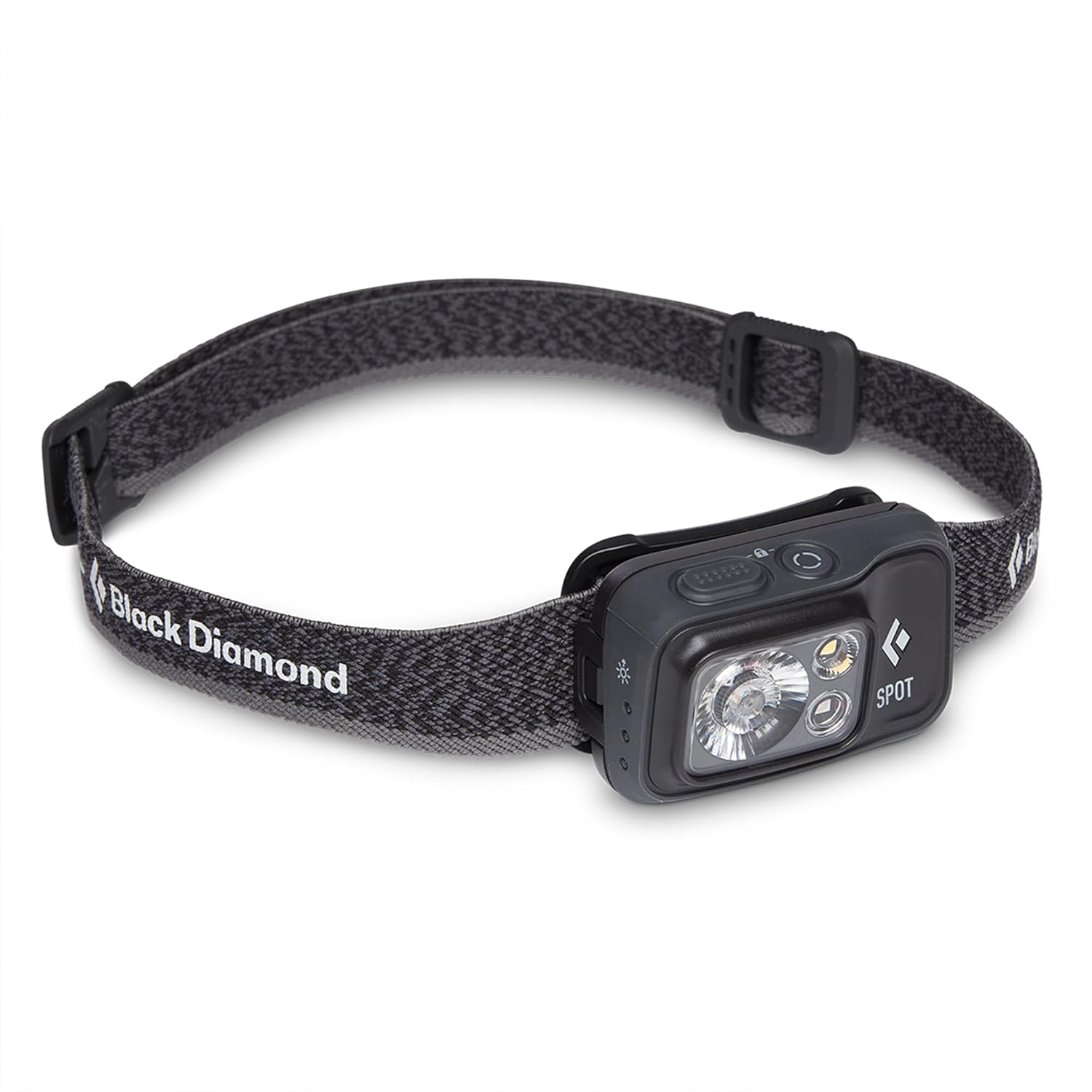
- Our pick: Black Diamond Spot 350 (~$45). 350 lumens, IPX8 waterproof rating, proximity and distance modes, and a single AAA battery drawer. The lamp most experienced hikers recommend first.
- Budget pick: GearLight LED 2-pack (~$24). Two usable headlamps for under $25. Bright enough for trail use, IPX4 water-resistant. Keep one in your kit and one in your car.
- Power users: Petzl Actik Core (~$75). 600 lumens, USB rechargeable via the included Core battery, but also accepts AAA alkalines as backup. The lamp for dawn starts and alpine hikes.
- Lumen count matters less than beam pattern. 350 lumens is plenty for trail hiking. What you actually want: a flood beam for proximity (camp tasks, reading a map), and a spot beam for distance (lighting the trail ahead).


Why lumens aren't the whole story
Headlamp marketing leads with lumen counts because it's a simple number to compare. In practice, 200–350 lumens is plenty for trail hiking in darkness — your eyes adjust. What matters more is beam pattern: a wide flood beam for close work (tent setup, food prep, reading a map) and a focused spot beam for distance (illuminating the trail 10–15 meters ahead so you can place your feet). All three picks here have both modes; cheap single-mode headlamps give you one or the other.
The second thing that matters is waterproofing. IPX4 (splash-resistant) is the minimum for hiking — light rain won't kill it. IPX8 (submersion-rated) means the Black Diamond Spot can handle sustained downpours and stream crossings without issues. Don't buy a headlamp that isn't at least IPX4.
How we picked
We filtered on: lumen output for the price (minimum 200 lumens for trail use), beam modes (flood + spot, not single-mode), water resistance (IPX4 minimum), battery type (AAA alkalines are available everywhere — a factor for emergency backup; USB rechargeable adds convenience but fails if you're out of power and can't recharge), weight (headlamp + batteries — too heavy and it shifts uncomfortably on a headband), and strap comfort (single vs multi-strap — single straps slip on steeper terrain). We excluded sub-$15 single-mode lights and anything without a usable flood/spot split.
 Best budget starter pick
GearLight LED Headlamp S500 (2-Pack)
The GearLight 2-Pack is the right call when you want a functional headlamp without spending $40+. You get two actual headlamps — not one lamp with a spare bulb — for under $25. Each runs on 3 AAA batteries (included), has adjustable tilt for pointing the beam at the trail rather than at the sky, and is IPX4 water-resistant (splash and rain, not submersion). The 5 lighting modes cover high, medium, low, strobe, and SOS. Beam output isn't as refined as the Black Diamond's two-mode flood/spot system, but it lights up a trail adequately at high mode. The main trade-off is beam focus — the GearLight throws a wide wash rather than a tight spot beam, which means less distance penetration. Keep one in your hiking pack as a permanent backup regardless of what primary lamp you carry.
What's good
- Two complete headlamps for under $25 — one for your pack, one for your car/backup
- IPX4 water resistance handles rain and splashes
- Adjustable tilt to point beam at the trail, not the sky
- 5 modes including SOS — useful as an emergency signal
- AAA batteries universally available — no USB dependency
What's not
- Wide wash beam rather than true spot mode — less distance penetration
- Strap comfort is mediocre on longer multi-hour sessions
- Lighter build quality than Black Diamond — not the lamp for 15-mile days
 Best for most hikers
Black Diamond Spot 350 Headlamp
The Black Diamond Spot 350 is the headlamp on most experienced hikers' gear lists for a reason: it does everything right and nothing wrong. The PowerTap technology lets you switch between proximity (flood) and distance (spot) by tapping the front button — no cycling through modes at 5am when your hands are cold. IPX8 means it's submersion-rated to 1.1 meters for 30 minutes — more than you'll ever need on a trail, but it means driving rain and stream splashes won't kill it. The single-strap design is comfortable for most head sizes and doesn't require rear adjustment to stay in place. At 350 lumens on high, it lights the trail 20+ meters ahead clearly. The battery drawer takes standard AAA alkalines — easy to swap mid-trip.
What's good
- IPX8 waterproof — genuine submersion rating, not just splash resistance
- PowerTap mode switching: one tap for flood, hold for spot — no menu cycling
- 350 lumens lights the trail clearly 20+ meters ahead
- Standard AAA batteries — easy to carry spares
- The default recommendation of most hiking instructors and guides
What's not
- Single-strap design shifts more than dual-strap on vigorous movement
- Battery drawer takes 3 AAA — more batteries to carry than rechargeable models
- No USB charging — requires battery swap in the field
 Best for early starts and alpinism
Petzl Actik Core 600
The Petzl Actik Core solves the rechargeable headlamp's main liability: running out of power in the field. The included Core battery charges via USB and provides 600 lumens on high — meaningfully brighter than the Spot 350 for technical terrain in total darkness. When the Core battery dies and you're far from a charger, the lamp also accepts standard AAA alkalines as a direct swap. This means you get convenience (USB charge before the trip) with a genuine field backup (AAA pack always carried as emergency). The Actik Core also has a red light mode — red light preserves night vision for map reading at camp without ruining everyone else's dark adaptation. The 600-lumen output is the pick for alpine routes where you're navigating technical terrain before dawn.
What's good
- 600 lumens — brighter than the Spot 350, better for technical terrain in full dark
- USB rechargeable via included Core battery — charge overnight, no disposables
- AAA alkaline backup: swap batteries in the field if Core dies
- Red light mode preserves night vision for camp use
- Dual-beam flood and spot in a single unit
What's not
- More expensive than the Spot 350 for casual day hiking where 350 lumens is plenty
- Core battery is proprietary — carry spares or AAA pack on multi-day trips
- Slightly heavier than the Spot 350 with rechargeable battery inserted
The Ten Essentials include illumination for a reason. A twisted ankle at mile 4 of an 8-mile out-and-back can mean finishing in the dark. A headlamp weighs 3 ounces and takes up the space of an apple. Leave it in your pack permanently — don't take it out and forget to put it back. This is the most common reason hikers end up in the dark.
Before you buy
Set your headlamp to the lowest brightness that lets you see comfortably — high mode drains batteries in 2–4 hours; medium mode can stretch to 8+ hours.
Carry spare batteries in a small bag inside your pack even if you have a rechargeable lamp. A dead rechargeable in the field with no AAA backup is dangerous.
Use red light at camp. Red preserves your night vision and doesn't blind your tent partner. Switch to white only when you need to see detail or navigate terrain.
Before any night hike or alpine start, test your headlamp the night before — not at 4am at the trailhead. Confirm it's on and the batteries are fresh.
Tilt the lamp down toward the trail rather than straight ahead. Angled down at 20–30° illuminates the ground at your feet and the trail a few meters ahead, which is where you need to see.
Common questions about hiking headlamps
How many lumens do I need for hiking?
What's IPX4 vs IPX8?
Should I get AAA or rechargeable?
Do I really need a headlamp for day hikes?
What's the difference between a flood and spot beam?
The Black Diamond Spot 350 is the right headlamp for most hikers — IPX8 waterproof, PowerTap beam switching, and AAA batteries you can carry as spares anywhere. The GearLight 2-pack is a smart cheap backup to throw in your car. Move up to the Petzl Actik Core if you're doing alpine starts or multi-day trips where USB charging is available at camp.
Ready to actually do it?
The first hiking quest takes an evening, and it tells you whether the gear was worth it better than any review can.
Start HikingThe HobbyStack editorial team researches each guide using practitioner communities, published resources, and direct input from active hobbyists. Every guide is reviewed for accuracy before publication and updated when practices change.
About our editorial process →More gear guides
All guides
Best Beginner Hiking Backpack 2026: Osprey Daylite vs Talon vs Atmos
The right hiking backpack depends on one number: how long you plan to be out. Day hike → 20–30L. Overnight → 33–45L. Multi-day → 50–65L. Get the volume wrong and you're either cramming gear into too little space or hauling empty weight all day. Here are three Osprey packs, each sized for a different stage of hiking, that will outlast your beginner phase.

Best Beginner Hiking Boots 2026: Merrell Moab 3 vs Salomon X Ultra 4
Your first hiking boots need to do three things: not blister you, stay dry on wet trails, and grip technical terrain. The Merrell Moab 3 Waterproof checks all three for around $130. Here are three real boots: a non-waterproof breathable option, the waterproof all-rounder, and a stiffer upgrade for rocky terrain, each with a confirmed Amazon link.
Best Beginner Hiking Water Bottle 2026: Nalgene vs Hydro Flask vs CamelBak
Dehydration is the most common cause of early hike turnarounds and trail emergencies. The solution is simple: carry enough water and actually drink it. Here are three hydration options: the indestructible trail standard, the insulated bottle that keeps drinks cold all day, and the hands-free reservoir system for longer and hotter hikes.

Best Beginner Trekking Poles 2026: Black Diamond Trail vs Distance Z
Trekking poles reduce knee impact by up to 25% on descents and add meaningful stability on uneven terrain. They're not optional once you start hiking with a loaded pack or doing technical descents. Here are three pairs: a no-frills starter, the consensus day-hiking pair, and a folding carbon option for hikers who want minimum weight.

Best Handheld GPS for Hiking (2026): 3 Rugged Picks That Work Off-Grid
A handheld GPS is rugged, reliable backcountry navigation that keeps working where your phone gives up: no cell signal needed, sunlight-readable screens, and batteries that last days, not hours. The choice comes down to whether you also want satellite SOS messaging for safety. Here are three good ones, all from Garmin, from a simple trail unit to a do-everything device with an emergency beacon.

Best Hiking First Aid Kit 2026: Surviveware vs AMK Watertight vs Backcountry
A first aid kit is mandatory on any hike beyond a paved trail. Blisters, cuts, sprains, allergic reactions, and hypothermia are all scenarios where having the right supplies on hand determines the outcome. Here are three kits that cover day hiking, weekend backpacking, and multi-day backcountry trips, each sized and stocked for what you'll actually encounter.