Best Kombucha Starter Kits for Beginners (2026)
Brewing kombucha at home is mostly patience plus one live culture (a SCOBY) and a big jar. A kit bundles the fiddly parts: the culture, the right jar, a way to check temperature and acidity, so your first batch actually ferments instead of growing something you will be scared to drink.
HobbyStack may earn a commission from links on this page at no extra cost to you. Our picks are chosen on merit; the commission helps fund the research.
- The kit is really about the SCOBY. The live culture is what turns sweet tea into kombucha, and a healthy, well-shipped one is the difference between success and a failed first batch. Buy the culture and the jar together from a maker who grows their own.
- Our pick: the Kombucha Shop Starter Kit (~$55). A thick 1-gallon glass jar, a strong culture grown in their own brewery, pH strips, a temperature gauge, and genuinely good instructions — plus a ferment-or-replace guarantee. The kit that gets first-timers to a drinkable batch.
- Budget: the Fermentaholics Essentials Kit (~$37). The same essentials stripped down — organic SCOBY, 1-gallon jar, cover, pH strips, thermometer. Everything you need to brew, minus the extras, for less.
- Do it all: the Kombucha Shop Deluxe (~$90). The starter kit plus six swing-top bottles, a stainless funnel, and a bottle brush — so you can carbonate and bottle your kombucha, not just brew it. The complete brew-and-bottle setup.
- Skip: kits sold without a live SCOBY (a 'kit' that is just jars is missing the one thing that is hard to source), and giant continuous-brew crocks for your first batch — learn on a gallon first.
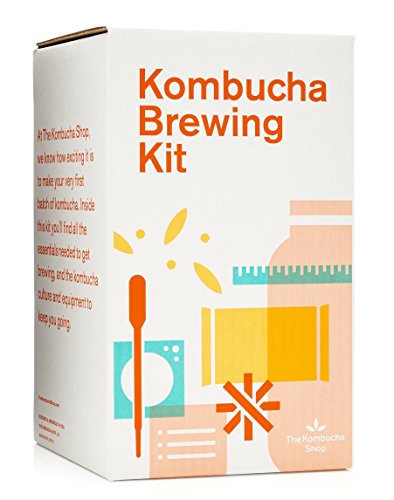 Our pickThe Kombucha Shop Organic Starter KitBest for most beginners$55Check price
 Fermentaholics Kombucha Essentials KitBest on a budget$37Check price
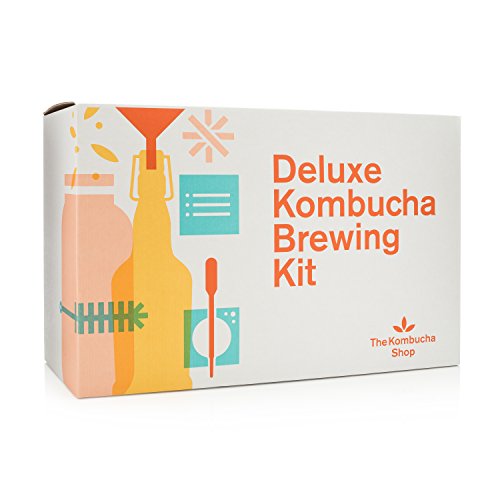 The Kombucha Shop Deluxe KitThe complete brew-and-bottle kit$90Check price
What a kombucha kit actually needs to include
Kombucha is simple: brew sweet tea, add a live culture, wait 1 to 2 weeks while it ferments, then bottle it. A good starter kit exists to get four things right so your first batch works:
- A live, healthy SCOBY. This is the culture — a rubbery disc of bacteria and yeast, plus a cup of "starter" liquid — that does the fermenting. It is the one ingredient you cannot easily buy at a grocery store, and its health decides whether your batch ferments or molds. Buy from a maker who grows their own cultures rather than a mystery disc.
- The right vessel. A 1-gallon glass jar with a wide mouth (to get the SCOBY in and out) and a breathable cloth cover (the culture needs air but not fruit flies). Avoid metal and most plastics, which the acidity can react with.
- A way to read temperature. Kombucha likes roughly 70 to 80°F. An adhesive thermometer on the jar tells you if your spot is warm enough — the most common reason a first batch is slow.
- A way to read acidity. pH strips tell you when the brew has fermented enough to be safe and tasty, rather than still basically sweet tea. Reassuring for a nervous first-timer.
The ingredients themselves — black or green tea and plain white sugar — you can buy anywhere, and kits assume you will supply them (some include a first round). Do not overthink the tea; plain caffeinated tea and cane sugar are exactly right.
 Best for most beginners
The Kombucha Shop Organic Starter Kit
The Kombucha Shop kit is the most-recommended beginner kit, and it is easy to see why. The culture is grown in their own Wisconsin brewery with filtered water and aged starter tea, and it comes backed by a guarantee — if your first batch does not ferment, they replace the culture. You get a thick American-glass 1-gallon jar, US-made pH strips and a temperature gauge, the cover, and by far the most thorough instructions of any kit here, including a post-brewing guide that walks you through flavoring. For a first-timer who wants the surest path to a drinkable batch, this is the one.
What's good
- Robust live culture grown in their own brewery, ferment-or-replace guarantee
- Thick American-glass 1-gallon jar, US-made test strips and gauge
- The most thorough beginner instructions of any kit here
- Everything to brew your first gallon in one box
What's not
- You still supply tea and sugar (as with any kit)
- Brews but does not bottle — no carbonation bottles included
 Best on a budget
Fermentaholics Kombucha Essentials Kit
The same core setup as our pick, stripped to the essentials to save money. Fermentaholics grows certified organic and kosher cultures in their own licensed lab, and the Essentials kit gives you that live SCOBY plus a 1-gallon glass brewing jar, a muslin cover and band, acid-range pH strips, and an adhesive thermometer. In other words, everything actually required to brew a first gallon — just without the nicer instructions booklet or any bottling gear. If you are comfortable following a recipe from their site and want the lowest-cost real entry, it is a genuinely good kit.
What's good
- Certified organic, lab-grown SCOBY
- Includes the jar, cover, pH strips, and thermometer
- Everything needed to brew, for the lowest price here
- A trusted culture maker, not a mystery disc
What's not
- Stripped-down: lighter on instructions than the Kombucha Shop kit
- No bottling gear for the fizzy second ferment
 The complete brew-and-bottle kit
The Kombucha Shop Deluxe Kit
Most people quickly want their kombucha fizzy, and that takes a second ferment in sealed bottles — which the two cheaper kits do not include. The Kombucha Shop Deluxe solves that by bundling their full brewing starter kit with the bottling half: six 16oz swing-top glass bottles with strong gaskets, a stainless funnel and strainer set, and a custom bottle brush for cleaning them. You get the same guaranteed culture and jar as the standard kit, plus everything to carbonate and bottle your finished brew. Buying it all together costs less than adding good swing-top bottles later, so if you already know you want bottled, fizzy kombucha, start here.
What's good
- Full brewing kit plus six swing-top bottles for carbonation
- Stainless funnel/strainer and a custom bottle brush included
- Same guaranteed culture and thick-glass jar as the starter kit
- Cheaper than buying quality bottles separately later
What's not
- More kit than you need if you only ever want it still, not fizzy
- The priciest of the three
Kits give you the hard-to-source parts: the culture, the right jar, and the test gear. You supply the easy, cheap consumables — plain black or green tea and white cane sugar, plus filtered or dechlorinated water (chlorine can harm the culture, so use filtered water or let tap water sit out overnight). That is it. One gallon of kombucha costs a couple of dollars in tea and sugar once you have the kit.
Before you buy
Keep the brew warm. Kombucha ferments best around 70 to 80°F. A cold kitchen is the number one reason a first batch is slow — put the jar somewhere warm, out of direct sun, and use the included thermometer to check.
Use filtered or dechlorinated water. Chlorine in tap water can weaken the culture. Filtered water works, or leave tap water out overnight so the chlorine off-gasses before you brew.
Never seal the brewing jar — but do seal the bottles. The first ferment needs air, so it is covered with cloth. The second ferment, in swing-top bottles, is sealed to trap carbonation. Mixing these up is the usual beginner slip.
Keep metal away from the culture. Use glass to brew and plastic or wood to handle the SCOBY. Brief contact with a stainless funnel when bottling is fine; prolonged metal contact is not.
Save starter liquid from each batch. The cup of finished kombucha you hold back is what safely acidifies your next batch. A kit gets you going; after that your own brew keeps the cycle running for free.
Common questions about kombucha starter kits
What do I actually need to brew kombucha at home?
What is a SCOBY and why does it matter?
Is homemade kombucha safe to drink?
How long does a batch take?
What's the difference between the starter kit and the deluxe kit?
Do I need a giant continuous-brew crock?
Ready to actually do it?
The first brewing kombucha quest takes an evening, and it tells you whether the gear was worth it better than any review can.
Start Brewing KombuchaThe HobbyStack editorial team researches each guide against manufacturer specifications, published resources and practitioner sources. Every product is checked for availability and described against its current listing before publication, and prices are re-checked when guides are updated.
About our editorial process →More gear guides
All guides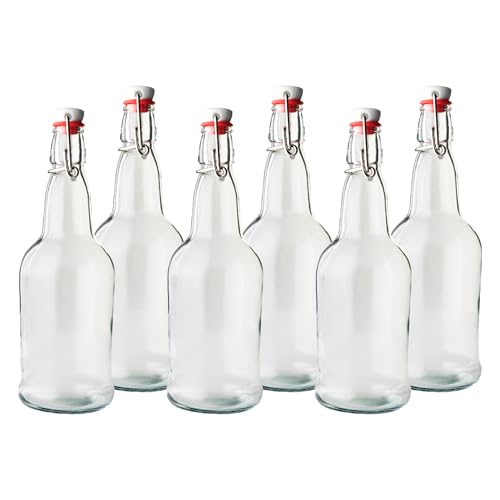
Best Kombucha Bottles (2026): Second Fermentation Builds Real Pressure
Second fermentation is the stage that puts the fizz in kombucha, and it works by trapping the carbon dioxide yeast produces inside a sealed bottle. That is genuinely a pressure vessel sitting on your worktop, and the wrong bottle is the reason people find glass in the ceiling.
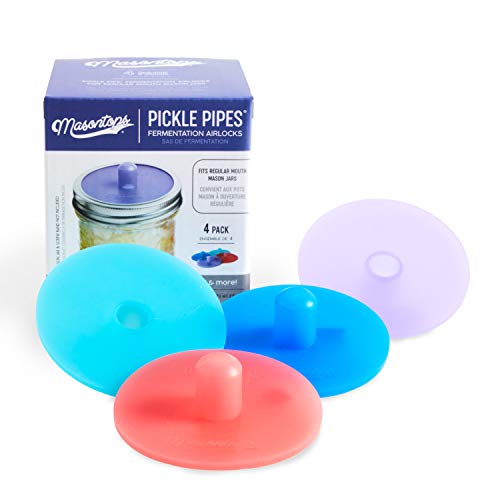
Best Fermentation Airlocks and Weights (2026): Under the Brine, Out of the Air
Vegetable fermentation asks for two things at once that sound contradictory: carbon dioxide has to get out, and oxygen must not get in. Every failure — the fuzzy white bloom, the soft mushy cabbage, the jar that pushed its lid off overnight — traces back to one of those two, and both are solved by about fifteen pounds of silicone and glass.
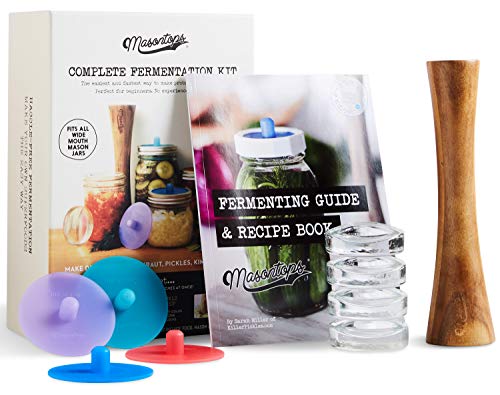
Best Fermentation Kits for Beginners (2026)
Fermenting vegetables at home: sauerkraut, kimchi, pickles, needs surprisingly little: a container that keeps air out, a way to hold the vegetables under the brine, and salt. A kit bundles that so your first batch turns tangy and safe instead of moldy. Here are three, from a cheap mason-jar kit to a traditional crock.
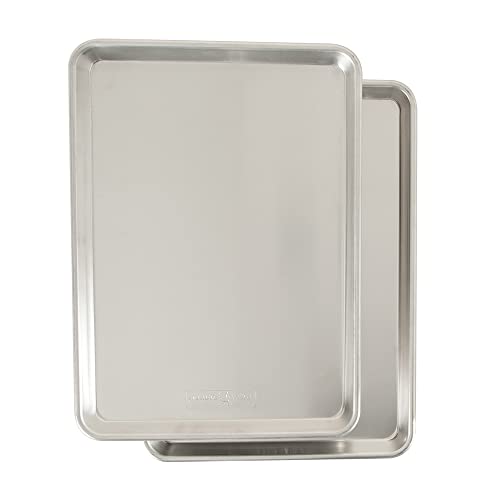
Best Baking Sheet for Beginners (2026): Why Half-Sheet Aluminium Wins
A baking sheet is the most-used pan in most kitchens and the one people spend least time choosing. The cheap ones warp with a bang the first time they hit a hot oven, and a warped sheet cooks unevenly forever after. The fix is not expensive: a heavy half sheet in bare aluminium with a rolled rim, which is what professional kitchens have used for decades.

Best Beginner Stand Mixer 2026: KitchenAid Artisan vs Classic vs Pro 600
Stand mixers are a one-time purchase that lasts decades. Pick the right KitchenAid (it's almost always going to be a KitchenAid) and you'll never need to think about it again. Pick wrong and you'll end up reselling and rebuying within 5 years.

Best Kitchen Scale for Baking 2026: Escali vs Ozeri vs OXO
A kitchen scale is the single most important tool in baking: weight is exact where measuring cups aren't, and switching to grams is the fastest way to make your recipes finally come out the same every time. The good news: accuracy is basically a solved problem, so the real choice isn't which scale weighs best (they're all spot-on) but which features you want. Here's the honest breakdown.