Best Fermentation Kits for Beginners (2026)
Fermenting vegetables at home: sauerkraut, kimchi, pickles, needs surprisingly little: a container that keeps air out, a way to hold the vegetables under the brine, and salt. A kit bundles that so your first batch turns tangy and safe instead of moldy. Here are three, from a cheap mason-jar kit to a traditional crock.
HobbyStack may earn a commission from links on this page at no extra cost to you. Our picks are chosen on merit; the commission helps fund the research.
- Two things keep a ferment safe: no oxygen, and the vegetables held under the brine. An airlock lid lets fermentation gas escape without letting air back in, and a weight keeps the vegetables submerged so they do not mold. Any good kit gives you both.
- Our pick: the Masontops Complete Kit (~$55). Durable self-venting airlock lids, glass weights, and a wood tamper that turn four of your own wide-mouth mason jars into fermenters. The system most people settle on.
- Budget: the Lalvam 2-Jar Kit (~$20). Comes with the jars, airlock lids, and glass weights — everything to ferment your first two batches with nothing else to buy.
- Big batches: a 1-Gallon Stoneware Crock (~$95). The traditional way to make a large batch of sauerkraut or kimchi at once, with the classic look. More than a first-timer needs, but the one to grow into.
- Skip: fermenting in a plain sealed jar with no airlock (you have to 'burp' it daily or it can crack), and anything metal (the acidity reacts) — use glass, stoneware, or food-grade silicone only.
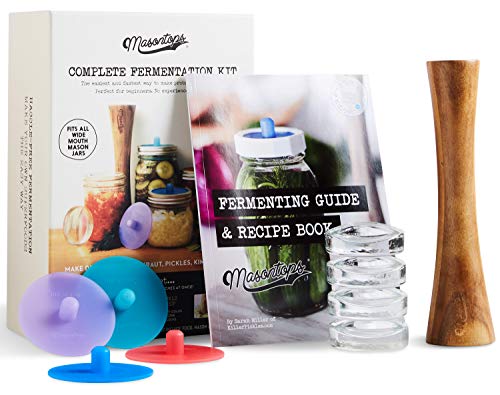 Our pickMasontops Complete Mason Jar Fermentation KitBest for most beginners$55Check price
 Lalvam 32oz Mason Jar Fermentation Kit (2-Pack)Best all-in-one starter$20Check price
 1-Gallon Stoneware Pickling Crock KitFor big traditional batches$94Check price
What a fermentation kit is actually for
Lacto-fermentation — how you make sauerkraut, kimchi, and real pickles — is mostly just salt, vegetables, and time. The bacteria that do the work are already on the vegetables; your job is to give them the right environment. A kit exists to get two things right:
- Keep oxygen out. Fermentation produces CO2, which needs to escape, but oxygen coming back in is what grows mold and off-yeasts. The solution is an airlock: a one-way valve (a water-filled lock, or a self-venting silicone cap) that lets gas out without letting air in. Without one, you have to open and "burp" the jar daily, and pressure can build up.
- Keep the vegetables submerged. Anything above the brine is exposed to air and can spoil. A weight — a glass disc, or a stone in a crock — holds the vegetables under the surface so the whole batch ferments safely.
Get those two right, add the correct amount of salt, and fermentation is genuinely hard to mess up. Everything else — jars, crocks, tampers — is about scale and convenience.
One rule overrides everything: no reactive metal. The acid a ferment produces reacts with aluminum and most metals, so ferment only in glass, stoneware, or food-grade silicone. That is why kits are built around mason jars and stoneware crocks.
 Best for most beginners
Masontops Complete Mason Jar Fermentation Kit
Masontops is the system most home fermenters settle on, and it earns it. The Pickle Pipe silicone airlocks self-vent — no water to top up, no daily burping — and the glass Pickle Pebble weights are sized exactly for wide-mouth jars so your vegetables stay under the brine. The acacia Pickle Packer tamps cabbage down hard enough to draw out its own liquid, and a printed recipe book gets you started. You supply four standard wide-mouth mason jars, which are cheap and sold everywhere. It is the durable, hands-off small-batch setup you will keep using for years.
What's good
- Self-venting airlock lids — no burping, no water to refill
- Glass weights sized precisely for wide-mouth jars
- Acacia tamper packs cabbage to draw its own brine
- Reusable, durable, and the recognized brand
What's not
- You supply your own wide-mouth mason jars
- Small-batch by design — a crock is better for big batches
 Best all-in-one starter
Lalvam 32oz Mason Jar Fermentation Kit (2-Pack)
The cheapest way to start with nothing missing. This kit includes two thick 32oz glass jars, stainless wide-mouth lids, water-lock airlocks, and glass fermentation weights — everything to run two batches at once the day it arrives, no separate jars to buy. The water-lock airlocks need a splash of water in the top (versus the Masontops self-venting caps), and the build is not as refined, but it ferments just as safely: gas escapes, air stays out, vegetables stay weighted down. For finding out whether fermenting is for you, it is a genuinely complete, honest starter.
What's good
- Includes the jars — truly everything to start, for ~$20
- Airlocks and glass weights, the two parts that matter
- Two jars, so you can run two ferments at once
- Glass and stainless — no reactive metal touching the brine
What's not
- Water-lock airlocks need topping up (vs self-venting caps)
- Less refined than the Masontops system
 For big traditional batches
1-Gallon Stoneware Pickling Crock Kit
Once you are making sauerkraut faster than you can eat it, a stoneware crock is the traditional next step. This 1-gallon lead-free crock ferments a whole head or two of cabbage in a single batch, the old way, with a classic look that earns a spot on the counter. Stoneware is inert and blocks light (which helps a long ferment), and the lidded design keeps air off the top. It is heavier, pricier, and more than a first-timer needs — you still weight the vegetables down inside — but it is the piece serious fermenters keep for life. Buy it when small jars are not keeping up with your appetite.
What's good
- 1-gallon capacity for big single batches of kraut or kimchi
- Inert, light-blocking lead-free stoneware
- Classic look that is happy left out on the counter
- The traditional vessel serious fermenters keep for life
What's not
- Heavy, and more than a beginner strictly needs
- Big batches only — overkill for a test jar of pickles
It is tempting to just use a mason jar with its normal metal lid. Two problems: fermentation gas has nowhere to go, so you must unscrew and 'burp' it every day or risk a cracked jar and a mess, and the metal lid corrodes against the acidic brine. An airlock lid solves both for a few dollars — it is the single piece that makes fermenting hands-off and safe. Every kit here includes one.
Before you buy
Get a small kitchen scale. Fermentation is a salt ratio, not a recipe you eyeball — about 2% of the vegetable weight. A $10 scale is the real secret to consistent, safe batches.
Use non-iodized salt and filtered water. Iodized table salt and chlorinated tap water can inhibit the good bacteria. Pickling or sea salt and filtered water keep the ferment lively.
Start with sauerkraut. Cabbage and salt, packed down until it makes its own brine, is the most forgiving first ferment. Kimchi and pickles come easily after that.
Keep it out of direct sun, around room temperature. 65 to 72°F is ideal. Cooler is slower; warmer can turn things mushy. A shaded countertop or cupboard is perfect.
Taste from day 5. Ferments are ready when they taste pleasantly sour, usually 1 to 3 weeks. Once you like it, move the jar to the fridge to slow it right down.
Common questions about fermentation kits
What do I need to start fermenting vegetables?
Why do I need an airlock?
Mason jar kit or a stoneware crock?
Is fermented food safe to make at home?
Do I need a special starter culture?
What's the easiest first thing to ferment?
Ready to actually do it?
The first fermentation quest takes an evening, and it tells you whether the gear was worth it better than any review can.
Start FermentationThe HobbyStack editorial team researches each guide against manufacturer specifications, published resources and practitioner sources. Every product is checked for availability and described against its current listing before publication, and prices are re-checked when guides are updated.
About our editorial process →More gear guides
All guides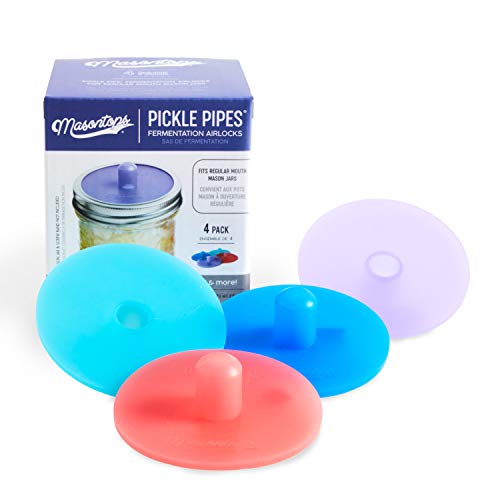
Best Fermentation Airlocks and Weights (2026): Under the Brine, Out of the Air
Vegetable fermentation asks for two things at once that sound contradictory: carbon dioxide has to get out, and oxygen must not get in. Every failure — the fuzzy white bloom, the soft mushy cabbage, the jar that pushed its lid off overnight — traces back to one of those two, and both are solved by about fifteen pounds of silicone and glass.
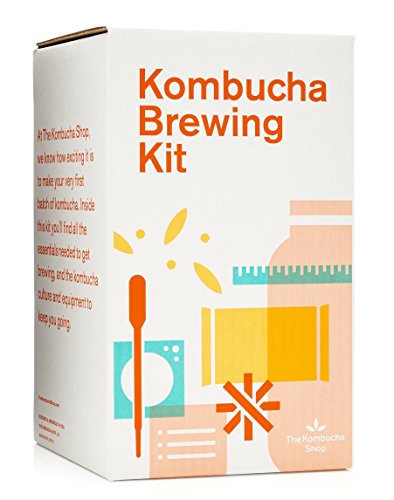
Best Kombucha Starter Kits for Beginners (2026)
Brewing kombucha at home is mostly patience plus one live culture (a SCOBY) and a big jar. A kit bundles the fiddly parts: the culture, the right jar, a way to check temperature and acidity, so your first batch actually ferments instead of growing something you will be scared to drink.
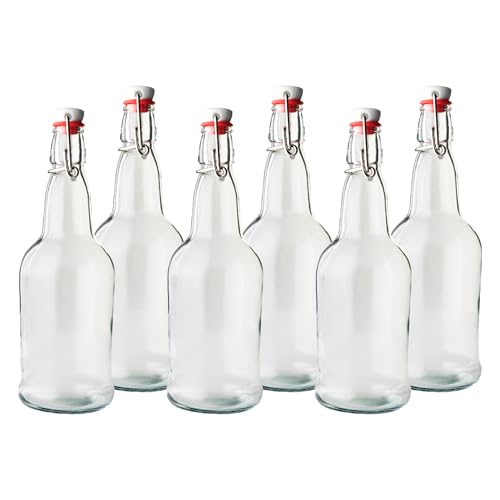
Best Kombucha Bottles (2026): Second Fermentation Builds Real Pressure
Second fermentation is the stage that puts the fizz in kombucha, and it works by trapping the carbon dioxide yeast produces inside a sealed bottle. That is genuinely a pressure vessel sitting on your worktop, and the wrong bottle is the reason people find glass in the ceiling.

Best Pot for Cheese Making (2026): Milk Scorches Where the Pan Is Thin
Milk is unforgiving in two specific ways. It reacts with bare aluminium and copper, which taints the curd and discolours the pan, and it scorches wherever the base has a hot spot — and once a batch has caught, the whole thing tastes of it. Both problems are solved by the same purchase, and neither is solved by watching more carefully.
Best Chef's Knife (2026): The Only Knife Most Kitchens Need
A chef's knife does perhaps ninety percent of the cutting in a kitchen, which is why it is the one knife worth thinking about and why a block of ten is mostly storage. The choice comes down to a single trade that nobody explains at the counter: harder steel holds an edge longer and chips more easily, softer steel dulls faster and forgives almost everything.

Best Dutch Oven (2026): A Camp Oven and a Kitchen Pot Are Not the Same Thing
Two very different pots share the name. One has three legs and a flanged lid built to hold burning coals on top, and it is what historical recipes assume. The other is a smooth enamelled casserole for a hob and an oven. Buy the second and try to cook over a fire with it and nothing will work the way the recipe says.