Best Beginner Stand Mixer 2026: KitchenAid Artisan vs Classic vs Pro 600
Stand mixers are a one-time purchase that lasts decades. Pick the right KitchenAid (it's almost always going to be a KitchenAid) and you'll never need to think about it again. Pick wrong and you'll end up reselling and rebuying within 5 years.
HobbyStack may earn a commission from links on this page at no extra cost to you. Our picks are chosen on merit; the commission helps fund the research.
- All three picks here are KitchenAid. That's not lazy — KitchenAid genuinely dominates the home-baking market and has for 40+ years. The choice is bowl size, motor power, and whether to spend extra for the heavier bowl-lift design.
- Our pick: the KitchenAid Artisan 5 Qt (~$380). 5 qt bowl handles ~6 dozen cookies or 4 loaves of bread, 70+ attachments expand into pasta, ice cream, meat grinding. The mixer that lives on the counter for 20 years.
- Tighter budget: KitchenAid Classic Plus 4.5 Qt (~$230). Same gearbox, smaller motor, smaller bowl. Genuinely fine for hobby baking.
- If you'll bake bread weekly: KitchenAid 5.5Qt Bowl-Lift 6 Qt Bowl-Lift (~$549). Stronger motor, bowl-lift design (no flipping the head up), handles double-batch sourdough without bogging.
- Skip: any sub-$150 stand mixer (motors burn out fast); knock-off brands (resale value is zero, parts disappear in 2 years); hand-mixer combos (compromise both).
 Our pickKitchenAid Artisan 5 Qt Tilt-Head Stand MixerMost beginners$489Check price
 KitchenAid Classic Series 4.5 Qt Tilt-Head Stand MixerTrying it cheap$300Check price
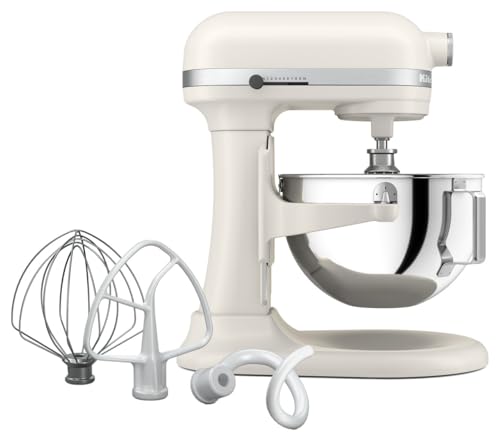 KitchenAid 5.5Qt Bowl-Lift Stand MixerGoing deep$330Check price
Why a stand mixer matters for baking
Hand mixers are fine. Whisks are fine. For most baking, you don't need a stand mixer. So why does almost every serious home baker own one?
Time saved on every batch. A stand mixer mixes hands-free while you measure the next ingredient, line the pan, or read the recipe. For a single batch of cookies, that's 5 minutes. Multiply that across a year of regular baking and the math is real.
Doughs that don't work without one. Bread dough, pasta dough, brioche, anything that needs sustained kneading — you can do it by hand, but you'll resent the recipe within a month. A stand mixer turns "I'll make bread someday" into "I make bread weekly."
Attachments multiply value. The KitchenAid attachment ecosystem is the real moat. The mixer body is a power source for 70+ attachments — pasta sheeter, meat grinder, ice cream maker, food grinder, citrus juicer. People who fall down the rabbit hole end up with one machine that replaces 4-5 single-purpose tools.
The single mistake to avoid: buying a no-name stand mixer to save $150. The motor will burn out within 2-3 years, you can't get replacement parts, and resale value is zero. KitchenAid bodies routinely sell on Craigslist for 60-70% of their new price after 10 years of use.
 Best for most beginners
KitchenAid Artisan 5 Qt Tilt-Head Stand Mixer
The default home-bakery pick across MasterClass, Sally's Baking, Food52, and every major culinary publication. 5 qt bowl + 325-watt motor handles the full range of hobby baking — cookies, cakes, bread, brioche. The 70+ attachments expand the mixer into pasta sheeting, meat grinding, ice cream churning, vegetable spiralizing. The mixer that lives on the counter for 20 years and gets passed down. Available in dozens of colors — pick one that matches your kitchen and forget about it.
What's good
- The home-bakery industry standard for 40+ years
- 70+ available attachments turn it into a multi-tool platform
- 5 qt bowl handles ~6 dozen cookies or 4 loaves of bread per batch
- Resale value holds remarkably well — sells for 60-70% of new on the used market
- KitchenAid customer service responds and parts are available for decades
What's not
- $380 is real money — you'll only justify it if you bake regularly
- Tilt-head design — for heavier doughs, the head can flex slightly under load
- Heavy (~22 lbs) — meant to live on the counter, not be moved daily
 Best under $250
KitchenAid Classic Series 4.5 Qt Tilt-Head Stand Mixer
The honest KitchenAid for hobby bakers who aren't sure they'll commit. Same proven gearbox as the Artisan, slightly smaller motor (250W vs 325W), 4.5 qt bowl instead of 5. For 90% of beginner baking — cookies, cakes, batters, frostings, basic bread doughs — this handles everything and you'd never notice the difference. The mixer to buy if you want "a KitchenAid" but can't justify the Artisan price yet.
What's good
- Real KitchenAid quality at the entry price point — not a downmarket cheap mixer
- Same gearbox engineering as the Artisan; same 10 speeds
- 4.5 qt is enough for almost every hobby baking recipe
- Same attachment compatibility as the Artisan and Pro models
What's not
- Smaller motor — won't handle double-batch sourdough or stiff bread doughs as smoothly
- Fewer color options than the Artisan line
- Less collectible / less common on the used market for resale
 Best to grow into
KitchenAid 5.5Qt Bowl-Lift Stand Mixer
The mixer to buy once if you bake seriously. The KitchenAid bowl-lift design is the sturdier, more powerful side of the KitchenAid line: a lever raises a large bowl into the beater, and the more robust motor handles stiff bread dough and big batches that make a tilt-head mixer strain. This one pairs that pro-style build with a roomy bowl, so it kneads a double loaf or whips a large batch of meringue without complaint. It is heavier, pricier, and more than a casual baker needs, but for anyone who bakes bread or bakes often it is the last mixer you will buy.
What's good
- Bowl-lift design and stronger motor for stiff dough
- Large bowl handles big batches and bread
- Sturdier and more durable than tilt-head models
- Buy-it-for-life KitchenAid build
What's not
- Heavy and takes real counter space
- More mixer than an occasional baker needs
KitchenAid Artisans are everywhere on Facebook Marketplace and Craigslist at 50-70% of new price. They genuinely last decades, parts are still available, and most are sold by people who bought one as a wedding gift and never used it. A 10-year-old used Artisan in working condition runs $150-220 vs $380 new. Worth a 2-week search before buying new — bring a recipe to test it in person.
How to choose between the three
Pick the Artisan 5 Qt if you're not sure how serious you'll get. It's the right answer for 90% of hobby bakers — handles every recipe you'll try in your first 2-3 years, has the broadest attachment library, holds its value if you decide to sell.
Pick the Classic Plus 4.5 Qt if budget is firm under $250 or you only have small kitchen space. Same gearbox, real KitchenAid, no compromises on quality — just less capacity.
Pick the 5.5Qt Bowl-Lift 6 Qt if you already know you'll bake bread weekly or want to do production-style batches (a double-batch of chocolate chip cookies, multiple loaves at once). The bowl-lift design and bigger motor are real upgrades for stiff doughs.
What's the same across all three: 10 speeds, attachment compatibility, parts availability for 15+ years, KitchenAid customer service, color options. The differences that matter: bowl size (4.5 vs 5 vs 6 qt), motor wattage (250W vs 325W vs 575W), and tilt-head vs bowl-lift design.
Whichever you pick, get the flex edge beater attachment ($35) at the same time. The stock paddle leaves a thick rim of unmixed batter against the bowl wall; the flex edge has a silicone scraper built in. Single best $35 you'll spend on the mixer.
Before you buy
Wait for sales. KitchenAid runs 20-30% off Artisan models around Mother's Day, Black Friday, and post-Christmas. If you're not in a rush, $300 (vs $380) is very achievable.
Check the bowl-lift vs tilt-head question. Bowl-lift won't fit under standard 18-inch upper cabinets when the head is raised. Measure first.
Color matters less than you think. Almost all home cooks paint their mixer color into the kitchen — but if you change kitchens, the mixer comes with you. Pick something timeless (white, black, silver) unless you love a bold color.
Skip the bundles. "KitchenAid + 3 attachments + cookbook" bundles are usually overpriced. Buy the mixer alone, then buy attachments individually as you need them.
Get the flex-edge beater immediately. Sold separately for ~$35. Bigger quality-of-life improvement than any other attachment.
Common questions about stand mixers
Why is everyone a KitchenAid evangelist? Isn't that just brand loyalty?
Tilt-head vs bowl-lift — which is right for me?
Can I just buy a used KitchenAid?
Are knock-off brands ever worth it?
What about the Smeg or KitchenAid Pro Line?
How much should I budget for attachments?
For most people, the KitchenAid Artisan 5 Qt Tilt-Head Stand Mixer is the buy — the best balance of price, quality, and longevity. Want to spend less? The KitchenAid Classic Series 4.5 Qt Tilt-Head Stand Mixer gets you started for a fraction of the cost. Ready to go deeper? The KitchenAid 5.5Qt Bowl-Lift Stand Mixer is the upgrade.
Ready to actually do it?
The first baking quest takes an evening, and it tells you whether the gear was worth it better than any review can.
Start BakingThe HobbyStack editorial team researches each guide against manufacturer specifications, published resources and practitioner sources. Every product is checked for availability and described against its current listing before publication, and prices are re-checked when guides are updated.
About our editorial process →More gear guides
All guides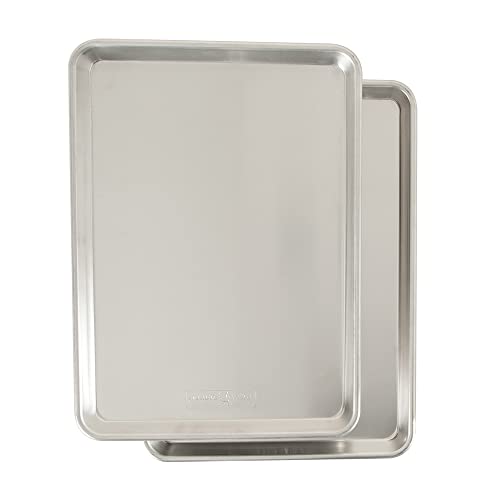
Best Baking Sheet for Beginners (2026): Why Half-Sheet Aluminium Wins
A baking sheet is the most-used pan in most kitchens and the one people spend least time choosing. The cheap ones warp with a bang the first time they hit a hot oven, and a warped sheet cooks unevenly forever after. The fix is not expensive: a heavy half sheet in bare aluminium with a rolled rim, which is what professional kitchens have used for decades.

Best Kitchen Scale for Baking 2026: Escali vs Ozeri vs OXO
A kitchen scale is the single most important tool in baking: weight is exact where measuring cups aren't, and switching to grams is the fastest way to make your recipes finally come out the same every time. The good news: accuracy is basically a solved problem, so the real choice isn't which scale weighs best (they're all spot-on) but which features you want. Here's the honest breakdown.
Best Mixing Bowls for Baking (2026): Stainless, Glass or Plastic
Mixing bowls are the piece of kit people own by accident — whatever came with the house, in whatever sizes. It mostly does not matter, with one real exception: plastic bowls will stop egg whites whipping, and almost nobody is told why. Beyond that it is about weight, nesting, and owning three rather than one.
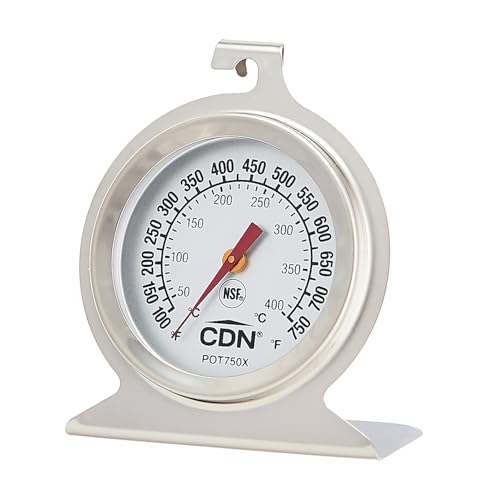
Best Oven Thermometer (2026): Your Oven Is Probably Lying to You
Set a home oven to 350°F and there is a good chance it is sitting anywhere between 315 and 390. The dial is a request, not a measurement, and the difference is the reason a recipe that works for everyone else comes out pale and raw in the middle at your house.
Best Rolling Pin (2026): French, Classic or Adjustable
Rolling pins divide into three shapes and people are oddly loyal to whichever they learned on. The differences are real but small: what changes most is how much you can feel the dough through the pin, and whether you get an even thickness without measuring. Any of them will roll pastry. One of them will roll it to a consistent 4mm without you thinking about it.

Best Round Cake Pans (2026): Why Anodised Aluminium Wins
Layer cakes are where most people find out their pans matter. A dark pan browns the edges before the middle is set; a thin one buckles; a single pan means baking layers one after another, which gives you two cakes that are not quite the same. None of this is expensive to fix, and the pan you want is not the one with the cleverest coating.