Best Kitchen Scale for Baking 2026: Escali vs Ozeri vs OXO
A kitchen scale is the single most important tool in baking: weight is exact where measuring cups aren't, and switching to grams is the fastest way to make your recipes finally come out the same every time. The good news: accuracy is basically a solved problem, so the real choice isn't which scale weighs best (they're all spot-on) but which features you want. Here's the honest breakdown.
HobbyStack may earn a commission from links on this page at no extra cost to you. Our picks are chosen on merit; the commission helps fund the research.
- For most bakers, the Escali Primo (~$42) is the pick — independent tests repeatedly rank it the most accurate and consistent scale at its price, and it's dead simple: two buttons, a clear display, instant tare, grams and ounces. It's the scale serious bakers recommend by default.
- On a budget, the Ozeri Pronto (~$20) is nearly as good where it counts — it matches the Escali for accuracy in testing, just with plainer design and a smaller platform. If you want a reliable scale for the least money, this is it.
- For features, the OXO Good Grips 11-lb (~$79) has a pull-out display so a big mixing bowl never hides the readout, the fastest response of any scale tested, and a sturdy stainless build. You pay for convenience and capacity, not better accuracy.
- Accuracy is basically solved — pay for features, not precision. Every decent scale here weighs to the gram; the Escali is simply the best accuracy-per-dollar, while the OXO's pull-out display earns its premium if you bake in big bowls. There's no 'more accurate' tier worth chasing for home baking.
- Skip: measuring by volume for baking (cups are why your results are inconsistent — a scale is the single biggest upgrade); worrying about precision you won't use; and, if you measure tiny amounts like yeast or espresso, relying on a 1-gram kitchen scale — add a cheap 0.1g pocket scale for those.
 Escali Primo Digital Food ScalePick$43Most accurate · simple · valueMost bakers
 Ozeri® Pronto® Digital Multifunction Kitchen and Food Scale with…$29Accurate · cheapestTightest budget
 OXO Good Grips 11-Pound Stainless Steel Food Scale with Pull-Out…$79Pull-out display · big bowlsFeatures
Accuracy is solved — so buy for the features, not the precision
A kitchen scale is the single most important tool in baking, because baking is chemistry: 120 grams of flour is 120 grams every time, while "one cup" can swing 20% depending on how you scoop. Weigh your ingredients and recipes that used to be hit-or-miss suddenly work. So the first decision isn't which scale — it's use one at all.
Once you're weighing, here's the freeing truth: accuracy is basically a solved problem. A kitchen scale is a load cell, and even cheap ones (the Ozeri, the Escali) nail the weight to the gram in independent testing. You are not buying a more accurate number by spending more. What the extra money actually buys:
- A readable display with a big bowl on it. The OXO's signature trick is a pull-out display on a little arm, so a wide mixing bowl never covers the numbers. On a flat scale, a big bowl can hide both the readout and the buttons — genuinely annoying mid-recipe.
- Capacity and platform size. A higher max weight (11 lb / 5 kg) and a bigger, sturdier platform make a scale comfortable for large batches.
- Speed, units, and build. Faster settling, easy gram/ounce switching, and a stainless top that wipes clean and lasts.
So the Escali is the accuracy-per-dollar sweet spot and the right call for most. Go Ozeri to spend the least, or OXO if you bake in big bowls and want the pull-out display. None of them weighs "better" than the others — they just differ in how pleasant they are to use.
 Best for most bakers
Escali Primo Digital Food Scale
The baker's default. The Escali Primo wins kitchen-scale tests for the reason that matters most: accuracy. Reviewers repeatedly find it the most accurate and consistent scale in its class, holding a steady, exact reading wherever you place the bowl — and it does it with refreshing simplicity: two buttons, a clear offset display, instant tare, and grams/ounces at a tap. It weighs up to 11 lb, runs on standard AA batteries, and just works, year after year. It's not flashy and the platform is modest, but for the actual job of a baking scale — give me the right number, every time — nothing at this price does it better. Buy it and stop thinking about scales.
What's good
- Ranked most accurate and consistent in its class
- Dead-simple: two buttons, clear display, fast tare
- Reliable year after year; runs on AA batteries
- The best accuracy-per-dollar — the baker's default
What's not
- Plain design; modest platform size
- Flat display can be hidden by a very wide bowl
- No frills (no rechargeable battery or app)
 Best on a budget
Ozeri® Pronto® Digital Multifunction Kitchen and Food Scale with…
Nearly the Escali, for half the price. The Ozeri Pronto is the cheap scale that's actually good: in head-to-head testing it matches far-pricier scales for accuracy, weighing to the gram and taring cleanly. It's compact, simple, and runs on standard batteries. Where it gives ground is design and feel — a smaller platform, plainer buttons, a less premium body — but none of that changes the number it shows. If you want a genuinely accurate baking scale for the least money, the Ozeri is the honest answer, and you can put the savings toward flour.
What's good
- Matches pricier scales for accuracy in testing
- The cheapest scale that's genuinely reliable
- Compact; simple tare and unit switching
- Leaves money for ingredients
What's not
- Small platform — awkward for big bowls
- Plainer build and display than the Escali
- Budget feel; less durable over the long haul
 Best features
OXO Good Grips 11-Pound Stainless Steel Food Scale with Pull-Out…
The convenient one, built for big bowls. The OXO Good Grips 11-lb scale earns its premium with a genuinely useful trick: a pull-out display on a little arm that slides forward, so a wide mixing bowl never hides the readout or the buttons — the single most annoying thing about flat scales, solved. It's also the fastest-settling scale in testing, has a big stainless platform that wipes clean and handles serious batches, and feels built to last. It's a touch less hair-splitting on precision than the Escali (spot-on to the nearest gram), but for home baking that's irrelevant. If you bake in large bowls and want the nicest scale to use, this is it.
What's good
- Pull-out display — a big bowl never hides the readout
- Fastest response time tested; large stainless platform
- Sturdy, premium build that lasts
- Great for big batches and serious bakers
What's not
- Most expensive here for no accuracy gain
- Slightly less precise than the Escali (to nearest gram)
- Bigger footprint to store
A scale only helps if you use it well, and the habits are simple. Tare (zero) between ingredients: put the bowl on, press tare to zero it, add the first ingredient, tare again, add the next — you can build a whole recipe in one bowl without dirtying a single measuring cup. Weigh in grams, not ounces, for baking: grams are finer and the math is easier (most modern recipes give grams anyway). Mind the minimum: kitchen scales read to 1 gram, which is perfect for flour and sugar but too coarse for tiny amounts like yeast or salt in a single loaf — for those, a cheap 0.1g pocket scale is the companion tool. And pull the batteries if you store it for months; auto-off helps, but a forgotten scale can still drain a cell.
How to choose between the three
Pick the Escali if you want the best baking scale for the money — the most accurate and consistent in its class, simple to use, and reliable for years. For most bakers, this is the whole answer.
Pick the Ozeri if you want a genuinely accurate scale for the least money. It matches the pricier scales on the number that matters; you trade away platform size and a premium feel, not accuracy.
Pick the OXO if you bake in big bowls and want the nicest scale to use — the pull-out display, fast response, and large stainless platform are real conveniences, just not more accurate ones.
If you're unsure, get the Escali. The honest truth of kitchen scales is that they all weigh the same to the gram; the Escali simply gives you that accuracy for the least fuss and money.
Before you buy
Get one that does grams + tare. Those two features are the whole point; everything else is nice-to-have. All three here have them.
11 lb / 5 kg capacity is plenty. It covers a big batch of dough or a full mixing bowl; you don't need more for home baking.
A pull-out or raised display is worth it if you use big bowls. It's the OXO's main advantage — no more lifting the bowl to read the weight.
Don't pay for 'accuracy.' Cheap and expensive scales weigh the same to the gram. Spend on features (display, capacity, build), not a more-precise number.
Measuring yeast or espresso? Add a 0.1g pocket scale. Kitchen scales read whole grams; tiny measures need finer resolution.
Common questions about kitchen scales
Do I really need a kitchen scale for baking?
Is an expensive kitchen scale worth it?
What's the best kitchen scale for baking?
Should I weigh in grams or ounces for baking?
What capacity and resolution do I need?
How do I use the tare function?
For most bakers, the Escali Primo Digital Food Scale is the buy — the most accurate and consistent scale at its price, simple and reliable, for around $42. Want to spend the least? The Ozeri® Pronto® Digital Multifunction Kitchen and Food Scale with… is just as accurate where it counts. Bake in big bowls and want the nicest one to use? The OXO Good Grips 11-Pound Stainless Steel Food Scale with Pull-Out…'s pull-out display earns its premium. They all weigh the same to the gram — so buy for the features, not the precision.
Ready to actually do it?
The first baking quest takes an evening, and it tells you whether the gear was worth it better than any review can.
Start BakingThe HobbyStack editorial team researches each guide using practitioner communities, published resources, and direct input from active hobbyists. Every guide is reviewed for accuracy before publication and updated when practices change.
About our editorial process →More gear guides
All guides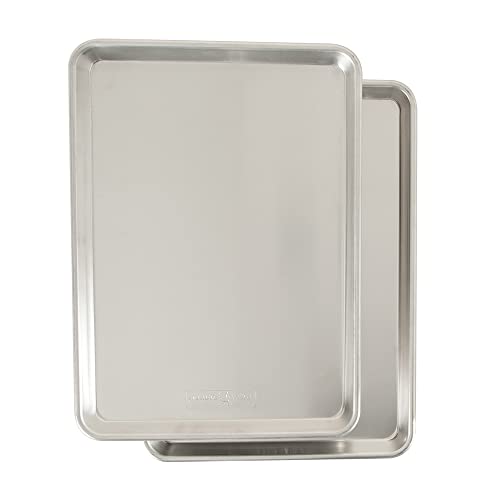
Best Baking Sheet for Beginners (2026): Why Half-Sheet Aluminium Wins
A baking sheet is the most-used pan in most kitchens and the one people spend least time choosing. The cheap ones warp with a bang the first time they hit a hot oven, and a warped sheet cooks unevenly forever after. The fix is not expensive: a heavy half sheet in bare aluminium with a rolled rim, which is what professional kitchens have used for decades.

Best Beginner Stand Mixer 2026: KitchenAid Artisan vs Classic vs Pro 600
Stand mixers are a one-time purchase that lasts decades. Pick the right KitchenAid (it's almost always going to be a KitchenAid) and you'll never need to think about it again. Pick wrong and you'll end up reselling and rebuying within 5 years.
Best Mixing Bowls for Baking (2026): Stainless, Glass or Plastic
Mixing bowls are the piece of kit people own by accident — whatever came with the house, in whatever sizes. It mostly does not matter, with one real exception: plastic bowls will stop egg whites whipping, and almost nobody is told why. Beyond that it is about weight, nesting, and owning three rather than one.
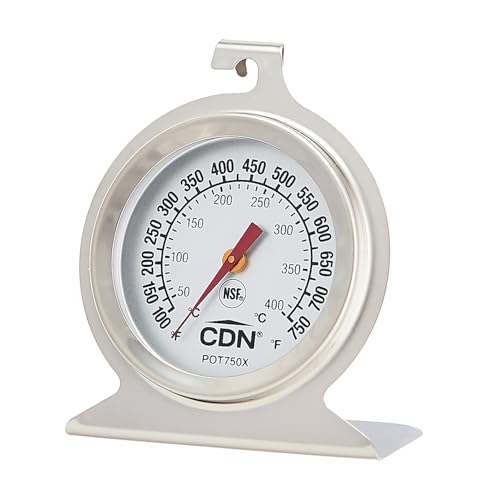
Best Oven Thermometer (2026): Your Oven Is Probably Lying to You
Set a home oven to 350°F and there is a good chance it is sitting anywhere between 315 and 390. The dial is a request, not a measurement, and the difference is the reason a recipe that works for everyone else comes out pale and raw in the middle at your house.
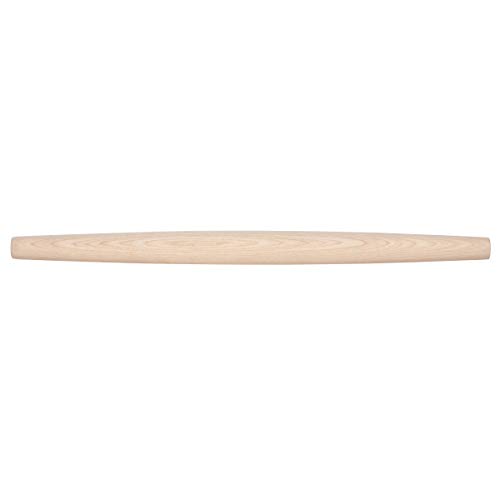
Best Rolling Pin (2026): French, Classic or Adjustable
Rolling pins divide into three shapes and people are oddly loyal to whichever they learned on. The differences are real but small: what changes most is how much you can feel the dough through the pin, and whether you get an even thickness without measuring. Any of them will roll pastry. One of them will roll it to a consistent 4mm without you thinking about it.

Best Round Cake Pans (2026): Why Anodised Aluminium Wins
Layer cakes are where most people find out their pans matter. A dark pan browns the edges before the middle is set; a thin one buckles; a single pan means baking layers one after another, which gives you two cakes that are not quite the same. None of this is expensive to fix, and the pan you want is not the one with the cleverest coating.