Best Bottles for Perfume Making (2026): Roll-On or Spray Decides It
The bottle question looks like packaging and is actually a formulation question. Oil-based perfume goes in a roll-on; alcohol-based perfume needs an atomiser, because rolling it on wastes the top notes and defeats the point of using alcohol at all. Get that the wrong way round and you have bought the wrong thing regardless of how nice the glass is.
HobbyStack may earn a commission from links on this page at no extra cost to you. Our picks are chosen on merit; the commission helps fund the research.
- Oil-based blends go in roll-ons. Alcohol-based perfume needs a fine mist sprayer.
- Amber glass, not clear. UV degrades citrus and florals fastest of all.
- 10ml is the right size while you are blending — big enough to wear, small enough to abandon.
- Buy more bottles than you think. Every trial blend needs its own, and they are the cheap part.
- Label everything as you fill it. An unlabelled blend you liked is a blend you cannot make again.
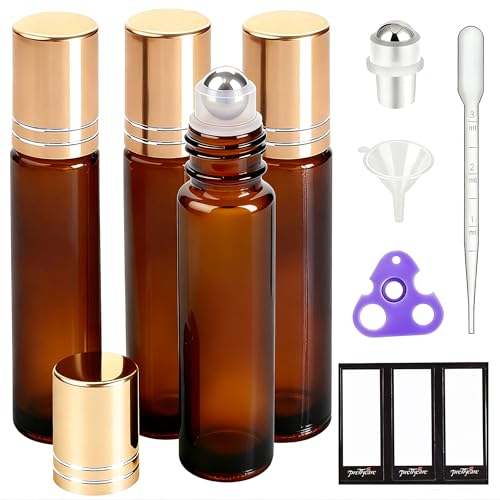 PrettyCare Amber Roll-On, 4-packA first try$7Check price
 Our pickAmber Roll-On Bottles, 12-packBlending seriously$9Check price
 Vivaplex Fine Mist Sprayer, 24-packAlcohol-based perfume$19Check price
Roll-on or spray is a formulation decision
Perfume is fragrance material carried in something, and the carrier decides the bottle.
Oil-based perfume dilutes the aromatics in a carrier oil — fractionated coconut, jojoba, or similar. It sits close to the skin, has little projection, and lasts a long time. It is thick, so it is applied rather than sprayed, and a roll-on is the correct fitting. This is also where almost everyone starts, because it needs no special ingredients and no ageing.
Alcohol-based perfume uses high-proof perfumer's alcohol. It flashes off the skin and carries the fragrance up into the air with it, which is what gives a perfume any projection at all. It must be sprayed to atomise properly, and rolling it on wastes the volatile top notes on contact.
So the format is not an upgrade path. If you are making oil blends, a set of sprayers is the wrong purchase, and if you have moved to alcohol, roll-ons are.
Why amber, and why so many
Amber glass is not a style choice. Ultraviolet light breaks down fragrance compounds, and citrus oils are the most vulnerable — a bright bergamot top note can flatten within weeks in clear glass on a sunny shelf. Amber blocks most of that. Cobalt blue does a similar job; clear glass does not, and neither does plastic, which can also leach and interact with some aromatics.
The quantity question surprises people. Blending means bottling a lot of things you will throw away. A single accord tried at three ratios is three bottles. Trying it again with the base swapped is three more. Perfume also changes over days as the materials settle together, so you cannot judge a blend the moment you make it and reuse the bottle — you have to leave it alone and come back.
A four-pack is enough to find out whether you enjoy this. A dozen is roughly what one afternoon of proper experimenting consumes.
 Best for a first try
PrettyCare 4 Pack Amber Glass Oil Roller Bottles
Four 10ml amber roll-ons with a funnel, a dropper, a spare roller ball, an opener and eight labels, which is genuinely everything needed to fill a bottle without spilling half of it. The opener matters more than it sounds: roller balls are pressed into the neck and are awkward to lever out cleanly the first few times, and picking at one with a knife is how people chip the glass. Four bottles is the right number to answer whether you enjoy this before spending anything more. It is not enough to blend with seriously — one comparison across three ratios eats most of the set — so treat it as a trial rather than a supply.
What's good
- Complete kit — funnel, dropper, opener, labels
- Amber glass protects the blend
- Cheapest way to find out if you like this
- Leak-proof for carrying one around
What's not
- Four bottles disappears in one blending session
- Roll-on only — wrong for alcohol perfume
- Eight labels is not many
- Dearest per bottle of the three
 Best for actually blending
Roller Bottles for Essential Oils
Twelve 10ml amber roll-ons with thirty labels, two funnels, two droppers and spare roller balls and caps, and twelve is the number that changes how you work. With four bottles you are cautious, reusing them and washing between trials, which contaminates everything and stops you leaving a blend to settle. With twelve you can put up a whole set of variations, label them, ignore them for a week and then judge them properly against each other — which is the only way to learn what a material actually does in a mix. The thirty labels are the underrated part of the box. Same amber glass and leak-proof roller fitting as the smaller set, at a much lower cost per bottle.
What's good
- Twelve bottles is enough to run real comparisons
- Thirty labels — enough to label every trial
- Two funnels and two droppers
- Much cheaper per bottle than the 4-pack
What's not
- Roll-on only — wrong for alcohol perfume
- More bottles than a casual dabbler needs
- Labels are plain, so write clearly
- Roller balls vary slightly in how freely they turn
 Best for alcohol-based perfume
Vivaplex, 24, Amber, 10 ml
Twenty-four 10ml amber bottles fitted with fine mist sprayers and dust caps, and it is worth being clear that this is a different format rather than a better bottle. Buy it when you have moved to perfumer's alcohol, because an alcohol perfume needs to be atomised into a cloud that flashes off the skin, and applying it with a roller wastes the top notes on contact. Twenty-four is a lot, which is right for this stage: alcohol blends need weeks of maceration before they are worth judging, so you end up with a shelf of bottles quietly ageing rather than a few in rotation. The dust caps matter for that, keeping the sprayer clean over a long wait. Pointless if you are making oil blends.
What's good
- Correct format for alcohol-based perfume
- Twenty-four bottles suits long maceration
- Amber glass with dust caps for storage
- Lowest cost per bottle here
What's not
- Wrong format entirely for oil blends
- No funnel or dropper included
- Twenty-four is far too many to start with
- Fine mist sprayers can clog on thick blends
Write the label first, stick it on the empty bottle, then fill. Filled bottles get moved, and a row of identical amber 10ml bottles becomes anonymous within about a day. The label needs the date and the actual ratio, not a name — "bergamot 6, lavender 3, vetiver 1, 14 Mar" is a blend you can make again, and "spring one" is not.
Cleaning and reusing bottles
Bottles are reusable, but fragrance material is stubborn and a badly cleaned bottle ruins the next blend in it.
Empty and rinse with high-proof alcohol, not water. Fragrance oils do not dissolve in water, and a water rinse leaves an oily film that smells of the last thing.
Leave them open to dry completely. Trapped alcohol will thin the next blend and shift its balance.
Smell the empty bottle before refilling. If it still smells of anything, it will pass that on. Bottles that held very tenacious materials — vetiver, oud accords, some ambers — often never come clean, and the honest answer is to retire them to that material permanently.
Roller balls and sprayer fittings are the harder part. Pull the roller out with the opener and soak the fitting separately, since the ball housing traps oil where a rinse will not reach.
Before you buy
Decide oil or alcohol first. That decides roll-on or spray, and nothing else does.
Amber or cobalt glass. Never clear, never plastic.
10ml while you are learning — enough to wear, cheap enough to bin.
Buy more than feels sensible. Every trial needs its own bottle.
Check labels are included, or buy them separately. They are the difference between a hobby and guesswork.
Perfume bottle questions
Should I use roll-on or spray bottles for perfume?
Why do perfume bottles need to be amber?
What size bottle should I use for making perfume?
How do I clean perfume bottles for reuse?
Answer the oil-or-alcohol question first and the bottle answers itself. If you are making oil blends, the twelve-pack of amber roll-ons is the buy — twelve is what lets you run real comparisons and leave them to settle instead of washing and reusing four. The PrettyCare four-pack is enough to find out whether you like this at all. The Vivaplex sprayers are the right thing only once you have moved to perfumer's alcohol. Label every bottle before you fill it.
Ready to actually do it?
The first perfume making quest takes an evening, and it tells you whether the gear was worth it better than any review can.
Start Perfume MakingThe HobbyStack editorial team researches each guide against manufacturer specifications, published resources and practitioner sources. Every product is checked for availability and described against its current listing before publication, and prices are re-checked when guides are updated.
About our editorial process →More gear guides
All guides
Best Beakers for Perfume Making (2026): Borosilicate, and Small
Perfumery works in small volumes and strong solvents, which rules out most measuring vessels in a kitchen. Plastic absorbs fragrance and hands it to the next blend; soda-lime glass is fine until something warm goes in it. Borosilicate solves both, and the sizes you actually need are smaller than any set will sell you.

Best Milligram Scale for Perfume Making (2026): Resolution Is Not Accuracy
Perfume formulas are written by weight, in percentages, and some materials are used at a fraction of a percent — a few milligrams in a ten gram batch. That means the scale is not a convenience, it is the instrument the whole craft depends on. It also means the number printed on the box is routinely misunderstood: a scale that displays three decimal places is not necessarily accurate to three decimal places.
Best Soap Making Goggles (2026): Lye Takes Eyesight, and Glasses Are Not Enough
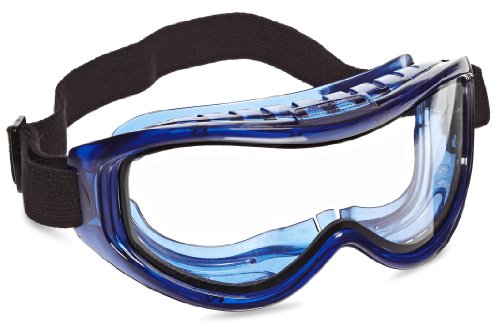
Sodium hydroxide dissolves protein, which is how it turns oil into soap and also what it does to an eye. A splash does not sting and then wash out; it keeps reacting, and it can take sight permanently in seconds. Safety glasses leave the sides open, and a splash from a stirring pot does not arrive from straight ahead.
Best Soap Making Kit for Beginners (2026): 3 Melt-and-Pour Picks
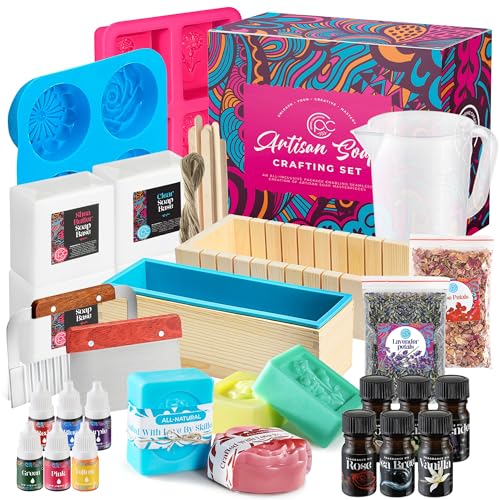
The easiest way to start making soap is a melt-and-pour kit, which skips the lye and safety hazards of traditional soap making entirely: you melt a ready-made base, add colour and scent, and pour it into molds. A kit bundles the base, molds, colourants, and fragrance so you can make your first bars in an afternoon. Here are three good ones, from a simple starter to a deluxe box.

Best Archival Brushes (2026): Soft, Dry, and Always Away From the Spine
The first rule of cleaning a book is that you almost never use water. Surface dirt comes off dry, with a soft wide brush and patience, and anything wet risks tidelines, cockling and lifting the very ink you were trying to save. The brush is the tool that does most of the real work.

Best Bone Folder (2026): Real Bone Burnishes, Plastic Just Presses
A bone folder does two jobs that sound like one. It creases paper, which anything stiff can do, and it burnishes — polishing a fold so the fibres lie down and the crease becomes sharp and permanent. Real bone burnishes. Plastic mostly just presses, and on some papers it leaves a shine you cannot remove.