Best Cocktail Jigger (2026): The Cheapest Way to Fix Your Drinks
Cocktails are ratios. A Daiquiri and a bad Daiquiri differ by about half an ounce of lime, and the eye cannot see half an ounce. Free pouring feels like the confident thing to do and is the single most common reason a home drink tastes harsh, sweet or thin when the recipe was fine.
HobbyStack may earn a commission from links on this page at no extra cost to you. Our picks are chosen on merit; the commission helps fund the research.
- Measure everything. Free pouring is the most common reason home cocktails taste wrong.
- You want interior markings, not just two end volumes. ½oz and ¾oz come up constantly.
- Japanese-style jiggers are tall and narrow, which makes them more accurate to fill.
- Angled jiggers let you read the measure from above without bending down.
- Fill to the brim, not near it. A jigger measures at the rim.
 Our pickCocktail Kingdom JapaneseMost people$15Check price
 OXO Angled Measure SetReading from above$21Check price
 Cocktail Kingdom LeopoldFinest gradations$45Check price
Why free pouring does not work at home
Bartenders who free pour are counting, on a spout, with a bottle they use hundreds of times a week. They have calibrated themselves against a specific pour rate, and they are still measured on the results.
At home none of that holds. Your bottles are different shapes, most have no spout, you use each one occasionally, and there is no feedback loop telling you when you were half an ounce out.
And half an ounce is a lot. A Daiquiri is two ounces of rum, one of lime, three quarters of syrup. Pour an extra half ounce of lime and it is sour and thin; an extra half of syrup and it is a sweet mess. Same recipe, same bottles, completely different drink.
This is why the same person can make a good drink one night and a bad one the next and conclude the recipe is unreliable.
A jigger costs less than a bottle of decent vermouth and fixes it permanently. It is the highest-return purchase in home bartending, ahead of any spirit upgrade.
Japanese, angled, and how to actually use one
Japanese-style jiggers are the tall narrow hourglass shape. The narrowness is the point: in a tall vessel, a given volume is a taller column of liquid, so a small error in level is a smaller error in volume. They also usually carry interior markings for the in-between measures.
Angled jiggers have measurement lines on a sloped interior that you read looking straight down. That solves a genuine annoyance — with a traditional jigger you have to crouch to bring your eye level with the rim, or accept guessing.
Two-sided jiggers, whichever style, give you two volumes at the ends and usually more inside.
The technique matters more than the choice. Fill to the brim. A jigger is calibrated at the rim, and "nearly full" is comfortably ten percent short — pour until it is domed with surface tension. Pour the jigger into the shaker rather than holding it over and trickling, and do your cheapest ingredient first so that if you misjudge, you have wasted syrup rather than a good spirit.
 Best for most people
Cocktail Kingdom® Japanese Style Jigger
The one used in professional bars around the world, and it is also the cheapest thing here, which does not happen often. One ounce and two ounces at the ends, with interior lines for half, three-quarters and one and a half — and those interior marks are what make it a real tool rather than two cups, because ¾oz appears in more cocktail recipes than almost any other measure. The tall narrow Japanese shape makes it more accurate to fill than a squat one, since the same volume is a taller column and a small misjudgement matters less. Stainless, dishwasher safe. The only real drawback is that you have to bring your eye down to the rim to read it precisely.
What's good
- Interior marks for ½, ¾ and 1½ oz
- Tall narrow shape is more accurate to fill
- The jigger professional bars actually use
- Cheapest option here
What's not
- You have to crouch to read it at eye level
- Narrow shape spills more easily when pouring in
- No ¼ oz marking
- Plain stainless, nothing decorative
 Best for reading from above
OXO Good Grips Mini Angled Measuring Tools (2 Oz Cup + Jigger)
A pair rather than a single tool: a patented angled measuring cup you read by looking straight down into it, plus a stainless angled jigger with ounce and tablespoon markings for small amounts. The angle is a genuine ergonomic fix — with a conventional jigger you either bend to bring your eye to the rim or accept some guesswork, and this removes that entirely, which matters more than it sounds when you are making four drinks in a row. The jigger's markings are etched rather than printed, so they do not fade with washing. Tablespoon markings make it useful in cooking too. It is less precise at the very small end than a marked Japanese jigger, and the cup is plastic.
What's good
- Read the measure from directly above — no crouching
- Etched markings that will not fade
- Ounce and tablespoon scales, useful in cooking
- Two tools covering different volumes
What's not
- Less precise than a marked jigger at small volumes
- The measuring cup is plastic, not steel
- Two objects to store rather than one
- No ¼ oz gradation
 Best gradations
Cocktail Kingdom Leopold Jigger - 1oz / 2oz - Copper-Plated
A copper-plated banded jigger based on vintage 1930s designs, and beyond looking considerably better than anything else here it does one functional thing the others do not: it carries a quarter ounce marking as well as half, three-quarters and one and a half. That sounds trivial until you work through recipes that call for a quarter ounce of an amaro, an absinthe rinse measure or a bar spoon of syrup expressed as a volume, at which point eyeballing a quarter of an ounce in a jigger marked only to halves becomes the weak link. One ounce over two ounces. The honest position: it is three times the plain Japanese jigger, and most of that is the finish rather than the extra line.
What's good
- ¼ oz marking as well as ½, ¾ and 1½
- Genuinely handsome on a bar
- Same accurate 1oz/2oz Japanese proportions
- Copper-plated and banded, built to last
What's not
- Three times the plain jigger for one extra marking
- Copper plating needs care to stay bright
- Still has to be read at the rim
- Mostly an aesthetic purchase
A jigger is calibrated at the rim, so "nearly full" is comfortably ten percent short — and being ten percent short on three ingredients is a noticeably different drink. Pour until the surface domes slightly with surface tension. It feels like you are about to spill, and that is the correct amount.
The measures that keep coming up
Almost all classic cocktails are built from a handful of volumes, which is why a jigger with interior markings goes so much further than one with only two.
2 oz — the base spirit in most stirred drinks and many shaken ones.
1 oz — a modifier, or citrus in a sour.
¾ oz — the most common syrup and citrus measure in the sour family, and the one people most often eyeball wrongly.
½ oz — a second modifier, or a sweeter syrup where ¾ would be too much.
¼ oz — accents. A dash of amaro, a float of a strong liqueur.
Once you can hit those five reliably, most classic recipes are just ratios you can read off a page and reproduce. And that is the real point of measuring: not precision for its own sake, but being able to make the same drink twice, notice what you would change, and change only that.
Before you buy
Interior markings matter more than end sizes. ¾oz appears constantly.
Japanese tall-and-narrow is more accurate than short-and-wide.
Angled if you dislike bending to read the rim.
Fill to the brim every time.
Measure the cheapest ingredient first, so mistakes cost syrup rather than spirit.
Jigger questions
Do I really need a jigger?
What size jigger should I buy?
What is a Japanese style jigger?
How full should a jigger be?
Buy the Cocktail Kingdom Japanese jigger. It is the cheapest thing here, it is what professional bars use, and its interior markings for ½, ¾ and 1½ ounces cover almost every measure a classic recipe asks for. Choose the OXO instead if bending to read a rim annoys you and you want something that doubles for cooking. The Leopold is lovely and adds a ¼oz line, but you are mostly buying the finish. Then fill it to the brim.
Ready to actually do it?
The first mixology quest takes an evening, and it tells you whether the gear was worth it better than any review can.
Start MixologyThe HobbyStack editorial team researches each guide against manufacturer specifications, published resources and practitioner sources. Every product is checked for availability and described against its current listing before publication, and prices are re-checked when guides are updated.
About our editorial process →More gear guides
All guides
Best Bar Spoon (2026): The Twist Is Not Decoration
A bar spoon looks like an affectation until you try to stir a Martini with a teaspoon and watch the ice clatter round the glass, chip, and turn the drink cloudy and watery. The spiral stem is a bearing. Held correctly, the spoon rotates between your fingers while your hand barely moves, and the ice glides instead of tumbling.
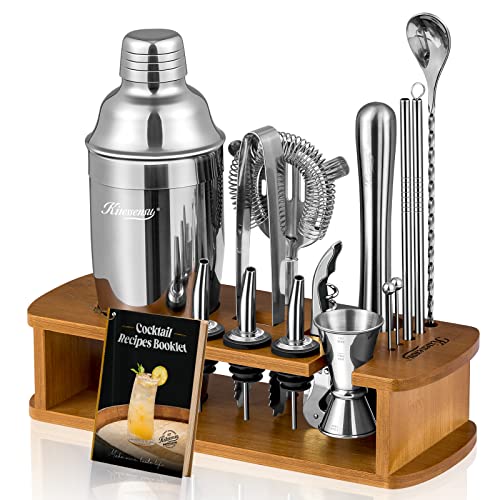
Best Bartender Kit for Beginners (2026): 3 Real Picks
A bartender kit gets you making real cocktails at home for the price of two or three bar drinks, and the honest truth is you need surprisingly little. The three tools that actually matter are a shaker, a jigger for measuring, and a strainer; everything else is nice to have. Most beginner kits bundle those plus a stand, and the real differences are build quality (does the shaker seal and pour without leaking?) and how complete the set is. Here are three good kits across the range, plus which tools you'll actually reach for.

Best Boston Shaker (2026): Two Tins Beat the Three-Piece
The shaker most people own is a three-piece cobbler with a built-in strainer and a little cap, and almost no working bartender uses one. Two metal tins are faster, seal harder, hold more, and never seize shut, which is the failure the cobbler is famous for. The change costs about twenty pounds and takes one evening to get used to.
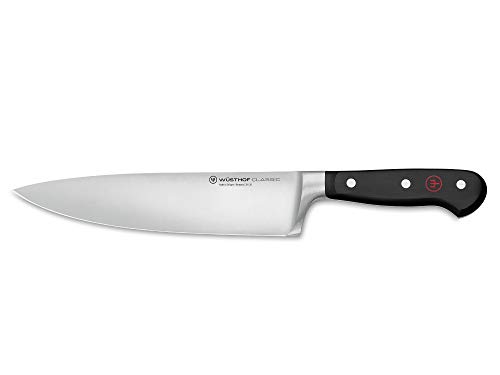
Best Chef's Knife for Beginners 2026: Victorinox vs Wüsthof vs Shun
A chef's knife is the most important tool in any kitchen, and the best news for beginners is that the cheap one is genuinely excellent. The Victorinox Fibrox is what culinary schools and professional kitchens use, for around $50. So the real question isn't which knife cuts best, a sharp one of any of these does, but whether you want to spend up for a German or Japanese knife's feel. Here's the honest breakdown.

Best Dutch Oven 2026: Lodge vs Le Creuset vs Staub (Is the Expensive One Worth It?)
A Dutch oven is the most versatile heavy pot you'll own: braises, stews, soups, and bakery-quality bread. The first thing to know is the one nobody selling you a $400 pot leads with: enameled cast iron cooks nearly the same whatever the badge. So the real question isn't which cooks best, it's what the extra money buys, and whether that's worth it to you.

Best Skillet for Beginners (2026): 3 Real Picks
A skillet is the one pan you'll reach for most, so it's worth getting right, and the honest truth is the best skillet depends on what you cook. Cast iron is cheap, lasts forever, and sears beautifully but is heavy and needs care; nonstick makes eggs and delicate food effortless but wears out; carbon steel is the restaurant choice, searing like cast iron but lighter and more responsive. Rather than budget-to-best of one thing, these are three genuinely different pans for three ways of cooking. Here they are, plus how to pick the one that fits your kitchen.