Best Cooperative Board Games (2026): Playing With the Table, Not Against It
Cooperative games are the easiest way into board games with people who do not think they like board games, because nobody gets knocked out and nobody has to be the one who ruins a friendship over a trade. They also have one specific failure mode that no box warns you about: the loudest player quietly starts telling everyone else what to do.
HobbyStack may earn a commission from links on this page at no extra cost to you. Our picks are chosen on merit; the commission helps fund the research.
- Co-op games are the best on-ramp for people who dislike competitive games — nobody is eliminated and nobody is a target.
- Watch for the quarterback problem: one player solving everyone's turn. It is the main reason co-ops fall flat.
- Weight matters more than theme. A heavy co-op with the wrong group is a long evening.
- Legacy games permanently change as you play — brilliant, and not something you can lend out afterwards.
- Start light. You can always go heavier; you cannot un-scare someone with a two-hour rules explanation.
 Our pickForbidden IslandFirst co-op, any group$21Check price
 Spirit IslandGroups who want depth$45Check price
 Pandemic Legacy Season 1A committed group$80Check price
The quarterback problem
In a competitive game you keep your plans to yourself because telling everyone would cost you the game. In a co-op there is no reason to hide anything — so the table discusses every move, and the person with the strongest opinions ends up planning everyone's turn.
The other players stop making decisions and start taking instructions, which is a fairly miserable way to spend an evening and the single most common reason a group decides they do not like co-ops.
Three things fix it. Hidden information — some co-ops restrict what you can tell each other, which forces everyone to think. A time limit per turn, even an informal one. And most simply, a rule that you may advise but the active player decides, agreed out loud before you start.
It is worth naming before the first game rather than after the third.
Weight, and being honest about your group
"Weight" in board games means how much rules overhead and decision-making a game asks for. It is the specification that decides whether an evening works, and it is far more important than whether the theme sounds appealing.
A light game explains in five minutes and plays in thirty. A heavy game can take forty minutes to teach and two hours to play, and asks players to hold a lot of interacting systems in their heads.
Neither is better. But a heavy game with a group who wanted a relaxed evening is a bad night for everyone, and it is very hard to recover a table's enthusiasm once you have lost it in a rulebook.
If you do not know your group, start lighter than you think you should.
 Best first co-op
Gamewright Forbidden Island
The game to own if you are buying one co-op, and genuinely the best introduction to the whole category. The island sinks tile by tile while you gather four treasures and escape — the rules take about five minutes to explain, a game runs half an hour, and the tension builds naturally as the board disappears beneath you. Four difficulty settings mean it grows with the group rather than being solved after two plays. It is light, so a group that wants a meaty strategic evening will find it slim, and the components are cardboard rather than lavish. Neither matters for what this is for: getting people who "do not like board games" to play a second one.
What's good
- Teaches in about five minutes
- Half an hour per game
- Four difficulty levels — grows with the group
- Cheap, and the best on-ramp there is
What's not
- Light — not a strategic evening
- Basic components
- Quarterbacks easily if you let it
- Repeats faster than heavier co-ops
 Best for depth
Greater Than Games Spirit Island
A genuinely heavy co-op, and one of the most respected games in the category. You play spirits defending an island from colonisers — a reversal of the usual settlement-game framing that the design takes seriously rather than as set dressing. Every spirit plays completely differently, so the game has enormous replay value and a real learning curve. It also largely solves the quarterback problem by accident: the spirits are complex enough that nobody can hold everyone else's options in their head, so players genuinely have to run their own. The cost is the teach — expect forty minutes for a first game and a couple of plays before it clicks. Not a first co-op, an excellent second one.
What's good
- Enormous depth and replay value
- Complexity naturally prevents quarterbacking
- Every spirit plays differently
- Excellent solo mode
What's not
- Long teach — 40 minutes for a first game
- Two hours per game once running
- Overwhelming for a casual group
- Takes a few plays to click
 Best for a committed group
Pandemic Legacy Season 1 Board Game
A legacy game, which means it changes permanently as you play: you write on the board, tear up cards, and open sealed boxes as the story advances across roughly twelve to twenty-four sessions. It is widely regarded as one of the best board game experiences ever made, and the reason is that consequences carry forward — a city you lost in session three is still ruined in session ten. The commitment is the entire trade-off. You need broadly the same group for months, the game is genuinely finished when the campaign ends, and you cannot lend it to anyone afterwards. Buy it for a group that already plays together regularly, not to get one started.
What's good
- One of the best campaign experiences in the hobby
- Consequences carry between sessions
- Story genuinely surprises
- Base Pandemic rules — easy to teach
What's not
- Needs the same group over months
- Permanently consumed — cannot be lent or resold
- Most expensive here
- Wrong buy for casual or rotating groups
"You can suggest, but the person whose turn it is decides." Say it out loud before the first turn of any co-op. It costs nothing, it stops the strongest player quietly running the table, and it is far easier to agree in advance than to raise halfway through when someone is already doing it.
Legacy and campaign games, briefly
A legacy game is played as a campaign and physically changes: you apply stickers, write on components, and destroy cards. When the campaign finishes, the game is finished — that is the design, not a defect.
What you get for it is consequence. Choices matter in a way they cannot in a game that resets to the box every time, and the story lands because your specific table caused it.
What you give up is flexibility. You need the same people over months, you cannot lend it out, and it has essentially no resale value. Some publishers now sell reset kits, which help but do not fully undo it.
If your group is stable, a legacy game is one of the best experiences in the hobby. If it is not, buy anything else.
Before you buy
Buy lighter than you think. Recovering a bored table is very hard.
Agree "advise, do not instruct" before the first turn.
Check the player count you actually have. Many co-ops sag at two.
Legacy games need a stable group over months — be honest about that.
Watch a five-minute playthrough before buying anything heavy.
Cooperative board game questions
What is the best cooperative board game for beginners?
What is the quarterback problem?
Are legacy games worth it?
Do cooperative games work with two players?
Start with Forbidden Island. It is cheap, it teaches in five minutes, and it is the most reliable way to turn someone who "does not like board games" into someone who asks for another. Move to Spirit Island when your group wants real depth and a game that rewards learning. Save Pandemic Legacy for a group that already plays together every month, because it asks for that and gives a great deal back. And agree the advice rule before the first turn.
Ready to actually do it?
The first board games quest takes an evening, and it tells you whether the gear was worth it better than any review can.
Start Board GamesThe HobbyStack editorial team researches each guide against manufacturer specifications, published resources and practitioner sources. Every product is checked for availability and described against its current listing before publication, and prices are re-checked when guides are updated.
About our editorial process →More gear guides
All guides
Best Gateway Board Games for Beginners (2026): 3 to Start With
Here is the honest truth: you do not need all three of these, any one of them is enough to get a good game night going. Gateway games are the ones built to win over people who think they do not like board games, the friends and family who groan at the word Monopoly. They teach in about five minutes, finish in under an hour, and leave everyone wanting another round. What they are not is Monopoly, Risk, or Trivial Pursuit, the long, luck-heavy, knock-you-out games most of us grew up quietly dreading. This guide is three different games at rising price and complexity, not three versions of one thing. Start with an easy, gorgeous crowd-pleaser, move to the classic that got a generation into the hobby, and step up to a richer game once your table is hooked. Buy one, get it played a few times, and add another only when your group is asking for more. Here are three good ones, and honest advice on where to start.

Best UV Flashlight (2026): 365nm Beats 395nm and Costs More
Nearly every cheap UV torch is 395nm, and nearly every good one is 365nm. The difference is not brightness — it is how much visible purple light comes out alongside the ultraviolet. That purple glare washes over faint fluorescence, which is exactly the thing you bought a UV light to see.

Best Poker Chip Set for Beginners (2026): 3 Sets for Every Home Game
A proper chip set is what turns a card game into poker night, and the thing that separates a cheap set from a great one is the weight and feel of the chips. A 500-count set covers a full table, and heavier clay-composite chips just feel like the real thing. Here are three good sets, from a light-but-complete starter to a casino-grade box.

Best Beginner Chess Sets (2026): 3 Real Picks
A tournament-style set is the right first chess set: standard-size Staunton pieces, weighted so they don't tip, on a board with 2.25 inch squares. Skip the decorative themed sets for now. The one real decision is vinyl (cheap, portable, what clubs actually use) versus wood (nicer to own, costs more). Everything below is a set people genuinely buy and play on.
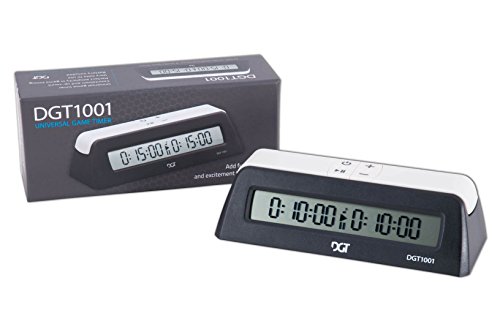
Best Chess Clock (2026): Delay, Increment and Why It Matters
A chess clock changes the game more than any other piece of equipment, because it turns thinking time into a resource you can run out of. The part beginners rarely have explained is that not all timed chess is the same: delay and increment are different rules that produce very different endgames, and the clock you buy determines which ones you can play.

Best Go Books (2026): Beginners Want Joseki and Need Life and Death
Every beginner reaches for a book of joseki, the memorised corner sequences, because they look like the secret. They are not. Strength at Go comes from reading life and death and recognising good shape, and a player who has memorised openings without those will play twenty moves of professional theory and then lose the group.