Best Diabolo for Beginners (2026): Bearings Change What You Can Learn
A bearing diabolo holds its spin almost indefinitely, which sounds like pure upside and is a real trade. Spin is what keeps a diabolo stable, so bearings make tricks much easier to hold together. They also remove the one thing that forces a beginner to learn a clean, powerful acceleration.
HobbyStack may earn a commission from links on this page at no extra cost to you. Our picks are chosen on merit; the commission helps fund the research.
- Bearings keep spin for minutes. Fixed axles lose it in seconds and teach acceleration.
- Heavier diabolos hold spin and resist wind. Light ones are quicker and twitchier.
- Rubber shells grip the string and survive drops. Plastic is faster and cracks.
- Carbon or aluminium sticks beat wooden ones. Wooden sticks warp and snap.
- Learn outdoors or in a hall. Ceilings are the main hazard.

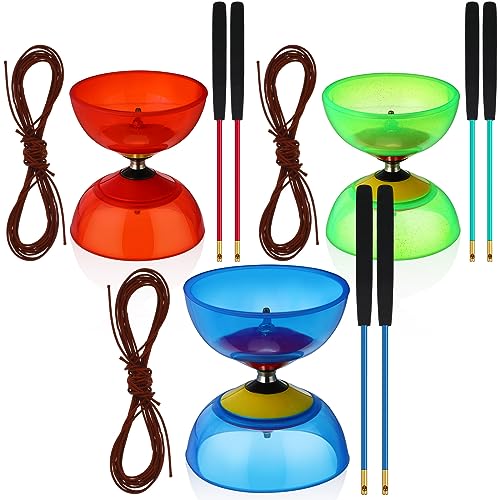

Bearings versus fixed axle
A diabolo spins on its axle while you accelerate it with the string. How that axle is built changes the whole experience.
A fixed axle is a solid shaft with the string running directly on it. Friction between string and axle is high, so spin decays quickly — a matter of seconds. That means you have to keep accelerating constantly, and the only way to do that is with clean, well-timed technique.
A bearing axle puts the string on a bearing that turns freely. Friction is tiny, so a diabolo can hold usable spin for minutes. Spin is what keeps a diabolo stable and upright, so this makes almost every trick dramatically easier to complete.
The counter-argument that experienced players make is real: bearings let you get away with poor acceleration. With a fixed axle, a sloppy throw loses spin immediately and you cannot do anything until you fix it. With bearings, you can muddle through on spin you banked earlier.
For a beginner, bearings are still the right call. The failure mode of a fixed axle is constant frustration, and most people quit before the technique arrives. Learn with bearings and work on acceleration deliberately.
More bearings is not better. The triple and five-bearing descriptions on these products refer to the bearing assembly, and what you actually care about is whether it spins freely and stays smooth. A gritty bearing is worse than no bearing.
Weight, shells and the sticks nobody thinks about
Weight is the other big variable. A heavier diabolo carries more angular momentum, which means it holds spin longer, resists wind, and feels stable and planted. A lighter one accelerates faster, reacts more quickly, and is twitchier in a breeze.
For learning, heavier is more forgiving. For high throws and fast tricks, experienced players often prefer lighter.
Shell material. Rubber shells are grippier on the string, quieter, bounce rather than shatter when dropped, and are what most modern diabolos use. Hard plastic shells are faster and louder and crack on a hard surface. Given that learning involves constant drops, rubber is the sensible choice.
Size. A full-size diabolo is roughly five inches across. The four-inch version here is genuinely for children: smaller, lighter, easier for short arms to manage, and harder for an adult to use well. Buying small for an adult is a common mistake.
Then the sticks, which decide more than people expect. Cheap sets include wooden sticks, which warp, splinter and snap at the tip. Aluminium and carbon fibre sticks are light, stiff and essentially permanent, and the difference in control is immediately obvious because a flexing stick blurs every input you make.
String is consumable. It abrades over the axle, gets grubby, and a worn string is slippery and unpredictable. Spare string costs almost nothing and should be treated like a tennis overgrip rather than a permanent part.
 Best for children
MAGICYOYO 4" Small Size Diabolo Yoyo for Kids with Pro Triple Bearing- Blue
A four-inch diabolo on a triple bearing, which is a genuinely child-sized piece of equipment rather than a cheaper adult one. The smaller diameter and lower weight suit shorter arms and less strength, and the bearing means spin lasts long enough for a child to attempt a trick rather than constantly re-accelerating. An adult will find it twitchy and hard to control precisely, so size this to the person using it.
What's good
- Properly sized for a child rather than just cheaper
- Triple bearing holds spin long enough to learn
- Light enough for shorter arms to manage
- Cheapest entry into the hobby
What's not
- Too small and twitchy for an adult
- Light weight means wind affects it badly
- Holds less spin than a full-size diabolo
- Will be outgrown
 Best for most beginners
MAGICYOYO High Performance Red Chinese Yoyo Diabolo with Pro Triple Bearing
A full-size diabolo on a triple bearing, which is the combination that actually gets a beginner from nothing to recognisable tricks. The bearing holds usable spin for minutes rather than seconds, so a mistimed throw is recoverable instead of ending the attempt, and full size means enough weight to feel planted and resist a breeze. It will let you get away with sloppy acceleration, so work on that deliberately.
What's good
- Full size, so it holds spin and resists wind
- Triple bearing makes tricks completable
- Enough weight to feel stable and planted
- The sensible default for an adult beginner
What's not
- Bearings let you skip learning clean acceleration
- Heavier to throw high than a light diabolo
- Stick quality is the usual compromise at this price
- String will need replacing early
 Best for going for multiples
Lenwen 3 Pack Diabolo Set, 5 Bearing Chinese Yoyo with Aluminum Sticks
Three diabolos with aluminium sticks, and the reason this is worth more than a single is that multiples are where the hobby goes. Two and three diabolos at once is a whole separate discipline and you cannot practise it without matching equipment, since mismatched weights make a two-diabolo pattern nearly impossible to control. Aluminium sticks are a real upgrade on the wooden ones cheap sets include. Overkill if you are still learning one.
What's good
- Three matching diabolos for multiple-diabolo work
- Aluminium sticks are stiffer than wood
- Matched weights make two-diabolo patterns possible
- Five-bearing assemblies hold spin well
What's not
- Pointless until you can handle one confidently
- Three shells to keep undamaged
- Only marginally dearer than one, which flatters it
- Carry bag rather than a hard case
A diabolo thrown properly goes high, and it comes down as a weighted object on a string. Ceilings, light fittings and televisions are the usual casualties, and a diabolo to the head genuinely hurts. Learn acceleration, grinds and string tricks indoors where it stays low on the string. Take anything that leaves the string outside or into a sports hall, and keep people well clear while you are learning to catch.
The first fortnight
Learn acceleration first. Diabolo on the string, right stick lifting in a smooth repeated motion. Everything depends on having spin, and spin comes from this. Spend the first sessions doing nothing else.
Fix the lean early. A diabolo that tips is the universal beginner complaint and it is almost always corrected the same way: move the stick on the side the diabolo is leaning away from, so the string runs slightly downhill toward the low side. Small corrections, constantly.
Keep the string taut but not tight. A slack string loses contact and a tight one fights you.
Then the trapeze. The first real trick and the gateway to most of the string work. It is reachable within a week.
Check the bearing when spin drops off. Grit in a bearing kills it, and a gritty bearing is worse than a fixed axle. Keep the diabolo off sandy ground and wipe the axle.
Replace the string before it fails. A worn string is slippery, unpredictable and will eventually snap mid-throw. It costs almost nothing.
Expect to drop it constantly. Rubber shells bounce, which is exactly why they are the right choice, and a scuffed diabolo works fine.
Before you buy
Bearings for a beginner. Fixed axle teaches better and frustrates more.
Full size for an adult, 4 inch only for a child.
Rubber shell, since learning means dropping it.
Check the sticks. Aluminium or carbon, not wood.
Buy spare string at the same time.
Diabolo questions
Should a beginner get a bearing or fixed-axle diabolo?
Does diabolo weight matter?
Why does my diabolo keep leaning to one side?
Are the sticks worth upgrading?
The full-size MAGICYOYO on a triple bearing is the one to buy for an adult beginner: enough weight to feel stable, and spin that lasts long enough to actually finish a trick. Take the four-inch version only for a child, since it is genuinely sized for one rather than merely cheaper. The three-pack becomes worth it when you move to multiples. Buy spare string whichever you choose.
Ready to actually do it?
The first diabolo quest takes an evening, and it tells you whether the gear was worth it better than any review can.
Start DiaboloThe HobbyStack editorial team researches each guide using practitioner communities, published resources, and direct input from active hobbyists. Every guide is reviewed for accuracy before publication and updated when practices change.
About our editorial process →More gear guides
All guides
Best Cardistry Cards (2026): A Deck Is a Consumable, Not a Purchase
A cardistry deck has a working life measured in weeks, not years. The coating wears, the edges soften, the cards start to clump, and fans that opened cleanly on Monday will not by Friday. Which means the single most useful thing a beginner can know is to buy cheap decks in bulk and stop treating any one of them as precious.

Best Kendamas for Beginners (2026)
A kendama is a wooden ball-and-cup skill toy, and the one that makes it click for a beginner has a slightly tacky paint that grips the ball so it does not slide off the cups. A cheap glossy one is genuinely harder to learn on. Here are three, from a trusted starter to a premium competition kendama.

Best Weighted Hula Hoops for Beginners (2026)
The trick to hula hooping as an adult is not skill, it is the hoop. The tiny light hoops from childhood fall straight down; a bigger, weighted hoop turns slowly enough to actually keep up. Here are three beginner hoops, from a simple weighted one to a heavier ACU Hoop.

Best Footbag (2026): Panel Count Decides Whether It Stalls or Bounces
A two-panel sand bag and a thirty-two-panel bag are barely the same object. The first is soft, dead, and sits still on your foot. The second is round, lively, and will bounce off. Panel count and fill decide which tricks are even possible, and almost nobody mentions it when you buy your first one.

Best Beginner Harmonica (2026): 3 Honest Picks
Here is the honest truth most gear guides skip: the harmonica is one of the cheapest instruments to start, and the thing that actually matters is not spending more, it is not buying a toy. A real 10-hole diatonic harmonica in the key of C from a known brand is airtight, stays in tune, and lets you bend notes, which is the whole point. The cheap no-name harp and the giant multi-key gift set fight you the entire way, drift out of tune within a week, and make you feel like you have no talent when the truth is the instrument is the problem. So this guide is not about which expensive harp to buy, it is about getting one honest, well-made harmonica in the right key so you actually enjoy learning. Key of C is the standard beginner key, nearly every lesson, song, and YouTube tutorial is in C, so start there. All three picks are proper 10-hole diatonics in C with plastic combs, and even the dearest one here is cheap. Here are three good ones, and honest advice on how little you need to spend.

Best Beginner Ukulele (2026): Soprano, Concert, and Tenor Picks
The great thing about the ukulele is that a good beginner one is cheap and genuinely easy to start on. The main decision is not budget, it is size: soprano, concert, or tenor. They are all tuned the same and played the same, they just differ in body size, which changes the tone and how much room your fingers have. All three picks here are from Kala, the brand most teachers point beginners toward, so you get a properly set-up instrument that stays in tune rather than a toy that fights you.