Best Yo-Yo String (2026): The Cheapest Thing That Changes How It Plays
String is the part of a yo-yo nobody thinks about and the part that decides whether tricks work. It costs pennies, it wears out in hours of play, and a stretched, fraying string is behind most of the sudden inability to land something you had yesterday. Changing it is the cheapest fix in the hobby.
HobbyStack may earn a commission from links on this page at no extra cost to you. Our picks are chosen on merit; the commission helps fund the research.
- Polyester for modern unresponsive play. Cotton for looped and responsive tricks.
- String is consumable. Change it every few hours of play, or when it greys and stiffens.
- A tight string binds and returns. A loose string sleeps longer. Adjust by twisting.
- Thicker string is more responsive. Thinner sleeps longer and whips faster.
- A snapped string sends a metal yo-yo across the room. Replace before it frays through.
 YoYoFactory Polyester, 10 packTrying polyester$3Check price
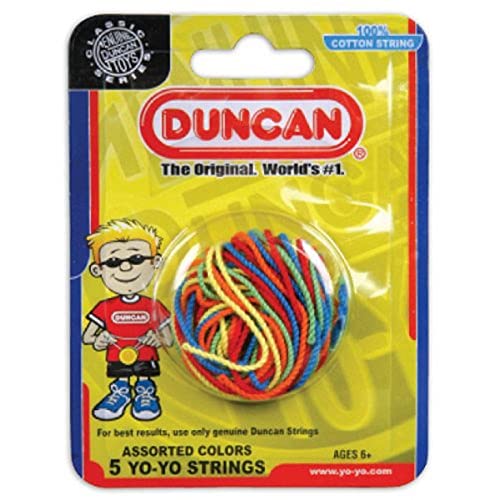 Duncan Cotton, 5 packResponsive play$5Check price
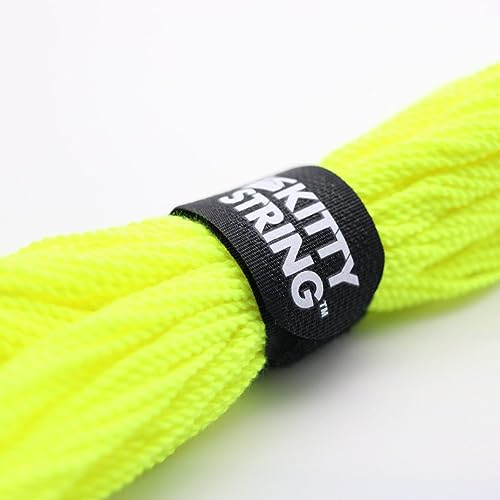 Our pickKitty String First Class Fat, 100Most players$33Check price
Polyester or cotton
The fibre decides how the yo-yo behaves, not just how long the string lasts.
Cotton is the traditional string and it is what came on yo-yos for most of a century. It grips the axle readily, which makes a yo-yo responsive — it comes back up when you tug. That is what you want for looping tricks and for anything where the yo-yo needs to return on demand. Cotton also wears out quickly and absorbs moisture from your hands.
Polyester is the modern standard. It is slicker and far more durable, which means the yo-yo sleeps at the bottom of the string for much longer instead of climbing back up. Long sleep times are what string tricks are built on, so almost all modern play uses polyester.
The practical rule: if your yo-yo has a bearing and is meant to be unresponsive, use polyester. If it is a fixed-axle or responsive yo-yo and you are looping, cotton does the job better.
Blends exist and sit between the two. Most players end up on polyester.
Tension, thickness and when to change it
String tension is the twist in the string, and it changes as you play — every throw adds or removes a little. Too tight and the string binds against itself and the yo-yo snaps back unexpectedly. Too loose and it goes slack and floppy, and slack tricks stop catching.
Adjusting it takes seconds: let the yo-yo hang and spin freely to unwind, or pinch the string and twist it by hand. Experienced players do this constantly without thinking about it.
Thickness is the other variable. Thicker string sits more snugly in the gap, so it is more responsive and better for binds. Thinner string sleeps longer and whips faster for slack tricks. The Kitty String here is a fat 12-strand, which is the popular middle for modern play.
When to change: when it greys and stiffens, when the tension will not hold, when it feels rough, or when you can see fraying near the axle. That is typically a few hours of play.
A string that snaps mid-throw sends a metal yo-yo across a room at speed.
 Cheapest way to try polyester
YoYoFactory 100% Polyester String 10 Pack (Assorted Colors)
Ten polyester strings from an established yo-yo maker, for about the price of a coffee. It is the right way to find out whether you prefer polyester to the cotton that likely came on your yo-yo, without committing to a hundred of anything. Ten strings is roughly a month of regular play. Beyond that there is no reason to keep buying in tens when the bulk packs cost a fraction per string.
What's good
- 100% polyester at a trivial price
- Enough to find out if you prefer it to cotton
- From an established yo-yo brand
- Assorted colours
What's not
- Far dearer per string than a bulk pack
- Ten strings goes in about a month
- Standard thickness with no choice
- Not a long-term way to buy string
 Best for responsive play
Duncan Toys Cotton Yo-Yo String
Cotton, which matters because it is a different tool rather than a cheaper one. Cotton grips the axle more, so the yo-yo returns when you tug it — that is exactly what looping tricks and fixed-axle play need, and polyester makes both harder. If you are working through classic responsive tricks on a Duncan-style yo-yo, this is the correct string. It wears faster than polyester and it will not give you long sleep times.
What's good
- Cotton grips the axle, so the yo-yo returns on a tug
- The right string for looping and fixed-axle play
- Traditional feel that classic tricks are built around
- Cheap and widely available
What's not
- Wears out considerably faster than polyester
- Short sleep times — wrong for modern string tricks
- Absorbs moisture from your hands
- Only five strings
 Best for most players
Kitty String First Class 100 Pack Yo-Yo String
A hundred strings, which sounds absurd and is the sensible way to buy a consumable that lasts hours. Kitty String is a favourite among professional players, and this is the Fat version: 12 strands of polyester, which still whips and handles slack well while sitting snugly enough for reliable binds. Strings run 120 to 125cm. Note they arrive unknotted, so you tie your own finger loop to the length you want.
What's good
- A hundred strings — the cheapest per string by far
- 12-strand fat sits well for binds and still whips
- A professional favourite
- Untied, so you set your own loop and length
What's not
- Arrives unknotted — you tie every finger loop yourself
- A hundred strings is a commitment
- Fat gauge is not everyone's preference
- Polyester only, so wrong for looping
String is a consumable that lasts hours, not months. A stretched, greying string holds tension badly, sleeps poorly and makes tricks you had yesterday stop working — and most players blame themselves or the yo-yo. It costs pennies. If a string feels stiff, looks grey near the axle, or will not hold its tension, put a fresh one on before you troubleshoot anything else.
Sizing the loop, and the two knots
Bulk string usually arrives unknotted, which puzzles people the first time. It is deliberate: you set the length to your own height.
Length. Standing, the yo-yo should sit at about your navel when hanging from your finger. Longer gives more room for string tricks; shorter is easier to control. Cut and tie to suit yourself.
The finger loop. Tie a slipknot at the end, adjust it to fit your middle finger snugly at the base of the nail — not tight enough to cut off circulation, not loose enough to fly off.
The axle loop is not a knot. The string is doubled and twisted, and the yo-yo axle sits inside the loop of that twist. It is not tied on. If someone has knotted a string onto an axle, that is wrong and it will not sleep.
Wear it on the middle finger, at the base of the nail. Index finger is a common beginner habit and gives less control.
And keep spares in a pocket. Strings break at inconvenient moments.
Before you buy
Polyester for unresponsive bearing yo-yos. Cotton for responsive and looping.
Buy in bulk. String is a consumable and hundred packs cost a fraction per string.
Change it every few hours of play, or when it greys and stiffens.
Adjust tension by hand as you play. It changes constantly.
Tie the loop to your own height, roughly navel level.
Yo-yo string questions
Polyester or cotton yo-yo string?
How often should I change yo-yo string?
What is string tension?
Why did my string arrive without a knot?
Buy Kitty String in bulk if you play regularly — a hundred strings costs a fraction per string of any small pack, and string is a consumable that lasts hours. Take the YoYoFactory ten pack first if you just want to find out whether you prefer polyester to what came on your yo-yo. Buy Duncan cotton only if you are doing responsive or looping tricks, where polyester actively works against you.
Ready to actually do it?
The first yo-yoing quest takes an evening, and it tells you whether the gear was worth it better than any review can.
Start Yo-yoingThe HobbyStack editorial team researches each guide against manufacturer specifications, published resources and practitioner sources. Every product is checked for availability and described against its current listing before publication, and prices are re-checked when guides are updated.
About our editorial process →More gear guides
All guides
Best Yo-Yos for Beginners (2026)
The one thing that makes learning a yo-yo click is starting with a responsive one that comes back with a tug. Get that and you learn the throw and basic tricks fast; start with a pro unresponsive yo-yo and it just sleeps at the bottom of the string and frustrates you. Here are three, from a $14 responsive plastic to a metal you grow into.

Best Juggling Balls for Beginners (2026): 3 Honest Picks
Here is the good news that juggling gear pages tend to bury: you do not need anything fancy to learn, and the right tool is also one of the cheapest. Soft beanbag balls, the kind that land with a dull thud and stay put instead of bouncing or rolling under the sofa, are genuinely the best way to learn to juggle. You are going to drop a lot early on, everyone does, and a ball that rolls away turns every single drop into a chase across the room. Beanbags do not roll. That one quality matters more than brand, colour, or price. You do not need stage balls, LED balls, or anything a professional uses, those come much later, if ever. All three picks here are soft, three-ball beanbag sets in the 90 to 130 gram range that most jugglers settle on, and the ladder is simple: a cheap, soft set to start, a quality all-purpose set that most people should just buy, or a durable pro-grade set that gets nicer with use and lasts for years. Here are three good ones, and honest advice on how little you actually need to spend.

Best Kendamas for Beginners (2026)
A kendama is a wooden ball-and-cup skill toy, and the one that makes it click for a beginner has a slightly tacky paint that grips the ball so it does not slide off the cups. A cheap glossy one is genuinely harder to learn on. Here are three, from a trusted starter to a premium competition kendama.
Best Playing Cards for Card Magic (2026): 3 Honest Picks
Here is the honest truth most gear guides skip: a standard deck of Bicycle cards, the kind you can buy for about four dollars at any supermarket, is genuinely all you need to learn almost every card trick worth knowing. Nearly every card magician alive learned on exactly that deck, and most still perform with it. The sleights, the moves, the classics in every beginner book all assume an ordinary deck of cards, not a special one. So this is not a guide about buying your way to better magic, because you cannot, the skill is entirely in your hands. It is a guide to three good decks and the honest, small differences between them: a cheap standard Bicycle to start and stick with, a classic magician's paper deck that fans and springs a touch more smoothly once your hands know what they are doing, and a premium deck that feels lovely and looks the part but does nothing your first deck cannot. One thing up front: these are all real decks you also just play cards with, not gimmick or trick decks. You do not need those to learn card magic. Here are three good ones, and honest advice on whether to bother going past the first.
Best Diabolo for Beginners (2026): Bearings Change What You Can Learn
A bearing diabolo holds its spin almost indefinitely, which sounds like pure upside and is a real trade. Spin is what keeps a diabolo stable, so bearings make tricks much easier to hold together. They also remove the one thing that forces a beginner to learn a clean, powerful acceleration.

Best Microphone for Singing (2026): 3 Picks from USB to Studio
The right first vocal microphone depends less on brand than on two questions: how will you plug it in, and how treated is your room? A USB microphone plugs straight into your computer and is the simplest, cheapest start. An XLR microphone sounds better and lasts a lifetime but needs an audio interface to run it. And for a normal, untreated room, a dynamic microphone (which ignores room echo) is far more forgiving than a sensitive studio condenser. Here are three excellent vocal mics, from a versatile plug-and-play starter to a studio-grade classic, and the honest advice on which suits your setup.