Best Gaming Headset (2026): Wired, Wireless and What Actually Matters
Most gaming headset marketing is about surround sound. Most actual complaints are about weight, clamp pressure and a microphone that makes you sound like a drive-through. The specifications that decide whether you still like a headset after six months are comfort and the mic, and neither appears in the headline.
HobbyStack may earn a commission from links on this page at no extra cost to you. Our picks are chosen on merit; the commission helps fund the research.
- Comfort decides everything. A headset you take off after an hour is a headset you stop using.
- The microphone is what other people experience. It is the half of the purchase you never hear.
- Wired is cheaper, lighter, has no battery and never drops out. Wireless buys you freedom, not fidelity.
- Virtual surround is a software effect. It is fine, it is not a reason to choose a headset.
- Check platform support before buying — PlayStation, Xbox and PC do not all accept the same wireless dongles.
 HyperX Cloud Stinger 2 CoreStarting out$25Check price
 Our pickSteelSeries Arctis Nova 3XMost people$100Check price
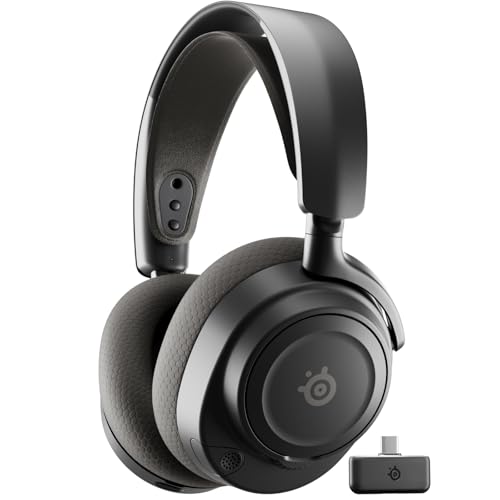 SteelSeries Arctis Nova 7 Gen 2Long sessions$170Check price
Comfort is a specification, it is just not printed
Two things make a headset uncomfortable: weight and clamp force. Weight matters over hours — anything under about 300g is generally fine, and much above that starts to press on the top of your head. Clamp force is how hard it squeezes, and it is what causes the ache around the temples and behind the ears, particularly for anyone wearing glasses.
Ear pad material matters more than it sounds. Fabric or mesh breathes and stays cool; leatherette seals better and isolates more but gets hot and sweaty in long sessions. There is no right answer, but it is the thing people actually notice.
If you wear glasses, look for softer pads and lower clamp — the arms of your frames get pressed into the side of your head, and a tight headset becomes genuinely painful in about forty minutes.
The microphone is the half you never hear
You hear your game through the headset. Everyone else hears you through the mic — and you have no idea what you sound like unless you record yourself, which almost nobody does.
What to look for: a flip-to-mute boom is the most reliable design, because muting is physical and unambiguous. Noise-cancelling on the mic helps if you have a mechanical keyboard or a room with other people in it. And a sidetone feature (hearing your own voice in the headset) stops you shouting, which is what everyone does when their ears are covered.
Record yourself in the software that came with the headset, or a voice memo, before you decide you like it. Thirty seconds tells you what your friends have been too polite to mention.
 Best for starting out
HyperX Cloud Stinger 2 Core
Very light, genuinely comfortable, and cheap enough that it is hard to argue with as a first headset. The weight is the thing that makes it work — a light headset with modest clamp is comfortable for hours in a way that expensive heavy ones often are not, and comfort is what you will actually judge it on. Wired, so there is no battery to charge, no dongle to lose, and no dropouts. The mic is a swivel-to-mute boom, which is the design that never leaves you wondering whether you are muted. Sound is decent rather than special and the build is plastic. For a first headset, or a spare, this is the right amount to spend.
What's good
- Very light — comfortable for long sessions
- Wired: no battery, no dongle, no dropouts
- Swivel-to-mute mic is unambiguous
- Costs very little
What's not
- Plastic build, feels its price
- Sound is fine rather than good
- No wireless
- Limited adjustment range
 Best for most people
SteelSeries Arctis Nova 3X Wireless Multi-Platform Gaming
The point at which a headset stops having obvious compromises. Wireless with a proper low-latency connection rather than plain Bluetooth, which matters in anything competitive — Bluetooth latency puts sound behind the picture in a way you feel before you consciously notice. Multi-platform, so it works across console and PC rather than locking you to one. The retractable mic is good enough that people will not ask you to repeat yourself, and the app gives you an EQ and sidetone. The suspension-style headband spreads weight rather than concentrating it, which is why it stays comfortable. If you want one headset and no regrets, buy at this level.
What's good
- Low-latency wireless, not just Bluetooth
- Works across platforms
- Genuinely good mic
- Comfortable headband design
What's not
- Four times the budget pick
- A battery to remember to charge
- App required for the best settings
- Dongle is another thing to lose
 Best for long sessions
SteelSeries Arctis Nova 7 Wireless Gen 2 Gaming Headset
The two upgrades here are both about time rather than sound. Battery life past fifty hours means you charge it weekly instead of thinking about it daily, which quietly removes the most annoying thing about wireless. And simultaneous wireless and Bluetooth means game audio and your phone at once — a call, music, or Discord on a second device without unplugging anything. Audio quality is a step up from the mid pick but not a dramatic one; if you are choosing on sound alone, the gap does not justify the price. Choose it because you play in long stretches and want to stop managing the headset.
What's good
- 50+ hour battery — charge it weekly
- Wireless and Bluetooth at the same time
- Best mic of the three
- Premium build and pads
What's not
- Most expensive by a distance
- Sound gain over the mid pick is modest
- Heavier than the budget pick
- Still a battery to manage
Open a voice recorder, say thirty seconds into the mic, and listen back. It is the only way to know what your friends have been hearing, and it is the single most useful test you can run on a headset — far more informative than any surround-sound demo.
Wired or wireless, honestly
Wired is cheaper for the same audio quality, weighs less, never runs out of charge, and cannot drop out. The cable is the entire downside, and if you sit at a desk it is barely a downside at all.
Wireless buys freedom of movement, not better sound. Modern low-latency dongles are genuinely fine for competitive play — plain Bluetooth is not, because its latency puts audio noticeably behind the picture.
One practical trap: dongles are platform-specific more often than people expect. A headset advertised for PlayStation may not have a working wireless mode on Xbox. Check the exact platform before buying, not the box art.
Before you buy
Weight and clamp force decide comfort. Under ~300g is a good sign.
Wear glasses? Prioritise soft pads and low clamp above everything.
Record yourself on the mic before deciding you like it.
Check your exact platform supports the wireless mode.
Ignore virtual surround claims — it is software, not a reason to choose.
Gaming headset questions
Wired or wireless gaming headset?
Does an expensive gaming headset sound better?
Is virtual surround sound worth it?
What should I look for if I wear glasses?
Buy on comfort and the microphone, not on surround-sound claims. The SteelSeries Arctis Nova 3X is the one for most people — low-latency wireless, a mic that does its job, and a headband that stays comfortable. The HyperX Cloud Stinger 2 Core is genuinely good value if you sit at a desk and do not need wireless. The Nova 7 Gen 2 is worth it for the fifty-hour battery and dual audio if you play in long stretches. Whatever you buy, record yourself on the mic before you settle.
Ready to actually do it?
The first video gaming quest takes an evening, and it tells you whether the gear was worth it better than any review can.
Start Video GamingThe HobbyStack editorial team researches each guide against manufacturer specifications, published resources and practitioner sources. Every product is checked for availability and described against its current listing before publication, and prices are re-checked when guides are updated.
About our editorial process →More gear guides
All guides
Best Gaming Monitor for Beginners (2026): 3 Picks from 1080p to 240Hz
Your first proper gaming monitor is one of the biggest upgrades you can make, and it comes down to three numbers: resolution (how sharp), refresh rate (how smooth), and response time (how quick). The one you feel most is refresh rate. Going from an ordinary 60Hz screen to 144Hz or more makes everything look noticeably smoother, and it is the whole reason to buy a gaming monitor. Here are three good ones, from an affordable 1080p screen to get you into high-refresh gaming, up to a fast 240Hz do-it-all display.

Best Cooperative Board Games (2026): Playing With the Table, Not Against It
Cooperative games are the easiest way into board games with people who do not think they like board games, because nobody gets knocked out and nobody has to be the one who ruins a friendship over a trade. They also have one specific failure mode that no box warns you about: the loudest player quietly starts telling everyone else what to do.

Best Gateway Board Games for Beginners (2026): 3 to Start With
Here is the honest truth: you do not need all three of these, any one of them is enough to get a good game night going. Gateway games are the ones built to win over people who think they do not like board games, the friends and family who groan at the word Monopoly. They teach in about five minutes, finish in under an hour, and leave everyone wanting another round. What they are not is Monopoly, Risk, or Trivial Pursuit, the long, luck-heavy, knock-you-out games most of us grew up quietly dreading. This guide is three different games at rising price and complexity, not three versions of one thing. Start with an easy, gorgeous crowd-pleaser, move to the classic that got a generation into the hobby, and step up to a richer game once your table is hooked. Buy one, get it played a few times, and add another only when your group is asking for more. Here are three good ones, and honest advice on where to start.

Best Beginner Chess Sets (2026): 3 Real Picks
A tournament-style set is the right first chess set: standard-size Staunton pieces, weighted so they don't tip, on a board with 2.25 inch squares. Skip the decorative themed sets for now. The one real decision is vinyl (cheap, portable, what clubs actually use) versus wood (nicer to own, costs more). Everything below is a set people genuinely buy and play on.
Best Chess Clock (2026): Delay, Increment and Why It Matters
A chess clock changes the game more than any other piece of equipment, because it turns thinking time into a resource you can run out of. The part beginners rarely have explained is that not all timed chess is the same: delay and increment are different rules that produce very different endgames, and the clock you buy determines which ones you can play.

Best Poker Chip Set for Beginners (2026): 3 Sets for Every Home Game
A proper chip set is what turns a card game into poker night, and the thing that separates a cheap set from a great one is the weight and feel of the chips. A 500-count set covers a full table, and heavier clay-composite chips just feel like the real thing. Here are three good sets, from a light-but-complete starter to a casino-grade box.