Best Macrame Cord (2026): Single Strand Combs Out, Three-Ply Does Not
Cord comes in three constructions and they behave completely differently at the one moment that matters most: whether you can comb the ends out into soft fringe. Single strand combs beautifully. Three-ply gives you a crinkled, curly fringe instead. Braided will not comb at all. Buy the wrong one for your project and the finish is decided for you.
HobbyStack may earn a commission from links on this page at no extra cost to you. Our picks are chosen on merit; the commission helps fund the research.
- Single strand combs into soft fringe. Three-ply gives crinkled curls. Braided does not comb.
- Three-ply holds knot definition best. Single strand is softer and easier on the hands.
- 3mm is the general-purpose size. 5mm for bold statement pieces, 2mm for jewellery.
- Buy far more than you think — roughly four times the finished length per strand.
- Cotton is standard. It is soft, takes dye and combs; synthetics do not.
 NOANTA 3mm, 109 yardsLearning$6Check price
 Munzong 5mm, 109 yardsBold pieces and colour$14Check price
 Our pickBochiknot 3mm Single Strand, 330 yardsMost projects$25Check price
The three constructions
This is the decision, and cord is usually sold without explaining it.
Single strand — sometimes called single twist — is one bundle of fibres given a light twist. It is soft, gentle on the hands over a long session, and crucially it combs out into flowing, brushed fringe, because the fibres are essentially parallel. It is what almost every soft-fringed wall hanging is made from. The trade is that it is less firm, so very crisp knot definition is harder, and it can fluff with handling.
Three-ply (or 3-strand) is three single strands twisted together, like rope. It holds its shape, gives excellent knot definition — a square knot looks sculptural — and is stronger. Untwisted and combed it gives a crinkled, wavy fringe rather than a smooth one, which some people prefer and some do not expect.
Braided is a woven sheath, sometimes around a core. It will not comb out at all, it does not fray, and it is the tidiest and most durable. Right for plant hangers and anything structural, wrong for fringe.
So: single strand for fringe, three-ply for definition, braided for durability.
How much cord you actually need
Running out mid-project is the classic macrame disaster, because a join is visible and dye lots differ between orders.
The working rule most people use is four times the finished length, per strand. So a wall hanging you want to finish at 30 inches needs strands around 120 inches, and each of those is folded in half when mounted — meaning you cut about 240 inches and get two working strands from it.
Multiply that by the number of strands across the piece and the numbers get large quickly. A modest wall hanging can easily eat a hundred yards.
Denser knotting needs more. Square knots consume roughly the four-times figure; heavily knotted patterns and anything with lots of spirals can want six times or more.
Round up generously. Cord is cheap, a join is permanent, and leftovers become keyrings.
Buy one roll rather than two. Natural cotton varies subtly between batches, and two rolls in one piece can show as a faint stripe under certain light. This is a real argument for the 330-yard roll over two 109-yard ones.
 Best for learning
NOANTA Natural Macrame Cord 3mm x 109Yards
109 yards of 3mm twisted cotton for the price of a coffee, which makes it the obvious thing to learn knots on before committing to a project. The cotton is soft enough not to hurt your hands over a long session, which matters more than it sounds — coarse cord makes practising unpleasant and people give up on the tension rather than the pattern. 3mm is the general-purpose size: fine enough for detail, substantial enough that knots read clearly. Being a twisted cord rather than single strand, the fringe it produces is crinkled and wavy rather than smooth and brushed, which is a genuine aesthetic difference and not a fault. Natural colour only, and 109 yards goes faster than you expect once you start a real piece.
What's good
- Cheap enough to practise knots without counting
- Soft on the hands over a long session
- 3mm is the most versatile size
- Good general-purpose cord for plant hangers
What's not
- Twisted, so fringe combs out crinkled not smooth
- 109 yards disappears fast on a real project
- Natural colour only
- Less consistent than the premium cord
 Best for bold pieces
Army Green Macrame Cord 5mm x 109 Yards
109 yards of 5mm cotton in army green, and both of those are the point. Five millimetres is a step up in scale that changes what a piece looks like entirely: knots become sculptural objects you read from across a room rather than texture you read up close, and a large wall hanging works in far fewer strands, which means less time and a bolder result. It is also easier on the hands, since thicker cord needs less grip strength to tension. Colour is the other half — natural cotton is the default and a strong colour makes a piece look deliberate rather than default. The trade is that 5mm eats length far faster than 3mm, detail work is impossible at this scale, and 109 yards is not many yards of 5mm.
What's good
- 5mm gives bold, sculptural knot definition
- Fewer strands needed for a large piece
- Easier to tension than fine cord
- Colour rather than the default natural
What's not
- 5mm consumes length very quickly
- Too coarse for detail or jewellery
- 109 yards is a modest amount at this thickness
- Dyed cotton can vary between batches
 Best for most projects
BOCHIKNOT Single Strand Macrame Cord 3mm x 330yds
Single strand recycled cotton at 3mm, and 330 yards on one roll — three times the others — which together make it the pick. Single strand is the construction that combs out into soft, feathery fringe, which is the finish most macrame wall art is actually going for, and you simply cannot get it from a twisted cord. It is soft on the hands through a long session and Bochiknot note it holds knots without slipping, which is the usual worry with softer cord. The 330-yard roll matters beyond value: one roll means one dye lot, so there is no faint stripe where two rolls meet, and natural cotton does vary subtly between batches. Over twenty colours. Recycled cotton, which is a genuine rather than decorative claim here.
What's good
- Single strand — combs into soft brushed fringe
- 330 yards means one dye lot for a whole piece
- Soft on the hands and holds knots without slipping
- Over twenty colours available
What's not
- Softer, so knot definition is less crisp than 3-ply
- Single strand fluffs with heavy handling
- More cord than a first project needs
- Four times the budget roll
Natural cotton varies subtly between production batches, and two rolls used in the same piece can show as a faint band under raking light — which you will notice forever and nobody else will. Work out your total generously and buy it in a single roll where you can. It is also why running out mid-project is worse than it sounds: the replacement will not quite match.
Getting fringe right
Fringe is the part people photograph, and it is mostly technique rather than cord.
Comb it wet or dry, but comb it a lot. A pet slicker brush is the tool most macrame makers use — fine wire pins, cheap, and far more effective than a hair comb. Work from the ends upward in small sections, exactly as you would untangle hair.
Steam it. A garment steamer or an iron held above the fringe relaxes the fibres and drops the crinkle out, which is what turns a frizzy fringe into a flowing one. This is the step people miss.
Trim last, and trim with the piece hanging. Fringe hangs differently on a table than on a wall, and cutting it flat produces an uneven line once it is up.
Cut in stages. Take a little, step back, take a little more. There is no way back.
A hair straightener works on stubborn sections, on a low setting, which sounds odd and is a genuinely common trick.
And if the cord is three-ply, the crinkle is structural — combing gives you waves rather than smoothness, and steaming only softens it.
Before you buy
Single strand for combed fringe, three-ply for crisp knots, braided for durability.
3mm unless you want a bold statement piece, then 5mm.
Roughly four times the finished length per strand, and round up.
One roll rather than two, so the whole piece is one dye lot.
Buy a pet slicker brush at the same time. It is the fringe tool.
Macrame cord questions
What's the difference between single strand and 3-ply macrame cord?
How much macrame cord do I need?
What size macrame cord should I use?
How do I make macrame fringe soft and flowing?
Buy the Bochiknot single strand if you want soft combed fringe, which is what most macrame wall art is going for and what twisted cord physically cannot give you — and 330 yards on one roll means the whole piece comes from one dye lot. The NOANTA 3mm is the right thing to learn knots on for almost nothing. Go 5mm only for deliberately bold pieces. And buy a pet slicker brush, because the fringe is mostly combing.
Ready to actually do it?
The first macrame quest takes an evening, and it tells you whether the gear was worth it better than any review can.
Start MacrameThe HobbyStack editorial team researches each guide against manufacturer specifications, published resources and practitioner sources. Every product is checked for availability and described against its current listing before publication, and prices are re-checked when guides are updated.
About our editorial process →More gear guides
All guides
Best Macrame Kit for Beginners (2026): 3 Picks for Your First Knots
A macrame kit gives you the cord, the rings and dowels, and (crucially) a guide, so you can knot your first plant hanger or wall hanging without buying anything separately. The cord is the heart of it: soft 3mm cotton is the beginner standard. Here are three good ones, from a single-project starter to a big multi-project kit with a project book.

Best Beginner Crochet Hooks (2026): 3 Picks
A beginner crochet hook set gives you the common sizes (roughly 2mm to 6mm) in one case so you never have to guess which one your yarn needs. The one thing that actually matters starting out is a comfortable grip and a smooth hook head, because a hook that snags or cramps your hand is the fastest way to quit. Metal shafts with a soft rubber handle are the easy default.

Best Soap Carving Knife (2026): Sharp Enough to Slice, Not Crush
Soap is softer than wood and less forgiving of a dull blade. A sharp knife parts it cleanly; a blunt one compresses and tears, leaving a crumbling edge no amount of care recovers. Wood carving knives are the right tool, and the difference between a good session and a frustrating one is almost entirely the edge.

Best Soap Carving Tools (2026): Loop Tools Cut, Knives Only Slice
A knife slices soap, which is fine for the first rough shape and useless for a curve. To hollow a concave surface you need a loop or ribbon tool that shaves a thin controlled ribbon away, and that single tool change is what separates a carved bar from a whittled one.

Best Beginner Embroidery Kits (2026): 3 Starter Kits Worth Buying
A beginner embroidery kit is a box that has everything you need to start stitching in one go: a hoop, floss, needles, fabric, and usually a pattern already printed on the cloth. The one spec that actually matters for a first kit is whether the fabric comes stamped with a pattern, because tracing your own design is the thing most people give up on before they even start.
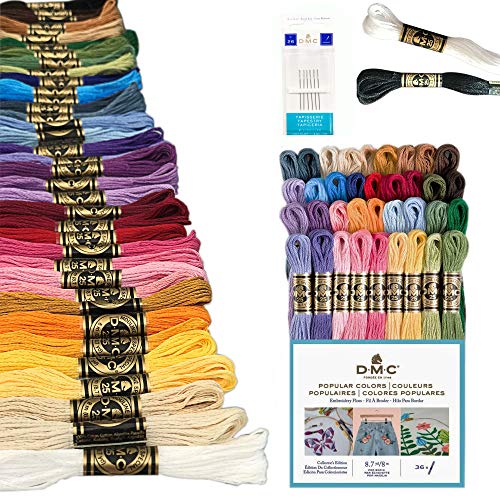
Best Embroidery Floss (2026): Six Strands, and You Rarely Use All Six
A skein of embroidery floss is six loosely twisted strands, and almost every pattern asks you to pull some of them out before you start. Stitching with all six because that is how it came off the shelf is the single most common beginner mistake, and it is why beginner work looks lumpy where it should look smooth.