Best Raspberry Pi Starter Kit for Beginners (2026): 3 Real Picks
There is one thing to understand before you buy, and almost every listing is vague about it: "starter kit" means two completely different products. Some kits are a bag of sensors, wires and LEDs that assume you already own a Raspberry Pi. Others include the computer itself, the power supply, the case and the SD card, so you can plug in and boot. Both are called starter kits, they look similar in a search, and buying the wrong one is the most common way a first project stalls before it begins. Here is how to tell them apart, plus three genuinely good options depending on which one you need.
HobbyStack may earn a commission from links on this page at no extra cost to you. Our picks are chosen on merit; the commission helps fund the research.
- Check whether the board is included. This is the single biggest buying mistake: many "starter kits" are accessories only and assume you own a Pi.
- If you own nothing, buy a kit with the board, power supply, case and SD card in it. Sourcing those separately costs more and goes wrong more often.
- If you already have a Pi, buy components instead. A sensor and breadboard kit is where the actual learning happens.
- 4GB is plenty to learn on. The extra RAM in the bigger kits matters for desktop use and heavy projects, not for your first year.
 SunFounder Raphael Ultimate Starter Kit for Raspberry Pi$59Components kit, board NOT includedSomeone who already owns a Pi and wants to actually build things
 CanaKit Raspberry Pi 5 Essentials Starter Kit (4GB)Pick$190Complete kit, Pi 5 board includedStarting from nothing and wanting it to boot on day one
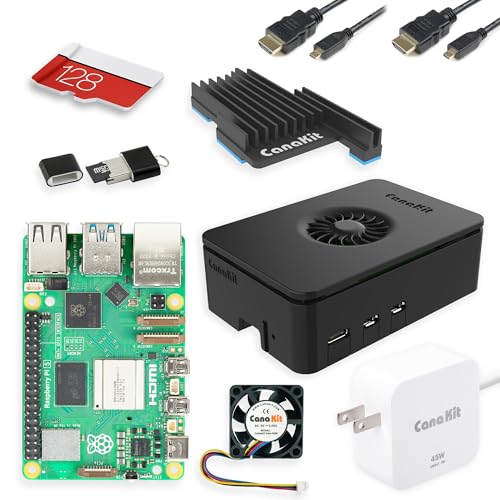 CanaKit Raspberry Pi 5 Starter Kit PRO (8GB, 128GB)$260Complete kit, 8GB board, 128GB storageUsing the Pi as a small desktop or heading for heavier projects
The confusion is worth spelling out because it costs people their first weekend. A Raspberry Pi is a small computer on a single board, roughly the size of a deck of cards, and on its own it does nothing: it needs a power supply (the Pi 5 is fussy about this and wants a proper 27W USB-C unit, not a phone charger), a microSD card with an operating system written to it, and usually a case and a fan so it does not throttle. A kit that includes all of that is sometimes called an "essentials" or "complete" kit and costs meaningfully more, because most of the price is the computer. A kit that includes a breadboard, jumper wires, resistors, LEDs, sensors and a project book is a components kit, costs far less, and is useless on its own. Both show up under the same search term. Read the listing for the words "board included" or check whether the price is under about fifty dollars, because at that price the computer is not in the box.
So buy for your situation rather than the biggest number. If you already own a Pi, or you are buying for someone who does, a components kit is the better purchase by a wide margin: it is where you actually learn, because wiring a circuit and making a light blink from your own code teaches more in an evening than any amount of reading. If you own nothing at all, buy the complete kit and accept the price, because the alternative is four separate orders, a power supply that turns out to be underpowered, and an SD card you have to flash before anything happens. And if you want the Pi to double as a small desktop machine or you already know you are heading toward heavier projects, more RAM and faster storage are worth paying for up front, since the board is not upgradable later.
 Best if you already have a Pi
SunFounder Raphael Ultimate Starter Kit for Raspberry Pi
This is the kit to buy if you already own a Raspberry Pi, and the wrong one if you do not, because the computer is not in the box. What you get is the part that teaches you something: a breadboard, jumper wires, resistors, LEDs, buttons, and a spread of sensors, along with an online course of projects that walk from blinking a light to reading a sensor and driving a display. That progression is the point. Reading about GPIO pins does very little; wiring one and watching your own code turn something on is what makes the concepts stick, and this kit gives you enough components to keep going for months rather than the handful you get in a token bundle. It supports the common Pi models including the Pi 5, 4B and Zero 2 W. The obvious caveat is the one people get caught by, so it is worth repeating: no board, no power supply, no SD card. If you have those already this is excellent value and the best learning per pound here. If you do not, buy the complete kit below instead.
What's good
- Large component and sensor spread, not a token handful
- Guided project course that builds up in difficulty
- Works across Pi 5, 4B, 3B+ and Zero 2 W
- Far cheaper than a kit containing the board
What's not
- Does NOT include the Raspberry Pi itself
- No power supply or SD card either
 Best for most people
CanaKit Raspberry Pi 5 Essentials Starter Kit (4GB)
If you own nothing, this is the one to buy, because it removes every way the first evening goes wrong. It contains the Raspberry Pi 5 board itself with 4GB of RAM, a proper high-current USB-C power supply, a case with active cooling, and a microSD card ready to go, which means you plug in a monitor and keyboard and you are running rather than troubleshooting. That matters more than it sounds. The Pi 5 genuinely needs an adequate power supply and will complain or throttle on a random phone charger, and flashing your own SD card is a small extra hurdle at exactly the moment enthusiasm is highest. The 4GB model is the right amount for learning: it runs the desktop, a browser, an editor and your own projects comfortably, and the jump to 8GB matters for heavy multitasking rather than for anything you will do in your first year. The trade-off is simply price, because most of it is the computer, and you get no sensors or breadboard, so pair it with a components kit when you want to start wiring things. For a first Pi bought from scratch, this is the sensible purchase.
What's good
- Everything needed to boot on day one, including the board
- Correct high-current supply, which the Pi 5 genuinely needs
- Active cooling and case included, so it does not throttle
- 4GB is ample for learning and general use
What's not
- Costs much more than a components kit, because it contains the computer
- No sensors or breadboard, so add a components kit to build circuits
 Best if it is doing real work
CanaKit Raspberry Pi 5 Starter Kit PRO (8GB, 128GB)
The step up, and worth it only if you already know what you want the Pi to do. This is the same complete-kit idea as the Essentials, so the board, supply, case, cooling and storage are all in the box, but with 8GB of RAM and a much larger 128GB card. Those two upgrades matter for specific things rather than for learning: 8GB lets the Pi work as a genuine light desktop with a browser and editor open together, and it gives headroom for containers, home automation stacks, or anything holding a lot in memory. The larger card matters if you are running a media server or storing data locally rather than just booting an OS. The important caveat is that the RAM is soldered, so unlike a desktop you cannot add more later, which is the honest argument for buying up front if you are confident. But most beginners are not doing any of that yet, and paying a large premium for headroom you may never use is the classic first-purchase mistake. Buy this if you have a specific heavier use in mind, and the Essentials kit if you are still finding out.
What's good
- 8GB gives real headroom for desktop use and heavier projects
- 128GB storage suits media servers and local data
- Complete kit, so nothing else to source
- RAM is not upgradable later, so buying up front is defensible
What's not
- Substantially more expensive than the 4GB kit
- The extra RAM does nothing for typical first-year learning
The most common Raspberry Pi buying mistake is ordering a components kit when you needed a complete one. If a "starter kit" costs well under the price of a Pi on its own, the computer is not included, and you will also need a power supply and an SD card before anything switches on. Read the listing for the board model, and if it is not named explicitly, assume it is not there.
Before you buy
Decide first whether you need the board. That single question sorts almost every kit on the market.
Use a proper high-current USB-C supply for a Pi 5. An old phone charger causes throttling and random reboots that look like software faults.
4GB is enough to learn on. Spend the difference on components you will actually wire up.
If a kit comes with a preloaded SD card, that saves a real step; otherwise you will flash Raspberry Pi OS yourself first.
Common questions
Does a Raspberry Pi starter kit include the Raspberry Pi?
How much RAM do I need on a Raspberry Pi?
Can I use a phone charger to power a Raspberry Pi 5?
Do I need a components kit as well?
It comes down to one question: do you already own a Raspberry Pi? If you do, the SunFounder components kit is the better buy and where the learning actually happens. If you are starting from nothing, the CanaKit Pi 5 Essentials kit is the sensible choice, because it boots on day one with the right power supply and no sourcing problems, and 4GB is genuinely enough to learn on. Only go for the 8GB PRO kit if you already have a heavier use in mind, since the RAM cannot be added later.
Ready to actually do it?
The first coding for fun quest takes an evening, and it tells you whether the gear was worth it better than any review can.
Start Coding for FunThe HobbyStack editorial team researches each guide using practitioner communities, published resources, and direct input from active hobbyists. Every guide is reviewed for accuracy before publication and updated when practices change.
About our editorial process →More gear guides
All guides
Best Smart Lights for Beginners (2026): 3 Picks from a $10 Bulb to a Full Hue Setup
Smart lighting is the easiest, most satisfying way into a smart home, and the first real decision is not brand but plumbing: do you want bulbs that connect straight to your Wi-Fi, or a system that runs on its own hub? Wi-Fi bulbs are cheap and take two minutes to set up, but they get slower and flakier the more you add. A hub system like Philips Hue costs more up front for the little bridge box, but it stays rock-solid across dozens of lights and reacts instantly. Here are three good starting points, from a single cheap Wi-Fi bulb to try the idea, to a proper hub-based Hue setup you can grow for years.

Best Smart Thermostat for Beginners (2026): 3 Picks That Cut Your Heating Bill
A smart thermostat is one of the few smart-home gadgets that pays for itself, by learning your schedule and not heating an empty house, most people save enough on energy to cover the cost within a couple of years. The first thing to check is not which brand but whether your heating system is compatible (most standard systems are, but you need to check your wiring, especially the 'C' wire). After that, the choice comes down to how hands-off you want it: a simple app-controlled thermostat, or one that learns and adjusts on its own. Here are three good ones, from an affordable no-frills model to a premium learning thermostat with room sensors.

Best Archival Brushes (2026): Soft, Dry, and Always Away From the Spine
The first rule of cleaning a book is that you almost never use water. Surface dirt comes off dry, with a soft wide brush and patience, and anything wet risks tidelines, cockling and lifting the very ink you were trying to save. The brush is the tool that does most of the real work.

Best Bottling Wand (2026): Fill to the Brim, Then Let It Drop
A bottling wand looks like a length of tube with a valve on the end, and the clever part is what happens when you lift it out. You fill the bottle right to the brim, and withdrawing the wand removes exactly its own volume, leaving the correct headspace every time without measuring anything.

Best Archery Finger Tab or Glove (2026): The Release Is the Shot
Everything you do before the release can be perfect and the arrow will still go wide if the string rolls off your fingertips rather than leaving cleanly. Finger protection is not mainly about comfort. It is about giving the string one consistent surface to leave from, every single time.

Best Leatherworking Awl (2026): Three Tools That Share One Name
Three quite different tools get sold as awls, and buying the wrong one is why people conclude that hand-stitching leather is impossibly hard. A scratch awl marks. A sewing awl carries thread. A diamond stitching awl makes the angled slits that saddle stitching depends on. They are not interchangeable.