Best Pottery Clay for Beginners (2026): Air-Dry, Stoneware or Porcelain
Clay is the one purchase in pottery where the right answer depends entirely on something outside the clay: whether you have a kiln. Air-dry clay needs none and will never hold water. Firing clay needs a kiln that reaches a specific temperature, and the number describing that temperature is on every bag — which is why buying clay before knowing your studio is how people end up with 25lb of something they cannot fire.
HobbyStack may earn a commission from links on this page at no extra cost to you. Our picks are chosen on merit; the commission helps fund the research.
- Ask your studio what cone they fire to, then buy clay for that. It is the only question that matters first.
- Air-dry clay needs no kiln and is never waterproof or food safe. It is for decorative work, not mugs.
- Cone numbers are temperature, not hardness. Cone 5-6 is mid-fire, where most studios sit.
- Stoneware is the forgiving default. Porcelain is beautiful and much harder to throw.
- Buy 25lb. Clay keeps indefinitely if sealed, and you use far more than you expect.
 AMACO Air Dry Clay (25 lb)No kiln access$42Check price
 Our pickLaguna B-Mix with Speckles, Cone 5Most beginners$70Check price
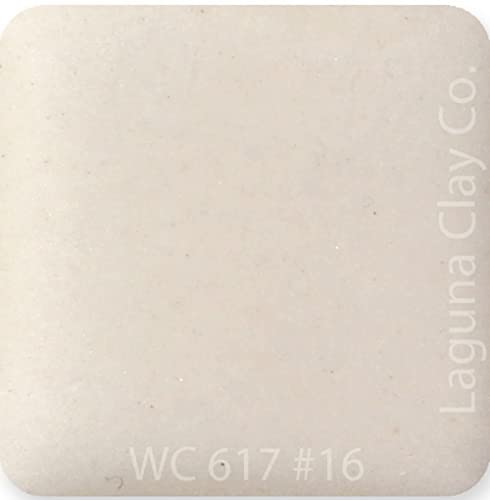 Laguna #16 Porcelain, Cone 6Once you can throw$87Check price
Cone numbers, which are temperatures
A "cone" is a small pyramid of ceramic material that bends at a known temperature — potters used them to judge a kiln before thermocouples, and the numbering stuck as the standard way to describe firing ranges.
What matters practically:
- Low-fire, cone 06-04 — around 1000°C. Bright glazes, more porous results.
- Mid-fire, cone 5-6 — around 1200°C. Where most community studios and home kilns sit, and where most beginner clay is sold.
- High-fire, cone 9-10 — around 1300°C. Traditional stoneware and porcelain, mostly in larger or gas kilns.
Confusingly, cones with a zero in front (06) are cooler than cones without (6). Cone 06 is low-fire; cone 6 is mid-fire.
Buy clay rated for the cone your kiln or studio actually fires. Clay fired too low stays porous and leaks; fired too high it slumps or melts, which is expensive for whoever owns the kiln.
Air-dry clay is a different material
Air-dry clay hardens by evaporation rather than by being fired, so no kiln is needed. That makes it genuinely useful for sculpture, decoration and for children.
What it cannot do is hold water. It never vitrifies, so it stays porous, softens if soaked, and is not food safe whatever you seal it with. A mug made from air-dry clay is an ornament.
It is also not practice for wheel-thrown pottery in the way people hope. It behaves differently under the hands, and the skills transfer only partly.
Buy it if you have no kiln access and want to make things. Do not buy it expecting it to be a cheaper route to pots you can drink from.
 Best without a kiln
AMACO AMA46319S Air Dry Clay
The answer when there is no kiln in your life and you want to make things anyway. It hardens in air over a day or two, takes detail well, and sands and paints readily, which makes it good for sculpture, ornaments and anything decorative. Twenty-five pounds is a lot of clay for the money. The limits are absolute rather than a matter of degree: it never vitrifies, so it stays porous, it will soften if genuinely soaked, and nothing you seal it with makes it food safe. Treat it as a modelling material rather than as pottery without the kiln, and it is excellent value. Expect the odd crack on thick pieces as they dry.
What's good
- No kiln required at all
- Takes fine detail, sands and paints well
- A lot of clay for the price
- Good for sculpture and children
What's not
- Never waterproof or food safe
- Can crack on thick pieces while drying
- Softens if soaked
- Only partly transfers to wheel work
 Best for most beginners
Laguna Clay | Cone 5 | B Mix with Speckles WC408
A mid-fire stoneware and the clay a great many studios put in beginners' hands, for good reasons. It is smooth enough to throw pleasantly but has enough tooth to stand up rather than collapsing the moment a wall gets thin, which is exactly the balance a beginner needs. It centres predictably and forgives uneven pressure. Fired at cone 5-6 it vitrifies properly, so pots hold water and are food safe with a suitable glaze. The speckles come from iron in the body and give finished pieces a warm freckled surface that looks deliberate under most glazes. Check your studio fires to cone 5-6 before buying, because that is the one thing that would make it useless.
What's good
- Forgiving to throw — stands up well
- Vitrifies at mid-fire: waterproof and food safe
- Speckling looks good under most glazes
- The common studio default
What's not
- Useless if your kiln does not reach cone 5-6
- Speckles will not suit every aesthetic
- Heavier to wedge than porcelain
- 25 lb is a commitment
 Best once you can throw
Laguna #16 Porcelain Clay, Cone 6 (25 lb)
Porcelain, and it is genuinely harder to work rather than simply more expensive. It has far less tooth than stoneware, which means it is more plastic and less willing to stand — walls collapse more readily, it warps more in drying and firing, and it punishes uneven pressure in a way stoneware forgives. What you get is the whitest, finest, most translucent finished ware there is, and glazes sit on it beautifully. Fired at cone 6 it vitrifies fully. Do not buy this as a first clay: you will conclude you cannot throw, when what is happening is that you are learning on the least forgiving material available. Come to it once cylinders are reliable.
What's good
- Finest, whitest finished surface
- Glazes look their best on it
- Fully vitrifies at cone 6
- Can be worked translucently thin
What's not
- Much less forgiving to throw
- Warps more in drying and firing
- Punishes uneven pressure
- Wrong choice for a first clay
One question to your studio — "what cone do you fire to?" — decides which clay you can use. Clay fired below its range stays porous and leaks; clay fired above it slumps or melts onto the kiln shelf, which is an expensive thing to explain. It takes ten seconds to ask and saves 25lb of unusable clay.
Keeping clay, and reclaiming it
Clay does not go off. Sealed in its bag it keeps indefinitely, and if anything it improves — sitting lets the water distribute evenly through the body, which potters call ageing.
If it dries out, it is not wasted. Break it into small pieces, cover with water until it slakes down to a slurry, then spread it on a plaster slab or a thick towel until it firms up to a workable consistency. Wedge it well and it is as good as new.
That is worth knowing before you buy, because it means 25lb is not a risk. The only clay you lose is clay you throw away.
Before you buy
Ask your studio what cone they fire to. Buy clay for that number.
No kiln? Air-dry clay, and accept it is decorative only.
Start on stoneware, not porcelain. Porcelain will convince you that you cannot throw.
Buy 25lb. Clay keeps indefinitely and you use more than you expect.
Keep it sealed. Dried-out clay can be reclaimed, but it is a chore.
Pottery clay questions
What clay should a beginner start with?
What do cone numbers mean?
Can I use air-dry clay to make mugs?
Is porcelain harder to throw than stoneware?
Ask your studio what cone they fire to before you buy anything. If the answer is cone 5-6, the Laguna B-Mix is the clay to learn on — forgiving to throw, properly waterproof once fired, and what most studios hand beginners anyway. If you have no kiln, AMACO air-dry lets you make things today, as long as you accept they are decorative. Leave porcelain until you can throw a reliable cylinder; starting on it will just convince you that you cannot.
Ready to actually do it?
The first pottery quest takes an evening, and it tells you whether the gear was worth it better than any review can.
Start PotteryThe HobbyStack editorial team researches each guide against manufacturer specifications, published resources and practitioner sources. Every product is checked for availability and described against its current listing before publication, and prices are re-checked when guides are updated.
About our editorial process →More gear guides
All guides
Best Pottery Tool Set (2026): Six of the Twelve Do Nearly Everything
Open a twelve-piece pottery set and six tools will do nearly all your work: the wire cutter, a wooden rib, a metal rib, a loop trimming tool, a sponge and a needle tool. The rest get picked up once, found to duplicate something, and left in the canister for years.
Best Pottery Wheel for Beginners (2026): 3 Real Picks
A pottery wheel is the tool that turns a lump of clay into a bowl, and the good news for a beginner is you do not need a studio-grade machine to learn on. What you actually need is enough motor torque to hold speed when your hands press on the clay, a pedal to control that speed, and a wheel head big enough for the pieces you want to throw. Cheap toy wheels bog down the moment you center clay, which is exactly when a beginner needs steady power. Here are three genuinely capable wheels across the range, plus what actually matters when you choose.

Best Leatherworking Starter Kit for Beginners (2026): 3 Picks Compared
Leatherworking needs a surprising number of small tools, and buying them one at a time is slow and expensive. An all-in-one starter kit gets you the core cutting, punching, and hand-stitching tools together, so you can make your first wallet or belt the week it arrives. Here are three good kits, from a cheap complete set to a big pro-grade box.

Best Cordless Drill for Woodworking 2026: Ryobi vs DeWalt vs Milwaukee
A cordless drill is the first power tool most woodworkers buy: it drives screws, bores pilot holes for joinery, and assembles your projects. The trick is choosing the right one for a wood shop without overbuying. Here are three picks, and the battery-ecosystem decision that matters more than the drill itself.
Best Hand Saw for Woodworking 2026: Japanese Pull Saw vs Western
A good hand saw is the most-used tool in beginner woodworking, and the first decision is the stroke: Japanese pull saws cut on the pull (thin kerf, easy control) while Western saws cut on the push (faster through rough stock). Here are three picks and which stroke fits the work you'll actually do.

Best Miter Saw for Woodworking 2026: Metabo vs DeWalt DWS779 vs Festool Kapex
A miter saw makes the fast, accurate, repeatable crosscuts that turn rough boards into furniture parts, the second power tool most woodworkers buy after the drill. Here are three picks, from an honest sub-$160 starter to the finish-carpenter's dream, plus how much saw your woodworking actually needs.