Best Hand Saw for Woodworking 2026: Japanese Pull Saw vs Western
A good hand saw is the most-used tool in beginner woodworking, and the first decision is the stroke: Japanese pull saws cut on the pull (thin kerf, easy control) while Western saws cut on the push (faster through rough stock). Here are three picks and which stroke fits the work you'll actually do.
HobbyStack may earn a commission from links on this page at no extra cost to you. Our picks are chosen on merit; the commission helps fund the research.
- For most beginners, the SUIZAN 7" Ryoba (~$32) is the pick — a Japanese double-edged pull saw (rip on one edge, crosscut on the other) that cuts clean and is easy to control.
- On a budget, the IRWIN 15" Western hand saw (~$14) is faster through rough lumber if you're doing more carpentry than fine joinery.
- Going a bit further, the SUIZAN 9.5" Ryoba (~$42) is a longer pull saw with more reach for thicker stock.
- Pull vs push is the real choice. Pull saws (Japanese) are finer and easier for beginners to control; push saws (Western) are stiffer and faster through rough work.
- Skip: dull hardware-store toolbox saws (they tear more than cut); a coping saw as your first saw (great for curves, wrong for straight cuts); a hacksaw for wood (wrong tooth geometry entirely).
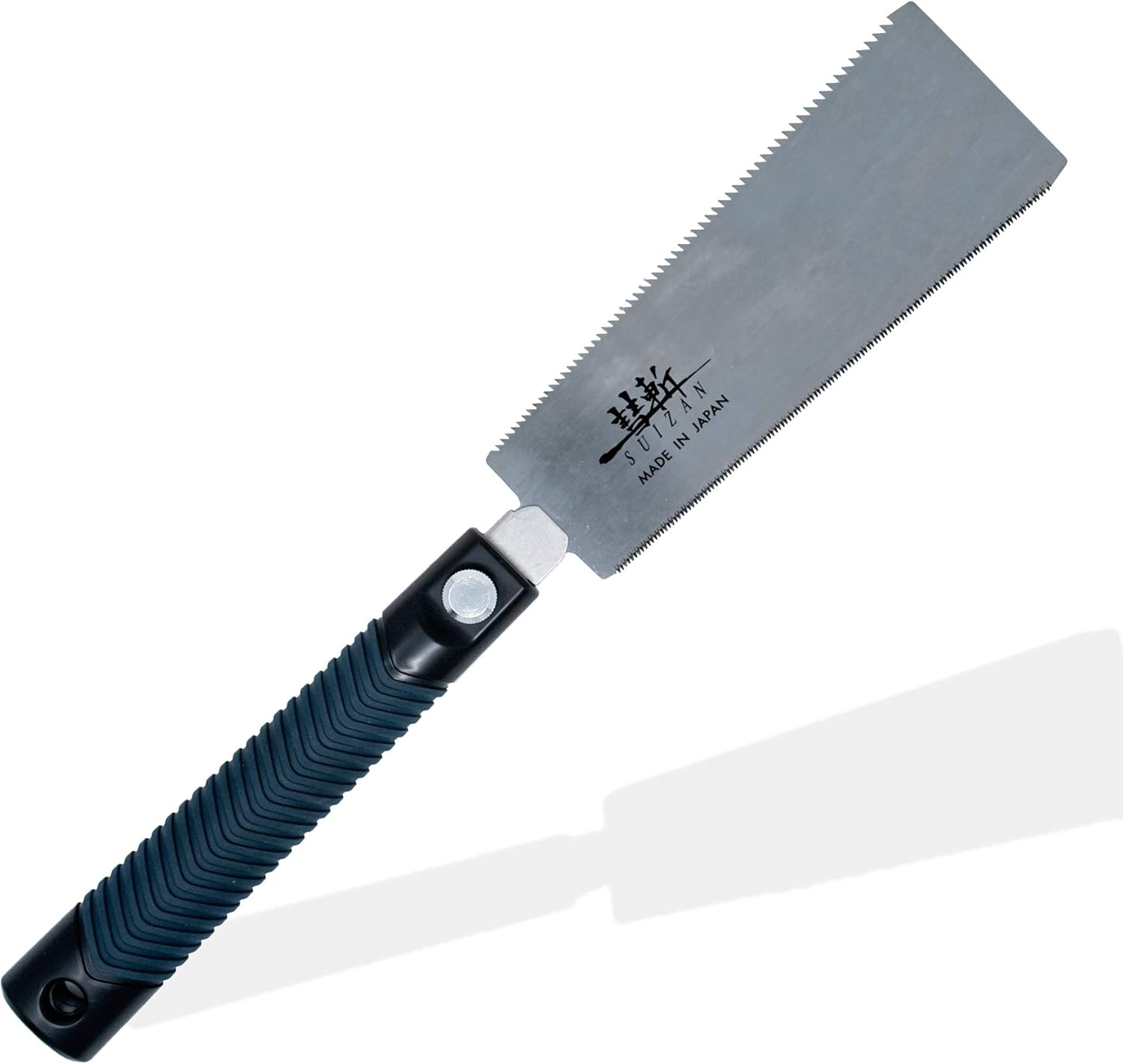 Our pickSUIZAN 7" Ryoba Pull SawMost beginners$39Check price
 IRWIN Coarse-Cut Hand SawRough lumber$21Check price
 SUIZAN 9.5" Ryoba Pull SawThicker stock$50Check price
Pull vs push — the choice that matters
Every hand saw cuts on one of two strokes, and for a beginner this is the whole decision.
A Japanese pull saw cuts as you pull it toward you. Because the blade is in tension on the cutting stroke, it can be very thin — which means a fine kerf (the slot the saw cuts), less wasted effort, and far more control. Thin blades and the pull action make these the easiest saws for a beginner to track a straight line with. The classic form is the Ryoba: a double-edged blade with rip teeth on one side (cutting along the grain) and crosscut teeth on the other (cutting across it) — effectively two saws in one.
A Western push saw cuts as you push away from you. The blade has to be stiffer and thicker to avoid buckling under that force, so the kerf is wider and the cut coarser, but it powers through thick, rough lumber faster.
For most beginners — building furniture, cutting joinery, working indoors — a pull saw is the friendlier, more precise choice. Reach for a Western saw if you're doing rougher carpentry or breaking down a lot of construction lumber.
 Best for most beginners
SUIZAN 7" Ryoba Pull Saw
The best first saw for most people. The SUIZAN Ryoba is a Japanese double-edged pull saw — rip teeth on one edge, crosscut on the other — so a single tool covers cutting both along and across the grain. It arrives genuinely sharp, the thin blade leaves a fine kerf, and the pull action makes it easy to track a straight line, which is exactly what beginners struggle with on push saws. At 7 inches it's sized for joinery and furniture work rather than rough lumber. SUIZAN is the most-recommended pull-saw brand for beginners, and replacement blades are cheap when the teeth eventually wear.
What's good
- Double-edged Ryoba — rip and crosscut in one saw
- Thin blade, fine kerf, sharp out of the box
- Pull action is the easiest for beginners to control
- Replaceable blade — cheap to refresh when it dulls
- The most-recommended beginner pull-saw brand
What's not
- Thin blade kinks if you force or twist it
- 7" length is for joinery, not breaking down big stock
- Pull-stroke feels unfamiliar if you grew up on Western saws
 Best budget saw
IRWIN Coarse-Cut Hand Saw (15in)
A no-nonsense hand saw that cuts wood fast. The IRWIN coarse-cut saw uses aggressive triple-ground teeth that slice through 2x lumber and boards quickly on the push stroke, with a comfortable ProTouch handle that stays put in a sweaty grip. At 15 inches it is the right size for general cuts around the shop and yard. It is a coarse rip and crosscut saw rather than a fine-finish saw, so for joinery you will want a finer-tooth backsaw later, but for a beginner making everyday cuts it is a durable, affordable workhorse.
What's good
- Aggressive teeth cut 2x lumber fast
- Comfortable ProTouch handle grips well
- 15 inches suits general shop and yard cuts
- Durable and affordable from a trusted brand
What's not
- Coarse teeth, not for fine joinery finish
- Push-cut Western saw, not a pull saw
 For thicker stock
SUIZAN 9.5" Ryoba Pull Saw
The same easy-to-control pull action as the 7" SUIZAN, with more reach. The 9.5-inch Ryoba is a double-edged Japanese pull saw — rip teeth on one edge, crosscut on the other — and the longer blade lets you cut through thicker stock in fewer strokes while keeping the fine kerf and control of a Japanese saw. It's the pick if you like the pull-saw feel but find a 7-inch blade limiting, or if your projects run to chunkier timber. Same trusted SUIZAN quality and replaceable blade — a step up in reach rather than a different class of tool.
What's good
- Longer 9.5" blade reaches through thicker stock
- Double-edged — rip and crosscut in one
- Keeps the fine kerf and control of a pull saw
- Same trusted SUIZAN brand, replaceable blade
What's not
- Longer blade is slightly less nimble for fine detail
- Costs a bit more than the 7"
- Still a thin blade — don't force it
Japanese pull-saw blades are thin and cut on the pull — so don't force or twist them. Push hard and you'll kink or buckle the blade; saw on the pull stroke with light, steady pressure and let the teeth do the cutting. Start the cut in a knife line or a shallow notch so it doesn't wander. When the teeth finally dull, you replace the blade rather than sharpen it.
How to choose between the three
Pick the SUIZAN 7" Ryoba if you're building furniture, cutting joinery, or working indoors — which is most beginners. It's the easiest saw to control and the double edge means you don't need a second saw for rip vs crosscut.
Pick the IRWIN if your projects are rougher — shelving, outdoor builds, breaking down construction lumber — and you value speed through thick stock over a fine finish.
Pick the SUIZAN 9.5" Ryoba if you like the pull-saw feel but want more blade to get through thicker pieces. It's the 7" SUIZAN with extra reach.
If you're genuinely unsure, get the SUIZAN 7" — a double-edged pull saw is the most versatile single saw a beginner can own, and the easiest to learn good technique on.
Before you buy
Default to a pull saw. For furniture and joinery it's finer and far easier for a beginner to control than a Western push saw.
A Ryoba is two saws in one. Rip teeth (along the grain) on one edge, crosscut (across the grain) on the other — you rarely need a second handsaw to start.
Mark your cut line first. A knife line or a shallow saw notch keeps the blade from wandering at the start of the cut.
Don't force it. Let the weight of the saw and the pull stroke cut — forcing a thin blade kinks it.
Blades are replaceable, not sharpened. When the teeth dull, swap the blade — cheaper and easier than learning to sharpen Japanese teeth.
Common questions about beginner hand saws
Japanese pull saw or Western push saw — which should a beginner buy?
What is a Ryoba saw?
Do I need a Western saw at all if I get a pull saw?
Can a thin Japanese saw cut hardwood?
How do I keep a hand saw sharp?
Do I need a powered saw, or is a hand saw enough to start?
For most beginners, the SUIZAN 7" Ryoba is the buy — a fine, easy-to-control pull saw that's really two saws in one. Doing rougher carpentry? The IRWIN powers through lumber for ~$14. Want the pull-saw feel with more reach? The SUIZAN 9.5" Ryoba is the step up.
Ready to actually do it?
The first woodworking quest takes an evening, and it tells you whether the gear was worth it better than any review can.
Start WoodworkingThe HobbyStack editorial team researches each guide against manufacturer specifications, published resources and practitioner sources. Every product is checked for availability and described against its current listing before publication, and prices are re-checked when guides are updated.
About our editorial process →More gear guides
All guides
Best Cordless Drill for Woodworking 2026: Ryobi vs DeWalt vs Milwaukee
A cordless drill is the first power tool most woodworkers buy: it drives screws, bores pilot holes for joinery, and assembles your projects. The trick is choosing the right one for a wood shop without overbuying. Here are three picks, and the battery-ecosystem decision that matters more than the drill itself.

Best Miter Saw for Woodworking 2026: Metabo vs DeWalt DWS779 vs Festool Kapex
A miter saw makes the fast, accurate, repeatable crosscuts that turn rough boards into furniture parts, the second power tool most woodworkers buy after the drill. Here are three picks, from an honest sub-$160 starter to the finish-carpenter's dream, plus how much saw your woodworking actually needs.

Best Beginner Woodworking Chisels 2026: REXBETI vs Irwin Marples vs Narex
A set of bench chisels is one of the first hand tools every woodworker needs: they pare joints, clean up saw cuts, and do the detail work a saw can't. Here are three beginner picks you can buy on Amazon, from a cheap set that includes its own sharpening stone to a buy-it-once Czech set, plus the four sizes you actually need.

Best Circular Saw for Beginners 2026: SKIL vs DeWalt 20V vs Makita
A circular saw is the workhorse of a beginner's shop, it breaks down plywood and makes the rough cuts a miter saw is overkill for. The first decision is the cord: corded gives you consistent power at the lowest price, cordless gives you go-anywhere freedom for more money. Here are three picks, and the blunt truth that a cheap saw plus a good blade beats an expensive one used carelessly.

Best Squares for Woodworking (2026): Speed Square or Combination Square
A speed square and a combination square are not two grades of the same tool. One is a fast triangle for framing cuts and rafter angles, the other is an adjustable square for laying out joints, checking depth and marking parallel lines. Most people buy the wrong one first because the cheap one looks like the beginner version, and it is not.

Best Tape Measure for Woodworking (2026): The Loose Hook Is Not Broken
The hook on the end of a tape measure wobbles, and every woodworker eventually decides theirs is worn out and tries to squeeze it tight. It is supposed to move. That small piece of slop is a deliberate correction, and crimping it is one of the quickest ways to make every measurement you take slightly wrong.