Best Spearfishing Mask (2026): Low Volume Is the Whole Point
On a breath-hold dive every bit of air you own is in your lungs, and a mask takes some of it away from you. The deeper you go the harder the mask squeezes onto your face, and the only way to relieve it is to blow air out of your nose into the mask. A smaller mask asks for less of that air.
HobbyStack may earn a commission from links on this page at no extra cost to you. Our picks are chosen on merit; the commission helps fund the research.
- Internal volume is the spec that matters. Less air inside means less air spent equalising.
- Frameless masks bond the skirt straight to the glass, which is where the volume saving comes from.
- Fit test: hold it to your face with no strap, breathe in gently through your nose. It should stick.
- New masks fog forever until you scrub the factory film off the inside of the lens.
- Tempered glass only. Plastic lenses scratch and fog and never stop.
 Cressi F1 FramelessFirst mask$41Check price
 Our pickCressi Z2 FramelessMost spearos$65Check price
 Cressi NanoGoing deep$80Check price
Why internal volume decides this
As you descend, the air inside your mask compresses. At 10 metres it is at half the volume it had at the surface, and the mask pulls hard onto your face. Left alone that becomes mask squeeze, which is genuinely unpleasant and can bruise the skin around your eyes and burst small vessels.
The fix is to exhale a little through your nose into the mask on the way down. On scuba that air is free, from a tank. On a breath-hold it is not. Every puff into the mask is air that is no longer available to your lungs, and it comes out of your dive time.
So the number that matters is how much air the mask holds. The Nano here is 83 cm³, which the maker claims is the lowest on the market. A general-purpose scuba or snorkelling mask can hold two or three times that.
Frameless is the usual way to get there. Instead of clamping the lens into a rigid plastic frame, the silicone skirt is bonded directly to the glass. That pulls the lens closer to your face, cuts weight, removes drag, and lets the mask fold flat in a pocket.
It is also why a good spearfishing mask looks small and unimpressive next to a snorkelling one. That is the feature.
Fit, and the film nobody tells you about
Fit beats every spec here. A leaking mask ruins a dive regardless of how little air it holds.
The test takes five seconds and works in a shop or at home. Hold the mask to your face without the strap, keep your hair out of the skirt, and inhale gently through your nose. It should stay put on its own for several seconds. If it drops or you feel air trickling in, it is the wrong shape for your face and no amount of strap tension will fix it.
Facial hair breaks the seal along the upper lip. A smear of silicone grease on the moustache helps, and plenty of spearos just trim a channel.
Now the thing that catches everyone. A new mask has a silicone release film left on the inside of the lens from manufacturing. Until you get it off, the mask fogs on every dive no matter how much defog you use, and people assume they bought a bad mask.
Scrub the inside of the glass hard with non-gel toothpaste and a finger or a soft cloth, rinse, and repeat several times until water sheets across the glass instead of beading. Some people burn it off with a lighter flame, which works on tempered glass but will melt the skirt if you slip. Toothpaste is slower and safer.
After that, a drop of baby shampoo or spit, rubbed round and rinsed lightly, keeps it clear.
 Best first mask
Cressi F1 Snorkel Mask, Frameless, for Adults, Black
The frameless mask most people start on, and the reason it lasts is that it gets the important part right at the price of a cheap snorkelling mask. The skirt bonds straight to a single tempered glass lens, so internal volume is low and the field of view is wide. It folds flat enough to live in a pocket, and quick-adjust buckles make strap changes easy. The skirt suits an average face and not every face.
What's good
- Frameless design keeps volume genuinely low
- Wide single-lens field of view
- Folds flat, easy to carry as a spare
- Tempered glass, not plastic
What's not
- Skirt shape does not suit narrow faces
- Buckles are simpler than the Z2
- Higher volume than the Nano
- Sold as a snorkel mask, so listings vary
 Best for most spearos
Cressi Z2 Frameless Masks, Graphite
The refinement of the frameless idea, with the silicone skirt attached directly to a single glass so volume stays low while the view opens up in every direction. Tilting buckles are the practical gain: the strap adjusts without deforming the silicone, so the fit stays put dive after dive. Light enough to forget you have it on, with reduced drag on the descent. A Z2S version exists for narrower faces, so check which you need.
What's good
- Low volume with a genuinely wide field of view
- Tilting buckles keep the fit from drifting
- Light with low drag on descent
- Z2S variant available for narrow faces
What's not
- Two sizes means you can order the wrong one
- Still not as low volume as the Nano
- Single lens rules out prescription inserts
- Over 1.5 times the F1
 Best for going deep
Cressi Nano 2-Lens Mask, Black/Black
Cressi claims the lowest internal volume of any mask on the market at 83 cubic centimetres, achieved with a patented dual-frame construction that pulls two rigid frames together to squeeze the air space down. The twin lenses are inclined and inverted teardrops, which sounds like marketing until you realise it opens up the downward view, and downward is where you are looking. Twin lenses also take prescription inserts.
What's good
- 83 cm³, the lowest internal volume available
- Teardrop lenses open up the downward view
- Twin lens takes prescription inserts
- Buckle system is flexible and near indestructible
What's not
- Twin lens splits the view with a nose bridge
- Small window feels tight if you are new to it
- Dearest here
- Low volume is wasted in shallow water
All three picks here are Cressi, which is not laziness. Low-volume freediving and spearfishing masks are a small category and Cressi has patents across most of the ways to build one. The main alternative worth knowing is Mares, whose Viper and X-Vision sit in the same range and fit differently around the nose and cheekbones. If a Cressi will not seal on your face, try a Mares before you assume the whole style is wrong for you.
Small things that change the dive
Black skirt over clear. A clear skirt lets light in from the sides, which throws reflections across the inside of the lens and washes out what you are looking at. Black cuts that out. It feels more enclosed at first and you stop noticing within a dive or two. All three masks here come in black for exactly this reason.
Equalise the mask early and often. Small puffs through the nose on the way down, before it starts to pull. Waiting until it hurts means spending more air than you needed to.
Strap position matters. The strap sits high on the back of the head, not across the widest part of the skull. Too low and it pulls the mask up off the top of the seal, which is the most common cause of a slow leak on a mask that fits fine on land.
Do not overtighten. A tight strap deforms the skirt and breaks the seal rather than improving it. Snug enough that it does not move, and no more.
Rinse in fresh water and dry out of the sun. UV hardens silicone, and a hard skirt stops sealing. Store it in a box rather than face down, so the skirt keeps its shape.
Before you buy
Do the no-strap suction test before anything else. Fit beats specs.
Frameless for low volume, unless you need prescription inserts.
Black skirt, to kill reflections on the inside of the lens.
Check whether the model has a narrow-face variant.
Scrub the factory film off the lens before the first dive.
Spearfishing mask questions
Why do spearfishing masks need low volume?
How do I stop my new mask fogging?
How do I know a mask fits me?
Single lens or twin lens?
The Cressi Z2 is the one to buy for most spearfishing: low volume, a wide single-lens view, and buckles that hold their adjustment. Start with the F1 if you are new and want to find out whether the sport sticks, since it gets the frameless part right for far less. Go to the Nano if you dive deep enough that 83 cubic centimetres genuinely matters, or if you need prescription inserts. Then scrub the lens before you get in.
Ready to actually do it?
The first spearfishing quest takes an evening, and it tells you whether the gear was worth it better than any review can.
Start SpearfishingThe HobbyStack editorial team researches each guide against manufacturer specifications, published resources and practitioner sources. Every product is checked for availability and described against its current listing before publication, and prices are re-checked when guides are updated.
About our editorial process →More gear guides
All guides
Long Blade Freediving Fins (2026): Stiffness Is Matched to Your Legs, Not Your Ambition
Long blades are not about speed. A long blade moves a large volume of water per kick, so you cover distance at a slow, unhurried cadence instead of a fast one, and on a breath-hold the thing you are conserving is oxygen. A stiff blade you cannot load properly burns more of it than a soft blade you can.

Best Spearfishing Wetsuit (2026): Open Cell Seals to Skin and Hates Fingernails
A spearfishing wetsuit is not a surfing wetsuit in camouflage. The good ones are open cell, meaning the inside is raw neoprene that seals directly against your skin with no lining at all. That makes them far warmer and considerably more fragile, and it means you cannot get into one without lubricant.

Best Backpacking Sleeping Pad (2026): R-Value Decides This, Not Thickness
The ground takes more heat off you overnight than the air does, which is why people in expensive sleeping bags still wake up cold. The number that fixes it is R-value, and since 2020 it has been a standardised measurement, so for the first time you can compare one brand against another honestly.
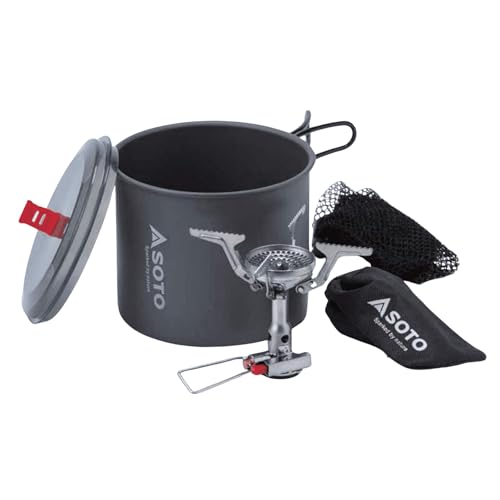
Best Backpacking Stove (2026): Boil Water Fast or Actually Cook
Almost every thru-hiker eats food that only needs boiling water, which makes "how fast does it boil and how little fuel does it use" the question that matters. But if you cook rather than rehydrate, the fastest stove here is also the one that cannot hold a simmer, and that trade is the whole decision.

Best Beginner Hiking Backpack 2026: Osprey Daylite vs Talon vs Atmos
The right hiking backpack depends on one number: how long you plan to be out. Day hike → 20–30L. Overnight → 33–45L. Multi-day → 50–65L. Get the volume wrong and you're either cramming gear into too little space or hauling empty weight all day. Here are three Osprey packs, each sized for a different stage of hiking, that will outlast your beginner phase.

Best Beginner Hiking Boots 2026: Merrell Moab 3 vs Salomon X Ultra 4
Your first hiking boots need to do three things: not blister you, stay dry on wet trails, and grip technical terrain. The Merrell Moab 3 Waterproof checks all three for around $130. Here are three real boots: a non-waterproof breathable option, the waterproof all-rounder, and a stiffer upgrade for rocky terrain, each with a confirmed Amazon link.