Best Bee Suit for Beginners (2026): Bees Sting Straight Through Thin Cotton
A bee sting is about two millimetres of sting, which is more than enough to reach skin through a single layer of cotton pulled tight over a shoulder or a knee. Beekeepers get stung through their suits constantly, and it is almost always where the fabric was touching them.
HobbyStack may earn a commission from links on this page at no extra cost to you. Our picks are chosen on merit; the commission helps fund the research.
- Stings come through anywhere the fabric touches skin. Standoff matters more than thickness.
- Three-layer ventilated suits hold the outer layer away from you and are cooler. Both at once.
- Fencing veils are cheap and close to the face. Round veils are self-supporting and see better.
- Wash the suit after a bad day. Alarm pheromone stays in the fabric and provokes bees next time.
- Light colours only. Dark fuzzy things read as bears.
 QHZHANG polycottonOne or two hives$32Check price
 Our pickANDES 3-layer ventilatedMost beekeepers$90Check price
 Humble Bee 430Long inspections$200Check price
Why three layers beats thick cotton
A sting has to reach skin to hurt you. There are two ways to stop it: thickness, or distance.
Cotton takes the thickness approach and mostly works, until the fabric is pressed against you. Kneel down and the cloth flattens onto your knee. Reach up and it pulls tight across your shoulder. Bend over a hive and it stretches across your back. Every one of those is a place where a sting reaches skin through a suit that is technically sting-proof.
Three-layer ventilated suits solve it with distance instead. Two mesh faces are held apart by a springy middle layer, so the outer surface sits a fixed distance from the inner one and cannot be flattened onto you. A bee stinging the outside is stinging air.
The useful surprise is that this is also the cooler option. A beekeeping suit in July is genuinely unpleasant, and a mesh sandwich moves air across you while solid cotton traps it. Ventilated suits used to be the expensive specialist choice and are now available at the price of a decent cotton one.
The trade is bulk and washing. Three-layer mesh is thicker to store, and the veils usually want hand washing rather than a machine.
Veils, which is the part people regret
The veil is what stands between a bee and your face, and there are two shapes.
Fencing veils zip to a collar and stand up on a stiffened band, roughly like a fencing mask. They are cheap, they pack small, they move with your head, and they sit close to your face. Close enough that if you press forward against the mesh, a bee on the outside can reach your nose.
They also let you unzip just the face opening to drink or take a call without stripping the whole hood off, which sounds trivial and is not when you are two hours into an inspection in the heat.
Round veils use a hoop to hold the mesh a fixed distance from your face in every direction. Better visibility, no chance of pressing the mesh onto your skin, and much better peripheral view, which matters when you are watching where you put a frame. They are bulkier, more awkward to store, and generally found on dearer suits.
Both need to seal at the collar. A bee that gets inside a veil is the single most stressful thing in beekeeping, and it is nearly always a zip that was not run all the way around.
The ANDES here ships with both veils, which is a genuinely good way to find out which you prefer.
 Best for one or two hives
QHZHANG Sting Proof Bee Suit Full Body
A full-body polycotton suit with a detachable fencing veil and goatskin gloves for the price of a couple of frames of foundation, which makes it a sensible way into a hobby you are not yet sure about. Elastic at the wrists, waist, cuffs and ankles closes the gaps that matter, and a resin zip with a metal pull holds up better than the usual. Single layer, so expect stings anywhere it presses against you.
What's good
- Complete suit plus goatskin gloves for around thirty dollars
- Elastic at wrists, waist, cuffs and ankles
- Detachable fencing veil with a wide view
- Polycotton breathes better than heavy canvas
What's not
- Single layer, so stings get through where it touches skin
- Hot compared with a ventilated suit
- Fencing veil only
- Build quality is what the price suggests
 Best for most beekeepers
ANDES 3-Layer Mesh Ventilated Bee Suit
Three layers of polycotton mesh, which holds the outer surface away from your skin so a sting on the outside does not reach you, and moves air through at the same time. It ships with both veil types, a round one and a fencing one, so you can find out which you actually prefer rather than guessing. Brass zips at the veil, front and legs. The suit machine washes; the hoods want hand washing.
What's good
- Three layers give standoff, so stings do not reach skin
- Noticeably cooler than single-layer cotton
- Both round and fencing veils included
- Brass zips at veil, placket and legs
What's not
- Bulkier to store than a cotton suit
- Hoods need hand washing
- Mesh snags on rough hive edges
- Roughly twice the budget suit
 Best for long inspections
Humble Bee 430 Ventilated Beekeeping Suit with Round Veil
Built for people who are in a suit for hours rather than twenty minutes. A medium-weight cotton and synthetic blend takes the wear, with fully breathable synthetic ventilation panels where the heat builds, and the round veil is self-supporting so the mesh never touches your face. Cushioned kneepads matter more than they sound when you are working a bottom box. Brass zips, double-stitched pockets, canvas carrying case.
What's good
- Ventilation panels where heat actually builds
- Self-supporting round veil keeps mesh off your face
- Cushioned kneepads for working low boxes
- Thumb and foot holds stop sleeves and legs riding up
What's not
- Over three times the ANDES
- Sized for a fairly narrow height range
- Heavier than a full mesh suit
- More suit than one or two hives needs
When a bee stings, it leaves alarm pheromone at the site, which tells every other bee where to aim. That scent soaks into fabric and stays there. Turn up to the next inspection in an unwashed suit that took a few stings last time and the colony reacts to you before you have opened anything. Wash it, dry it in the sun, and store it away from smoke and strong smells.
Wearing it so it works
Light colours, always. Bees evolved alongside bears and badgers, and dark fuzzy shapes get treated accordingly. White or pale is not a convention, it is the reason suits are that colour.
Check the seals before you walk to the hive, not after. Zips all the way round the veil, elastic pulled over boots rather than tucked inside them, gloves over the sleeve cuffs. One bee inside the veil will make you do something sudden, and sudden movements near an open hive are how a calm inspection stops being one.
Boots, not trainers. Bees walk upward. Ankles are the most commonly stung part of a properly suited beekeeper.
Do not tuck the veil into the collar loosely. Most suits have a drawstring or zip specifically to close that gap. Use it every time.
Suits are not sting proof, they are sting resistant. Even a good three-layer suit will let something through eventually, usually at a glove cuff or where you knelt on the mesh. Plan on getting stung occasionally and know your own reaction before you keep bees at all.
Buy a size up. A suit worn over normal clothes with room to move keeps fabric off your skin, which is the whole mechanism. A tight suit is a worse suit.
Before you buy
Three-layer ventilated if you can. Cooler and better protection at once.
Size up. Loose fabric cannot be stung through.
Check whether the veil is fencing, round, or both.
Light colours only.
Look for elastic at wrists, waist and ankles, plus thumb and foot holds.
Bee suit questions
Can bees sting through a bee suit?
Is a ventilated suit or a cotton suit better?
Fencing veil or round veil?
Why do bee suits have to be white?
The ANDES three-layer is the one to buy. It gives you the standoff that actually stops stings, it is cooler than a cotton suit rather than hotter, and it comes with both veil types so you can work out which you prefer. Take the budget polycotton if you have one hive and want to find out whether beekeeping suits you. Choose the Humble Bee 430 if you are in the suit for hours and the kneepads and round veil will earn their keep.
Ready to actually do it?
The first beekeeping quest takes an evening, and it tells you whether the gear was worth it better than any review can.
Start BeekeepingThe HobbyStack editorial team researches each guide against manufacturer specifications, published resources and practitioner sources. Every product is checked for availability and described against its current listing before publication, and prices are re-checked when guides are updated.
About our editorial process →More gear guides
All guides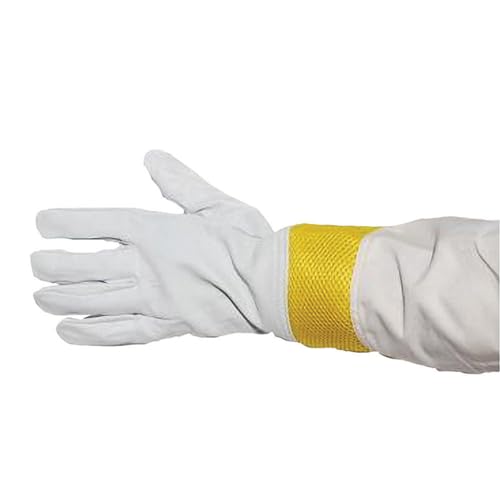
Best Beekeeping Gloves (2026): Goatskin, Cowhide, or Nothing at All
Thick gloves feel like the safe choice and quietly cost you in a way nobody warns you about. You cannot feel a frame through heavy cowhide, so you grip harder, move faster and crush more bees, and crushed bees release alarm pheromone that makes the whole colony defensive. The most protective glove is not always the one that gets you stung least.

Best Beekeeping Starter Kit for Beginners (2026): 3 Complete Hives Compared
A beekeeping starter kit is really a complete hive in a box: the boxes, frames, and foundation your bees will actually live on. Getting a proper 10-frame Langstroth kit (the standard almost every beginner and mentor uses) matters far more than saving a few dollars on an odd design. Here are three good complete kits, from a solid budget hive to a premium wax-coated one.

Best Beginner Gardening Pruners 2026: Fiskars vs Felco F-2 vs Felco F-8
Hand pruners are the most-used tool in any garden: deadheading, harvesting vegetables, shaping shrubs, cutting back perennials. The right pair makes clean cuts without crushing stems (which invites disease); the wrong pair bruises more than it cuts. Here are three options: a reliable budget shear, the Swiss-made professional standard, and Felco's ergonomic model for gardeners with hand fatigue.

Best Garden Hose (2026): Why Cheap Hoses Kink and Good Ones Do Not
A garden hose is a thing nobody thinks about until theirs kinks behind them for the fourth time in one watering. The difference between a hose that does that and one that does not is entirely material and construction, both of which are printed on the packaging and both of which most people ignore in favour of length and price.

Best Beginner Fishing Rod and Reel Combo 2026: Spinning Setups That Just Work
For your first setup, a matched spinning rod-and-reel combo is the right call: it's pre-balanced, forgiving to cast, and gets you fishing without choosing parts you don't understand yet. Here are three combos that punch above their price, from a near-indestructible classic to a saltwater-ready upgrade.
Best Fishing Pliers (2026): Braid Destroys Ordinary Cutters
Braided line is woven from the same fibre used in body armour, and it does not cut so much as fray under a normal blade. A pair of pliers that handles mono perfectly well will chew braid into a fuzzy mess, and the fix is a specific material rather than a sharper edge.