Best Beekeeping Gloves (2026): Goatskin, Cowhide, or Nothing at All
Thick gloves feel like the safe choice and quietly cost you in a way nobody warns you about. You cannot feel a frame through heavy cowhide, so you grip harder, move faster and crush more bees, and crushed bees release alarm pheromone that makes the whole colony defensive. The most protective glove is not always the one that gets you stung least.
HobbyStack may earn a commission from links on this page at no extra cost to you. Our picks are chosen on merit; the commission helps fund the research.
- Goatskin is thin and dextrous. Cowhide is thick and protective. That is the whole trade.
- Long gauntlet cuffs matter more than glove thickness. Bees walk up sleeves.
- Clumsy hands crush bees, and crushed bees release alarm pheromone that riles the colony.
- Many experienced beekeepers wear thin nitrile gloves or nothing. Do not start there.
- Wash gloves. Alarm pheromone and old venom on leather make your next inspection worse.
 Buzz Cowhide GauntletMaximum protection$25Check price
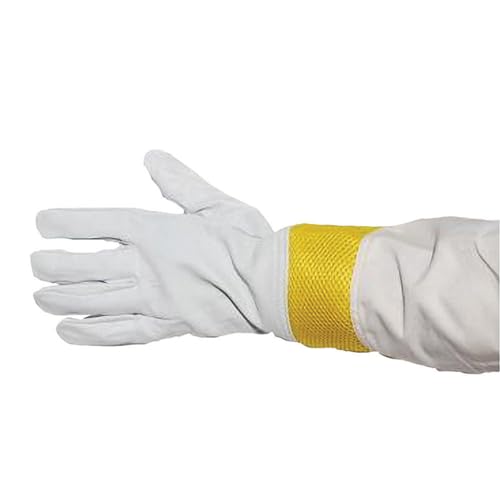 Our pickMann Lake Vented GoatskinMost beekeepers$34Check price
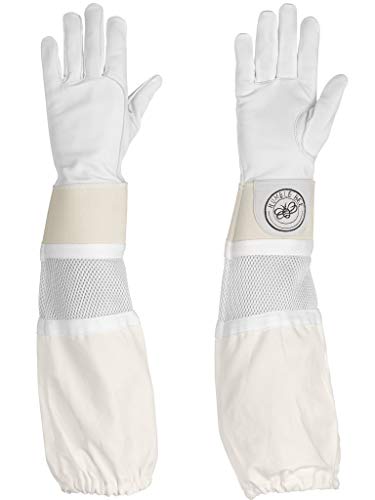 Humble Bee 114Buying once$60Check price
Goatskin and cowhide, and what each costs you
The leather decides almost everything about a beekeeping glove.
Cowhide is thick. It is very hard for a sting to get through, and it is also very hard to feel anything through. Picking up a frame, judging how much it weighs, easing apart two boxes glued with propolis — all of that becomes guesswork. It is warmer, it stiffens over time, and it is usually cheaper.
Goatskin is thinner and much more supple while still being genuinely sting-resistant. You can feel the frame, so you grip it properly rather than clamping. Most beekeeping suppliers sell goatskin as the standard for this reason, and it is what most working beekeepers wear.
The counter-intuitive part is that dexterity is a safety feature. Fumbling a frame means crushed bees, and crushed bees release alarm pheromone that recruits the rest of the colony to defend. A clumsy inspection in thick gloves genuinely can produce more stings than a careful one in thin gloves.
So: goatskin unless you have a specific reason. Cowhide if you are very nervous, or handling a colony you already know is defensive.
The cuff is the part that actually matters
Stings to the hand through a glove are not the common failure. The common failure is a bee walking up your sleeve.
Bees explore upwards along a surface, and a gap where the glove meets your suit is an open door. Once one is inside your sleeve it will sting when your arm bends and traps it, which is both surprising and unavoidable.
So look for long gauntlet sleeves — the canvas or leather tube that extends up the forearm — with elastic at the top end that seals against your arm or over the suit cuff.
All three gloves here have that, and it is more important than the leather grade.
Ventilation in the sleeve is the other thing worth having. A beekeeping suit plus long gloves in summer is genuinely hot, and heat makes people rush, and rushing makes them clumsy. Vented sleeves are a comfort feature that pays off in how carefully you work.
And get the fit right. Gloves that are too big bunch at the fingertips and you lose the dexterity you paid for.
 Best for maximum protection
Beekeeping Gloves Large Ventilated Sleeves
Thick cow leather with heavy-duty canvas sleeves, ventilated along the forearm, and long elastic gauntlet cuffs that close properly against a suit. This is the reassurance option, and there is nothing wrong with wanting reassurance in your first season — a new beekeeper who is calm inspects better than a nervous one, and if thick cowhide is what makes you calm then it is doing real work. The vented sleeve helps on hot days, when a full suit plus long gloves is otherwise punishing. They are sold with a 60-day money-back guarantee. The honest trade is dexterity: cowhide is noticeably less sensitive than goatskin, so expect to be clumsier with frames until you move on from them.
What's good
- Thick cow leather is very hard to sting through
- Long elastic gauntlet cuffs seal against a suit
- Ventilated sleeves for hot days
- 60-day money-back guarantee
What's not
- Cowhide costs you real dexterity with frames
- Clumsy handling crushes bees and riles the colony
- Stiffens over time
- Warmer than goatskin
 Best for most beekeepers
Mann Lake Vented Goatskin Beekeeping Gloves Medium
Vented goatskin from one of the established beekeeping suppliers, and goatskin is what most working beekeepers wear for a good reason. It is thin enough to feel a frame properly, so you lift it with a controlled grip instead of clamping, and that single difference means fewer crushed bees, less alarm pheromone and a calmer inspection. It is still genuinely sting-resistant; thin does not mean unprotected. The vented sleeve keeps the forearm bearable through a summer inspection in a full suit. This is the sensible middle: enough protection to work confidently, enough feel to work well. Goatskin does wear through sooner than cowhide, particularly at the fingertips if you handle a lot of propolis-glued frames.
What's good
- Goatskin is thin enough to feel the frame properly
- Fewer crushed bees means a calmer colony
- Still genuinely sting-resistant
- Vented sleeve for summer inspections
What's not
- Wears through sooner than cowhide
- Fingertips go first on propolis-heavy frames
- Less reassuring if you are very nervous
- Sizing runs snug — check before ordering
 Best buy-once pair
Humble Bee 114 Goatskin Beekeeping Gloves
Supple goatskin hands with reinforced and ventilated wrists and heavy-duty canvas sleeves, in a roughly half-and-half canvas and goat leather build — and the reinforcement at the wrist is the point, because that is where a glove flexes constantly and where cheaper pairs split first. Full-length sleeves with elastic cuffs, tailored rather than tubular, so they stay put instead of rotating on your forearm while you work. Unisex sizing. You get goatskin dexterity with a construction that survives several seasons rather than one, which for anyone keeping bees long-term is the cheaper answer per year. Humble Bee also put money into bee conservation work, if that matters to you. Twice the Mann Lake pair for durability rather than better feel.
What's good
- Reinforced wrists — where cheaper gloves split first
- Goatskin dexterity with a build that lasts seasons
- Tailored full-length sleeves stay put
- Supports bee conservation work
What's not
- Twice the Mann Lake for durability, not more feel
- Heavier than a plain goatskin glove
- Unisex sizing suits some hands better than others
- Overkill for one hive and a few inspections a year
When a bee stings leather it leaves venom and alarm pheromone behind, and that scent tells the next colony you open that something is wrong before you have touched a frame. Leather gloves that have never been washed make inspections progressively worse. Wash them, dry them away from direct heat so the leather does not go hard, and treat them as consumables rather than heirlooms.
Why experienced beekeepers wear less, and when to follow them
Go to any association apiary and you will see people inspecting in thin nitrile gloves, or with bare hands, and it is worth understanding why before you copy it.
Feel. Bare or nearly bare hands give complete control over a frame, so almost nothing gets crushed and the colony stays calm.
Speed. No gauntlets to pull on, no bunching fingertips, and inspections finish faster, which the bees prefer.
Hygiene. Disposable nitrile is thrown away between colonies, so nothing is carried from one hive to another — which matters if disease is a concern and is a genuine argument against leather.
Reading the colony. Experienced keepers can tell from behaviour when a hive is about to turn, and they gear up accordingly.
That last one is the catch. It is judgement built over seasons, and it is exactly what a beginner does not have. Start in proper gloves, get comfortable, and only go thinner when you can tell the difference between a calm colony and a tense one. Some people never do, and their bees are fine.
Before you buy
Goatskin unless you are very nervous or the colony is defensive.
Long elastic gauntlet cuffs. The sleeve gap is the real risk.
Vented sleeves — heat makes you rush, and rushing makes you clumsy.
Get the fit right. Loose gloves bunch and lose the dexterity you paid for.
Treat them as consumables. Wash them, and expect to replace them.
Beekeeping glove questions
Goatskin or cowhide beekeeping gloves?
Do I need beekeeping gloves at all?
Why do gauntlet cuffs matter?
Should I wash beekeeping gloves?
Buy vented goatskin with long elastic gauntlet cuffs, and the Mann Lake pair is the straightforward answer — thin enough to feel a frame, protective enough to work confidently, and vented enough to survive a summer inspection. Take the cowhide gauntlets if you are genuinely nervous, because a calm beekeeper inspects better than a scared one. The Humble Bee 114 is worth it if you are keeping bees for years and want reinforced wrists that will not split. Then wash them.
Ready to actually do it?
The first beekeeping quest takes an evening, and it tells you whether the gear was worth it better than any review can.
Start BeekeepingThe HobbyStack editorial team researches each guide against manufacturer specifications, published resources and practitioner sources. Every product is checked for availability and described against its current listing before publication, and prices are re-checked when guides are updated.
About our editorial process →More gear guides
All guides
Best Bee Suit for Beginners (2026): Bees Sting Straight Through Thin Cotton
A bee sting is about two millimetres of sting, which is more than enough to reach skin through a single layer of cotton pulled tight over a shoulder or a knee. Beekeepers get stung through their suits constantly, and it is almost always where the fabric was touching them.

Best Beekeeping Starter Kit for Beginners (2026): 3 Complete Hives Compared
A beekeeping starter kit is really a complete hive in a box: the boxes, frames, and foundation your bees will actually live on. Getting a proper 10-frame Langstroth kit (the standard almost every beginner and mentor uses) matters far more than saving a few dollars on an odd design. Here are three good complete kits, from a solid budget hive to a premium wax-coated one.

Best Beginner Gardening Pruners 2026: Fiskars vs Felco F-2 vs Felco F-8
Hand pruners are the most-used tool in any garden: deadheading, harvesting vegetables, shaping shrubs, cutting back perennials. The right pair makes clean cuts without crushing stems (which invites disease); the wrong pair bruises more than it cuts. Here are three options: a reliable budget shear, the Swiss-made professional standard, and Felco's ergonomic model for gardeners with hand fatigue.

Best Garden Hose (2026): Why Cheap Hoses Kink and Good Ones Do Not
A garden hose is a thing nobody thinks about until theirs kinks behind them for the fourth time in one watering. The difference between a hose that does that and one that does not is entirely material and construction, both of which are printed on the packaging and both of which most people ignore in favour of length and price.

Best Beginner Fishing Rod and Reel Combo 2026: Spinning Setups That Just Work
For your first setup, a matched spinning rod-and-reel combo is the right call: it's pre-balanced, forgiving to cast, and gets you fishing without choosing parts you don't understand yet. Here are three combos that punch above their price, from a near-indestructible classic to a saltwater-ready upgrade.
Best Fishing Pliers (2026): Braid Destroys Ordinary Cutters
Braided line is woven from the same fibre used in body armour, and it does not cut so much as fray under a normal blade. A pair of pliers that handles mono perfectly well will chew braid into a fuzzy mess, and the fix is a specific material rather than a sharper edge.