Best Bookbinding Thread (2026): Waxed Linen and Why Ply Matters
A book is held together by thread under tension for decades, and the thread is the one component you cannot inspect or replace once the text block is sewn. Linen is the traditional choice for reasons that are mechanical rather than sentimental, and the wax on it is doing three jobs at once.
HobbyStack may earn a commission from links on this page at no extra cost to you. Our picks are chosen on merit; the commission helps fund the research.
- Linen, not cotton. Linen is stronger, stretches less, and does not go brittle the same way.
- Wax stops tangling, grips the knot and lets the thread slide through paper without sawing.
- Thicker thread swells the spine. Too thick and the book will not close.
- Ply is how many strands are twisted together. 3 to 5 ply covers most work.
- Length: about three times the height of the spine per signature, plus extra.
 Gutermann Waxed Linen 50mTrying it$4Check price
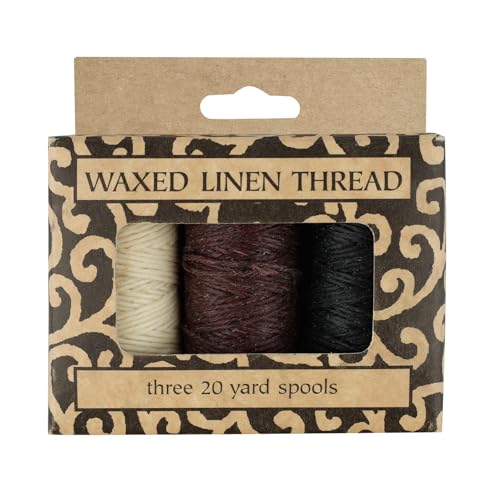 Our pickLineco Waxed Linen, 3 spoolsMost binders$18Check price
 Fil Au Chinois Lin CableFine binding$58Check price
Why linen, and what the wax does
Linen comes from flax, and its fibres are long, smooth and very strong in tension. Crucially it has low elongation — it barely stretches — which is exactly what a book spine needs, because a thread that gives will let the signatures loosen over years until the text block sags away from the spine.
Cotton stretches more and its shorter fibres abrade against the paper at the sewing holes. It is fine for a practice binding and not for something you want in fifty years.
Polyester is strong and does not age badly, but it is slippery, knots less securely, and is stronger than the paper — which sounds good and is not, because in a failure you would rather the thread went than the paper tore.
The wax does three separate jobs. It stops the thread tangling and knotting on itself while you sew, which is the immediate practical benefit. It grips, so knots hold and tension stays where you put it. And it lubricates the thread through the paper, so it slides rather than sawing at the hole each time it passes.
Unwaxed linen exists and you wax it yourself with beeswax. Pre-waxed simply saves the step.
Ply, thickness and spine swell
Ply is how many individual strands are twisted together. More ply means a thicker, stronger thread, and thickness is the decision that actually affects the finished book.
Every pass of thread through a signature adds material at the spine, and across twenty signatures that accumulates into spine swell — the spine becomes measurably thicker than the fore edge. A little is wanted, because it is what you round and back a spine from. Too much and the book will not close flat and gapes at the fore edge.
So: thinner thread for many thin signatures, thicker thread for few thick ones.
As a rough guide, 3-ply suits fine paper and many signatures, 4 to 5-ply is the general-purpose middle for normal text weight, and heavier threads suit thick paper, few signatures, or a binding sewn on cords where the thread is structural.
If a text block is swelling too much, the answer is thinner thread or fewer sewing stations, not tighter sewing — over-tightening cuts into the fold and tears the paper at the holes.
 Best for trying it
Gutermann Waxed Extra Strong Linen Sewing Thread 50m 4013
Fifty metres of 100% linen, waxed and sold as extra strong, for less than the price of a coffee — which makes it the obvious thing to learn on. It is a sewing thread rather than a dedicated bookbinding one, and in practice that matters less than it sounds: it is the right fibre, it is waxed, and it holds a knot. Fifty metres is a great deal of sewing, enough for a stack of practice bindings while you work out your tension and stop tearing folds. What you give up is the consistency and the range of weights a dedicated bookbinding thread gives you — one colour, one weight, and no choice of ply — so it is a thread to learn with rather than to plan a binding around.
What's good
- 100% linen at a trivial price
- Waxed, so it will not tangle while you learn
- Fifty metres is a lot of practice
- Holds a knot properly
What's not
- A sewing thread, not a binding thread
- One weight, no choice of ply
- Less consistent diameter than dedicated thread
- Limited colours
 Best for most binders
Lineco Waxed Linen Thread
Purpose-made bookbinding thread: 5-ply natural linen, lightly waxed, in three 20-yard spools of natural, black and brown. Five ply is the general-purpose weight — right for normal text paper and a typical number of signatures, thick enough to be structural and thin enough not to swell a spine out of shape. The light waxing is deliberate and better than heavy waxing for this work: enough to stop tangling and grip a knot, not so much that it drags or leaves residue on the paper. Lineco specifically note it does not slip when knotting and that the ends are easy to find, which sounds trivial until you are hunting a thread end mid-signature. Made in the USA. Three colours means the sewing can be part of the design on an exposed spine.
What's good
- 5-ply is the right general-purpose weight
- Lightly waxed — grip without drag or residue
- Three colours for exposed-spine bindings
- Does not slip when knotting
What's not
- One weight only, so no thin or heavy option
- 20 yards a spool goes faster than it sounds
- Natural colour shows dirt from handling
- Dearer per yard than sewing thread
 Best for fine binding
Fil Au Chinois Lin Cable, Waxed Linen Thread, Ecru (571)
The thread conservators and fine binders name when asked, made in France and sold in a range of weights and colours that lets you match thread to paper rather than compromising. What you are paying for is consistency: the diameter does not vary along the length, the twist is even, and the waxing is uniform — which matters when twenty signatures need identical tension and any thick spot shows as a bump in the spine. It is a cable-laid linen, which is a firmer construction than a simple twist and resists abrading at the sewing holes over decades. Honest position: it is more than three times the Lineco for a difference most people will not see in a practice binding, and every difference you would see in a book meant to last a century.
What's good
- Very consistent diameter and twist along the length
- Cable-laid, so it resists abrasion at the holes
- Available in a real range of weights and colours
- The thread conservators name
What's not
- More than three times the Lineco
- The difference is invisible on a practice binding
- Overkill for anything casual
- Harder to source than the alternatives
Running out mid-signature means a join in the sewing, which is a weak point and a nuisance. A working rule is roughly three times the height of the spine for each signature you are sewing, plus a generous extra length for tying off. Too long is only annoying; too short means unpicking. And thread the needle so the short tail is genuinely short, or you will sew it in by accident.
The rest of what a sewn binding needs
Thread is one of about five cheap things, and none of the others cost much either.
A bookbinding needle is blunt and has a large eye. Blunt matters: a sharp needle makes its own hole wherever it lands rather than finding the one you pierced, which is how sewing wanders off the line.
An awl to pierce the holes, through a folded signature over a cradle or a soft surface. Piercing all signatures with the same template is what keeps the stations aligned.
A bone folder for sharp folds and creases. A dull crease is the single most visible sign of an amateur binding.
Wheat starch paste or PVA. Paste is reversible and traditional; PVA is fast and strong and permanent. Conservation work uses paste for that reason.
Weights or a press. Books need pressing at almost every stage, and heavy books plus a flat board does the job before you buy a press.
Almost none of this is expensive. The thread and the paper are what decide how long the book lasts.
Before you buy
Linen over cotton or polyester. Low stretch is the point.
4 to 5 ply for general work. Thinner for many thin signatures.
Waxed saves a step; unwaxed plus beeswax gives you control.
Watch spine swell. Too thick a thread and the book gapes.
Cut roughly three spine heights per signature and do not run short.
Bookbinding thread questions
Why linen thread for bookbinding?
What does the wax on bookbinding thread do?
What ply thread should I use?
How much thread do I need per signature?
The Lineco 5-ply is the right thread for most binding: the general-purpose weight, lightly waxed so it grips without dragging, and three colours so an exposed spine can be part of the design. Learn on the Gutermann linen first — it is the right fibre for almost nothing, and fifty metres of practice costs less than a coffee. Fil Au Chinois is the thread for a book meant to last a century, and its consistency is what you are paying for.
Ready to actually do it?
The first bookbinding quest takes an evening, and it tells you whether the gear was worth it better than any review can.
Start BookbindingThe HobbyStack editorial team researches each guide against manufacturer specifications, published resources and practitioner sources. Every product is checked for availability and described against its current listing before publication, and prices are re-checked when guides are updated.
About our editorial process →More gear guides
All guides
Best Bookbinding Kit for Beginners (2026): With vs Without a Book Press
Hand bookbinding needs four tools and a press, not a workshop. A good starter kit gives you all of them, matched and sized to work together, plus instructions. Here is what to buy at $20 to $50, and why the press matters more than beginners expect.

Best Archival Brushes (2026): Soft, Dry, and Always Away From the Spine
The first rule of cleaning a book is that you almost never use water. Surface dirt comes off dry, with a soft wide brush and patience, and anything wet risks tidelines, cockling and lifting the very ink you were trying to save. The brush is the tool that does most of the real work.

Best Bone Folder (2026): Real Bone Burnishes, Plastic Just Presses
A bone folder does two jobs that sound like one. It creases paper, which anything stiff can do, and it burnishes — polishing a fold so the fibres lie down and the crease becomes sharp and permanent. Real bone burnishes. Plastic mostly just presses, and on some papers it leaves a shine you cannot remove.

Best Book Repair Adhesive (2026): Why PVA and Not the Glue in the Drawer
Paper is destroyed by acid. That is the single fact that governs every material decision in book repair, and it is why the glue in the kitchen drawer is not a cheaper version of the right glue — it is a slow way to damage the thing you are trying to save. The damage takes years to appear, which is exactly what makes it easy to do.
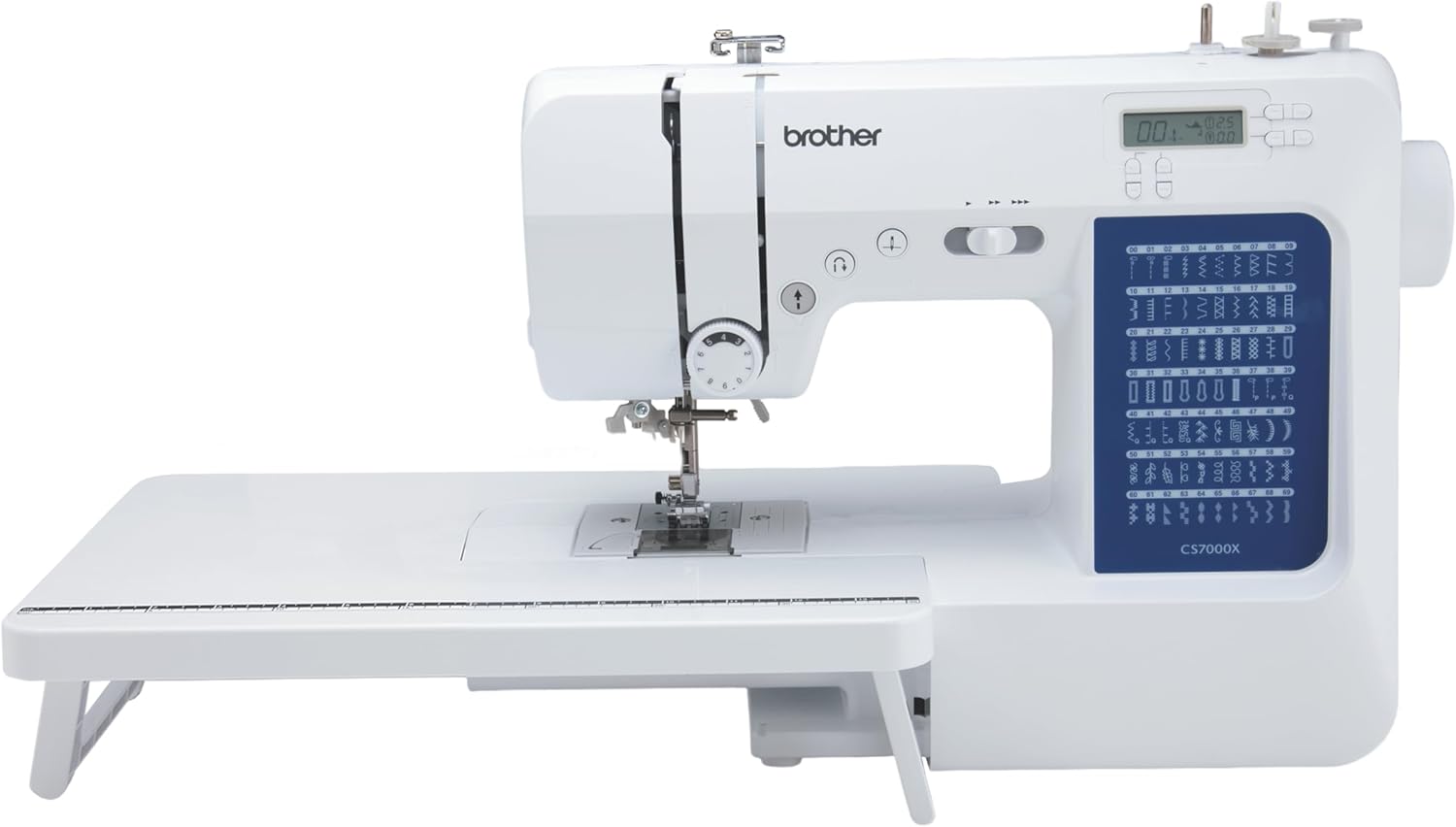
Best Beginner Sewing Machine 2026: Brother vs Janome vs Singer
The first sewing machine is the difference between sewing as a satisfying hobby and sewing as the thing you tried for a month. Here's how to pick a beginner machine that actually works, plus the brands and models to skip.

Best Fabric Marking Tools (2026): Marks That Come Out Again
Every marking tool is a trade between two failure modes: a mark that disappears before you have sewn it, and a mark that will not come out afterwards. There is no tool that avoids both on every fabric, which is why experienced sewers own several and always test on a scrap first. The one that ruins a garment is usually the one nobody tested.