Best First Camera Lens for Beginners (2026): 3 Nifty Fifties by Mount
The kit zoom that came with your camera is fine, but a cheap, fast prime lens is the upgrade that suddenly makes your photos look better. The classic first buy is a 'nifty fifty': a 50mm f/1.8 lens that is sharp, tiny, brilliant in low light, and cheaper than almost anything else you can put on your camera. The one catch is that lenses are not universal, so you have to match the lens to your camera's mount. Here are three good first primes in ascending price, plus how to find the right one for your camera brand.
HobbyStack may earn a commission from links on this page at no extra cost to you. Our picks are chosen on merit; the commission helps fund the research.
- The best first lens for most beginners is a fast 50mm f/1.8 prime, the 'nifty fifty': cheap, very sharp, and great in low light.
- A prime lens teaches you more than a kit zoom, because you move your feet to frame the shot instead of twisting a zoom ring.
- The f/1.8 aperture is the whole point: it blurs the background nicely and lets in far more light, so you can shoot indoors without a flash.
- Lenses are mount-specific, so buy the version made for your camera brand (Canon RF or EF, Sony E, Nikon Z, and so on). The wrong mount will not fit.
 Canon EF 50mm f/1.8 STM LensCanon DSLR shooters (and RF bodies via adapter)$169Check price
 Our pickSony FE 50mm f/1.8 LensSony mirrorless owners$248Check price
 Sigma 56mm f/1.4 DC DN Contemporary LensAPS-C shooters who want a brighter step up$454Check price
Two things make a nifty fifty such a good first upgrade. The first is the wide aperture. A kit zoom usually opens to about f/3.5 to f/5.6, while a 50mm f/1.8 opens much wider, and that does two things a beginner notices right away. It lets in a lot more light, so you can shoot indoors, at a dinner, or after dark without cranking the ISO or popping a harsh flash. And it throws the background out of focus into the soft blur people call bokeh, which makes portraits and close-ups look instantly more polished. The second thing is that a prime lens does not zoom, and that sounds like a downside but is quietly good for learning. Instead of twisting a ring, you move your feet, which forces you to think about where you stand and how you frame a shot. Primes are also usually sharper and lighter than the zoom they replace, for a lot less money. The one bit of homework is crop factor: on a smaller APS-C sensor, a 50mm lens sees more like a 75mm to 80mm lens would on full frame, which is a touch tight for everyday shots. If your camera is APS-C and you want that classic natural 'fifty' look, a roughly 35mm f/1.8 lens gets you there instead.
So the real question is not which 50mm is best, it is which one fits your camera. Lens mounts are brand-specific and they do not cross over: a Canon lens will not click onto a Sony body, and a lens made for one Nikon mount may not fit another. Before you buy anything, find your camera's mount, which is usually printed on the box or one quick search of your model away. Canon mirrorless cameras use the RF mount, older Canon DSLRs use EF, Sony mirrorless use E mount, Nikon mirrorless use Z, and so on. Nearly every one of these systems sells its own cheap 50mm f/1.8, so once you know your mount, you know which nifty fifty to grab. The three picks below run from the classic Canon that started the nickname to a brighter f/1.4 step up, but the honest headline is simpler than any single lens: get the fast fifty that matches your mount, and you will not regret it.
 The original nifty fifty
Canon EF 50mm f/1.8 STM Lens
The lens that earned the 'nifty fifty' nickname, and still the cheapest way to transform a Canon kit. This EF version fits Canon's DSLRs directly, and clicks onto a Canon RF mirrorless body with an inexpensive EF-to-RF adapter, so it covers a lot of Canon owners. It is sharp wide open, tiny, and light, and the STM motor focuses quietly enough for video. The build is honestly plasticky and there is no weather sealing or image stabilization, and the autofocus can hunt a little in dim light. None of that matters much at this price. If you shoot Canon and want one lens that makes your photos better tomorrow, this is it. Canon mirrorless owners can also buy the native RF 50mm f/1.8 STM and skip the adapter.
What's good
- The cheapest real upgrade you can buy for a Canon
- Sharp wide open, with lovely background blur
- Tiny and light, and the quiet STM motor is fine for video
- Works on Canon DSLRs and, with an adapter, RF mirrorless
What's not
- Plasticky build with no weather sealing
- No stabilization, and autofocus can hunt in low light
 The nifty fifty for Sony
Sony FE 50mm f/1.8 Lens
Sony does not have a decades-old nifty fifty like Canon, but this FE 50mm f/1.8 is its stand-in: the cheap, fast standard prime most Sony beginners should start with. It is small, light, sharp once you stop down a touch, and gives you the same big aperture for low light and background blur. Two honest caveats. The autofocus uses an older DC motor that is slow and audibly buzzy next to Sony's pricier lenses, which can annoy on video, and there is no optical stabilization, so you lean on your camera's in-body IS if it has it. On an APS-C Sony body it also frames more like a 75mm lens, which is a bit tight for everyday use. But as an inexpensive first prime for a full-frame Sony, it does the job well.
What's good
- Sony's cheapest fast standard prime
- Small and light, and sharp stopped down a little
- Same big f/1.8 aperture for low light and blur
- Fits both full-frame and APS-C Sony E bodies
What's not
- Older AF motor is slow and noticeably buzzy
- No stabilization, and frames tight on APS-C bodies
 The step-up first prime
Sigma 56mm f/1.4 DC DN Contemporary Lens
If the basic nifty fifty feels too basic, this is the lens people fall for. Sigma makes the 56mm f/1.4 for most APS-C mirrorless mounts, including Sony E, Fujifilm X, Micro Four Thirds, L mount, and Canon, so check that your mount is on the list before buying. That extra bit of aperture over f/1.8 gathers more light and blurs backgrounds even more, and the optics are genuinely excellent, a clear step above a budget fifty. It is built better too, with more metal and a smooth, quiet focus motor. The trade-offs: it costs several times what a plain nifty fifty does, it is APS-C only so it will not cover a full-frame body, and on APS-C its 56mm frames like roughly an 84mm portrait lens, which is lovely for people and tight for much else. There is no image stabilization either. For portraits on an APS-C camera, though, few first primes feel this good.
What's good
- Brighter f/1.4 gathers more light and blurs more
- Excellent, sharp optics, a clear step above a budget fifty
- Solid, metal-heavy build with a quiet AF motor
- Sold for most APS-C mounts (Sony E, Fuji X, MFT, L, Canon)
What's not
- Several times the price of a plain nifty fifty
- APS-C only, no stabilization, and frames tight like an 84mm
This is the one thing you cannot get wrong: a lens only fits the mount it was built for, so buy the nifty fifty made for your camera. The good news is nearly every system sells one. On Canon RF mirrorless it is the Canon RF 50mm f/1.8 STM; on older Canon EF DSLRs, the EF 50mm f/1.8 STM. Sony E mount owners want the Sony FE 50mm f/1.8. Nikon Z mirrorless has the Nikon Z 40mm f/2 (or the pricier Z 50mm f/1.8 S), and Nikon F DSLRs the AF-S 50mm f/1.8G. Fujifilm X uses the 35mm f/2, and Micro Four Thirds the Panasonic or Olympus 25mm f/1.8. One more note: on APS-C bodies, a 35mm-ish lens gives you the classic natural 'fifty' field of view, since a true 50mm frames tighter. Find your mount first, then buy its fifty.
Which to buy: match your mount first. Canon DSLR owners, and RF shooters with an adapter, want the Canon EF 50mm f/1.8 STM, or the native RF version on a Canon mirrorless body. Sony mirrorless owners want the Sony FE 50mm f/1.8. And if you shoot APS-C and want a brighter, better step up mainly for portraits, the Sigma 56mm f/1.4 is the one to save for. Whatever the badge, the pick is the same idea: a fast fifty in your camera's mount.
Before you buy
Find your camera's mount before you buy anything. It is usually on the box or one quick search away (Canon RF or EF, Sony E, Nikon Z, Fujifilm X, and so on), and the wrong mount simply will not fit.
Shooting APS-C? For the classic natural nifty-fifty look, buy a roughly 35mm f/1.8 instead, because a real 50mm frames more like a portrait lens on a smaller sensor.
You rarely need to shoot wide open at f/1.8. Stopping down to f/2.8 or f/4 makes almost any cheap prime noticeably sharper and keeps a little more in focus.
Check for a used or refurbished copy. Nifty fifties are made by the million and hold up well, so a clean second-hand one can save real money.
First lens questions
What is a 'nifty fifty'?
Why buy a prime lens instead of a zoom?
What does f/1.8 actually get me?
How do I know which mount my camera uses?
I have an APS-C camera. Is a 50mm still right?
Which first lens should a beginner buy?
For most beginners the best first lens is simple: a fast 50mm f/1.8 prime, the nifty fifty, in whatever mount your camera uses. It is cheap, sharp, brilliant in low light, and the blurred backgrounds make your photos look instantly better. Canon shooters have the classic EF 50mm f/1.8 STM, or the native RF version; Sony owners the FE 50mm f/1.8; and APS-C shooters who mainly want portraits and can spend more will love the brighter Sigma 56mm f/1.4. The only real mistake is buying the wrong mount, so find your camera's mount first, then buy its fifty.
Ready to actually do it?
The first photography quest takes an evening, and it tells you whether the gear was worth it better than any review can.
Start PhotographyThe HobbyStack editorial team researches each guide against manufacturer specifications, published resources and practitioner sources. Every product is checked for availability and described against its current listing before publication, and prices are re-checked when guides are updated.
About our editorial process →More gear guides
All guides
Best Beginner Mirrorless Camera 2026: Canon EOS R50 vs Sony ZV-E10 II
The best beginner mirrorless camera teaches you photography, not menus. It needs reliable autofocus, a grip that makes sense, and enough image quality to reward good technique. The Canon EOS R50 with its kit lens is the right camera for most people who are just starting out. Here's why, and who should buy something different.

Best Camera Bag for Beginners (2026): How You Get At Your Kit
Most people buy a camera bag on capacity and regret it on access. The question that decides whether a bag gets used is how you reach the camera: if getting the body out means putting the bag on the ground and unpacking it, you will leave the camera in the bag and stop taking pictures. Everything else — padding, weather cover, laptop sleeve — is secondary to that.

Best Camera Tripod for Beginners (2026): 3 Real Picks
A tripod unlocks the shots you cannot get handheld: long exposures, low light, sharp landscapes, self-portraits, and steady video. The good news is a beginner does not need a $600 one. Any stable tripod that holds your camera perfectly still does the core job; what more money buys is less weight, faster setup, and a sturdier hold as your gear grows. Here are three across the range, plus what actually matters when you choose.
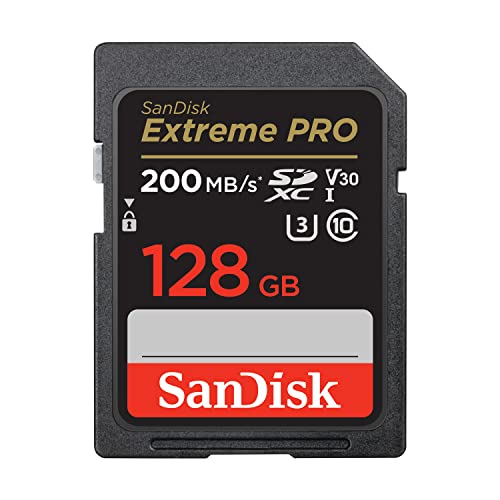
Best SD Card for Photography 2026: SanDisk Extreme PRO vs Ultra vs Sony TOUGH
A memory card is the one piece of gear that, if it fails, costs you the photos themselves: so it's worth getting right, even though it's the cheapest thing in the bag. The good news: the choice comes down to speed class, and most photographers need far less than the marketing implies. A fast V30 UHS-I card handles burst stills and 4K; UHS-II is a video upgrade most cameras can't even use. Here's the honest breakdown.

Best Remote Shutter Release (2026): Check the Mount Before Anything Else
At macro magnifications, pressing the shutter button is enough to blur the shot. Depth of field is measured in millimetres and any vibration you introduce is magnified along with the subject, which is why a remote release is not a convenience here the way it is in normal photography. The catch is that these are not universal, and the compatibility list is the whole purchase.

Best Drawing Tablet for Beginners 2026: XP-Pen Deco vs Wacom Intuos vs Huion Kamvas
Your first drawing tablet is where digital art begins, and the first decision is the big one: a screenless pen tablet (cheaper, lighter, what most pros use) or a pen display you draw directly on (instantly natural, but two to four times the price). The honest answer for almost everyone is start screenless. Here are three picks and which one fits where you are.