Best SD Card for Photography 2026: SanDisk Extreme PRO vs Ultra vs Sony TOUGH
A memory card is the one piece of gear that, if it fails, costs you the photos themselves: so it's worth getting right, even though it's the cheapest thing in the bag. The good news: the choice comes down to speed class, and most photographers need far less than the marketing implies. A fast V30 UHS-I card handles burst stills and 4K; UHS-II is a video upgrade most cameras can't even use. Here's the honest breakdown.
HobbyStack may earn a commission from links on this page at no extra cost to you. Our picks are chosen on merit; the commission helps fund the research.
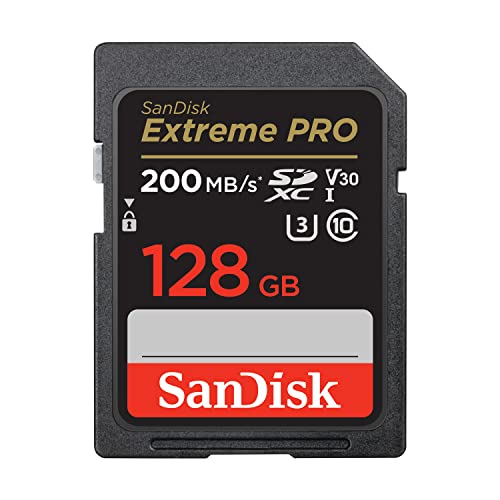
- For most photographers, the SanDisk Extreme PRO 128GB (~$47) is the pick — a fast UHS-I, V30 card that keeps up with continuous-burst stills and 4K video, from a brand with a deserved reputation for not failing. It's the photographer's default: quick enough for almost everything you'll shoot, without paying for speed you can't use.
- On a budget — or for casual shooting — the SanDisk Ultra 128GB (~$38) is plenty for stills, JPEGs, and 1080p video. It's slower, so long bursts fill the buffer sooner and big batches offload less quickly, but for everyday photography it just works for less.
- For serious video, the Sony SF-G TOUGH 128GB (~$255) is the premium UHS-II, V90 card — roughly triple the bandwidth for high-bitrate 4K, 6K/8K, and fast offloading, in a famously rugged waterproof, bend-proof body. Overkill for stills; the right tool the moment you shoot demanding video (and your camera has a UHS-II slot).
- Speed class is the whole decision — and most people need less than they think. A V30 UHS-I card handles burst stills and standard 4K, which covers the vast majority of shooting. UHS-II (V60/V90) only pays off for high-bitrate/6K-8K video or pro-level fast offload — and only if your camera supports it.
- Skip: the cheapest no-name cards (a failed card means lost photos — buy a trusted brand); paying for UHS-II if your camera has a UHS-I slot (you'll get UHS-I speeds either way); and one giant card for everything (two smaller cards hedge against a single card failing mid-shoot).


It's all about speed class — and you probably need less than the box implies
A memory card has two numbers that matter: how much it holds (capacity) and how fast it reads and writes (speed class). Capacity is easy — 128GB is a sensible default for most shooters. Speed is where people overspend, so here's the map.
Card speed is graded by UHS bus (UHS-I vs UHS-II) and Video Speed Class (V30, V60, V90 — the guaranteed sustained write speed in MB/s):
- UHS-I, up to V30 (the SanDisk Ultra and Extreme PRO) tops out around 100–200 MB/s read. A V30 card sustains 30 MB/s writes, which is enough for continuous-burst stills and standard 4K video (up to ~30fps) — i.e. the vast majority of what enthusiasts shoot.
- UHS-II, V60/V90 (the Sony TOUGH) has a second row of pins and roughly triples the bandwidth (up to ~300 MB/s). That headroom only matters for high-bitrate 4K, 6K/8K, or very long bursts of large raws, and for offloading big cards to your computer fast.
The catch most people miss: UHS-II speeds need a UHS-II slot. Put a UHS-II card in a UHS-I camera and it still works — but at UHS-I speed, so you'd be paying for performance the camera can't use. Check your camera's slot before buying up.
So: for stills and normal 4K, a V30 UHS-I card (the Extreme PRO) is the sweet spot — fast, reliable, affordable. Step up to UHS-II only when you're shooting demanding video on a camera that supports it. And whatever you buy, buy a trusted brand — a cheap card that corrupts is the most expensive card there is.
 Best for most photographers
SanDisk 128GB Extreme PRO SDXC UHS-I Card
The photographer's default. The SanDisk Extreme PRO is a fast UHS-I, V30 card — it sustains the write speed that lets a camera shoot long bursts of raws without choking, and records standard 4K reliably, which together cover almost everything an enthusiast does. It reads quickly for snappy offloads, it's built to SanDisk's professional standard (temperature-, shock-, and water-resistant), and it carries the brand reputation that matters most for the one job a card can't fail at: not losing your photos. At around $47 for 128GB it's the sweet spot — meaningfully faster than the Ultra where it counts, without paying for UHS-II speed most shooters can't use. Buy this for almost any camera.
What's good
- Fast UHS-I V30 — handles burst raws and standard 4K
- Quick read speeds for snappy offloads
- Pro-grade durability (shock/temperature/water-resistant)
- Trusted brand — the reliability that actually matters
What's not
- Not UHS-II — caps out for high-bitrate or 6K/8K video
- Slightly pricier than the Ultra
- More speed than a pure stills shooter strictly needs
 Best for casual / budget
SanDisk 128GB Ultra SDXC UHS-I Card
All the card a casual shooter needs. The SanDisk Ultra is a dependable UHS-I card that handles stills, JPEGs, and 1080p (and light 4K) video without drama — for everyday photography it captures and stores exactly as well as pricier cards. It's slower than the Extreme PRO, so very long bursts will fill the camera's buffer sooner and offloading large batches takes a bit longer, but if you're not machine-gunning raws or shooting demanding video, you may never notice. From a trusted brand, at the lowest price here — the sensible pick if your shooting is casual or your budget is tight.
What's good
- Plenty for stills, JPEGs, and 1080p video
- Trusted brand at the lowest price here
- Reliable everyday card — same captures as pricier ones
- Great value for casual shooting
What's not
- Slower writes — long bursts fill the buffer sooner
- Slower offload of large batches
- Not ideal for serious 4K or rapid continuous shooting
 For serious video
Sony 128GB SF-G Tough Series SD Card
The rugged, high-speed card for demanding video. The Sony SF-G TOUGH is a UHS-II, V90 card — its second row of pins roughly triples the bandwidth of a UHS-I card, giving the sustained write speed that high-bitrate 4K, 6K/8K, and very long raw bursts demand, plus fast offloads of big files. It's also the toughest card here by design: Sony's TOUGH line is molded in one piece with no write-protect tab to snap, and rated waterproof and bend-proof far beyond a normal card. The caveats are real: it's expensive, and you only get its speed in a camera with a UHS-II slot — in a UHS-I body it runs at UHS-I speed. But for serious videographers on capable cameras, it's the card that won't be the bottleneck.
What's good
- UHS-II V90 — ~3× bandwidth for high-bitrate/6K-8K video
- Fast offload of large files
- Exceptionally rugged — waterproof, bend-proof, one-piece
- The card that won't bottleneck a demanding camera
What's not
- Expensive — several times the UHS-I cards
- Only reaches full speed in a UHS-II camera slot
- Overkill for stills and standard 4K
A memory card's most important job is not losing your photos, so a few habits matter more than raw speed. Buy genuine cards from trusted brands and sellers — the market is full of counterfeit and fake-capacity cards that corrupt and lose data; a card that fails mid-shoot is the most expensive one you can buy. Format new cards in the camera (not the computer) before first use, and reformat periodically rather than just deleting files — it keeps the file system healthy. Don't put everything on one giant card: two smaller cards (say 2×64GB instead of 1×128GB) mean a single failure costs you half a shoot, not all of it. And offload and back up promptly — a photo exists once until it's in two places.
How to choose between the three
Pick the Extreme PRO if you shoot stills and standard 4K — which is most photographers. Its V30 UHS-I speed handles burst raws and 4K reliably, it's tough and trustworthy, and it doesn't make you pay for UHS-II speed your camera probably can't use.
Pick the Ultra if your shooting is casual — snapshots, JPEGs, 1080p — or money is tight. It captures every bit as well as pricier cards; you only give up speed for long bursts and big offloads, which casual shooters rarely hit.
Pick the Sony TOUGH if you shoot serious video (high-bitrate 4K, 6K/8K) on a camera with a UHS-II slot, and want the fastest, most rugged card. It's the one that won't bottleneck a demanding workflow.
If you're unsure, get the Extreme PRO — and check your camera's slot before ever paying up for UHS-II.
Before you buy
Check your camera's slot first. UHS-II speed needs a UHS-II slot; in a UHS-I camera a UHS-II card just runs at UHS-I speed (and wastes money).
V30 UHS-I is the sweet spot for stills + 4K. Most enthusiasts never need more; buy UHS-II only for high-bitrate or 6K/8K video.
128GB is a sensible default. Big enough for a full day of raws or 4K; small enough that losing one card isn't catastrophic. Two mid-size cards beat one huge one.
Buy from a trusted brand and seller. Fake and counterfeit cards are rampant and corrupt data — a failed card costs you photos, not just money.
Match the card to your camera, not your ambitions. A pro UHS-II card in an entry camera gives you entry speeds; spend the difference on glass or lighting instead.
Common questions about memory cards
What SD card should a beginner photographer get?
Do I need a fast (UHS-II) SD card?
What do V30, V60, and V90 mean?
What's the difference between UHS-I and UHS-II?
What size memory card should I buy?
How do I keep my photos safe on a memory card?
For most photographers, the SanDisk 128GB Extreme PRO SDXC UHS-I Card is the buy — fast UHS-I V30 speed for burst stills and 4K, trusted reliability, ~$47 for 128GB. Shooting casually or on a budget? The SanDisk 128GB Ultra SDXC UHS-I Card captures just as well for less. Shooting serious video on a UHS-II camera? The Sony 128GB SF-G Tough Series SD Card is the rugged, high-speed card that won't bottleneck you. Match the speed class to what you shoot — and your camera's slot — not the biggest number on the box.
Ready to actually do it?
The first photography quest takes an evening, and it tells you whether the gear was worth it better than any review can.
Start PhotographyThe HobbyStack editorial team researches each guide using practitioner communities, published resources, and direct input from active hobbyists. Every guide is reviewed for accuracy before publication and updated when practices change.
About our editorial process →More gear guides
All guides
Best Beginner Mirrorless Camera 2026: Canon EOS R50 vs Sony ZV-E10 II
The best beginner mirrorless camera teaches you photography, not menus. It needs reliable autofocus, a grip that makes sense, and enough image quality to reward good technique. The Canon EOS R50 with its kit lens is the right camera for most people who are just starting out. Here's why, and who should buy something different.

Best Camera Bag for Beginners (2026): How You Get At Your Kit
Most people buy a camera bag on capacity and regret it on access. The question that decides whether a bag gets used is how you reach the camera: if getting the body out means putting the bag on the ground and unpacking it, you will leave the camera in the bag and stop taking pictures. Everything else — padding, weather cover, laptop sleeve — is secondary to that.

Best Camera Tripod for Beginners (2026): 3 Real Picks
A tripod unlocks the shots you cannot get handheld: long exposures, low light, sharp landscapes, self-portraits, and steady video. The good news is a beginner does not need a $600 one. Any stable tripod that holds your camera perfectly still does the core job; what more money buys is less weight, faster setup, and a sturdier hold as your gear grows. Here are three across the range, plus what actually matters when you choose.

Best First Camera Lens for Beginners (2026): 3 Nifty Fifties by Mount
The kit zoom that came with your camera is fine, but a cheap, fast prime lens is the upgrade that suddenly makes your photos look better. The classic first buy is a 'nifty fifty': a 50mm f/1.8 lens that is sharp, tiny, brilliant in low light, and cheaper than almost anything else you can put on your camera. The one catch is that lenses are not universal, so you have to match the lens to your camera's mount. Here are three good first primes in ascending price, plus how to find the right one for your camera brand.

Best Remote Shutter Release (2026): Check the Mount Before Anything Else
At macro magnifications, pressing the shutter button is enough to blur the shot. Depth of field is measured in millimetres and any vibration you introduce is magnified along with the subject, which is why a remote release is not a convenience here the way it is in normal photography. The catch is that these are not universal, and the compatibility list is the whole purchase.

Best Drawing Tablet for Beginners 2026: XP-Pen Deco vs Wacom Intuos vs Huion Kamvas
Your first drawing tablet is where digital art begins, and the first decision is the big one: a screenless pen tablet (cheaper, lighter, what most pros use) or a pen display you draw directly on (instantly natural, but two to four times the price). The honest answer for almost everyone is start screenless. Here are three picks and which one fits where you are.