Best Grow Containers (2026): Air Pruning, Depth and How Often You Water
A plant in a plastic pot eventually runs its roots into the wall and starts going round in circles, and it keeps circling until the whole rootball is a knot that can no longer feed it. A fabric pot stops that from happening, using nothing more complicated than air.
HobbyStack may earn a commission from links on this page at no extra cost to you. Our picks are chosen on merit; the commission helps fund the research.
- Fabric pots air prune: roots hit dry air at the edge, stop, and branch instead of circling.
- Fabric dries out faster than plastic. Expect to water more, especially in wind.
- Depth by crop: 6 inches for salad and herbs, 12 for peppers, 16 or more for tomatoes.
- Irregular watering causes cracked tomatoes and blossom end rot, not a nutrient shortage.
- Dark containers in full sun cook roots. Light colours or shade the pot.
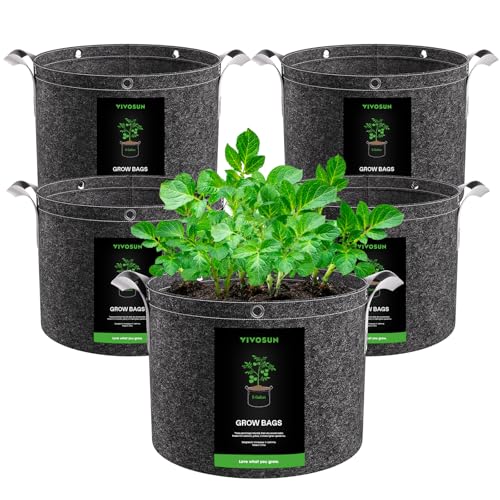 VIVOSUN 5 gal, 5 packTrying containers$21Check price
 Our pickBootstrap Farmer 7 gal, 10 packA real vegetable patch$55Check price
 Glowpear Mini BenchBalconies and long gaps$93Check price
Air pruning, in one paragraph
When a root reaches the side of a plastic pot it cannot go any further, so it turns and follows the wall around. Over a season that becomes a dense spiral, and a root-bound plant stops taking up water and nutrients properly no matter how much you give it.
A fabric pot is permeable. When a root reaches the edge it meets dry air rather than a wall, and the tip dies back. The plant reads that as a stop signal and branches behind it instead, the way pinching out a shoot makes a bushier plant.
The result is a mass of fine feeder roots throughout the soil instead of a coil around the outside, and fine roots are the ones that actually absorb. Both fabric pots here say so on the label, and it is one of the rare cases where the marketing claim is the mechanism.
The trade is water. All that air movement means fabric dries out considerably faster than plastic, especially somewhere breezy like a balcony or a roof. In high summer a fabric pot in full sun can need water twice a day.
Which is the honest argument for the self-watering option further down: it is not better growing, it is a bigger margin for the days you are not there.
Depth, volume and what fits in what
Container size is the thing beginners get wrong, and it is almost always too small.
Root depth by crop, roughly:
- 6 inches — lettuce, spinach, rocket, most herbs, radishes
- 8 to 10 inches — bush beans, chard, garlic, spring onions
- 12 inches — peppers, aubergine, bush cucumbers, dwarf beans
- 16 to 20 inches — tomatoes, potatoes, courgettes, anything that gets tall
Volume matters as much as depth. A rough guide is one tomato or pepper plant per 5 to 7 gallons, three or four lettuces in the same space, and one courgette needing the lot. Crowding two tomatoes into a 5 gallon bag gives you two poor plants rather than one good one.
Bigger is more forgiving. A larger volume of soil dries out more slowly, swings less in temperature, and holds more nutrients, so it forgives an irregular watering routine in a way a small pot never will.
Colour and position. A dark container in direct sun heats the soil considerably, and roots above about 90°F stop working properly. Lighter colours help, and so does shading the pot itself while leaving the leaves in the sun.
Feed more than you think. Every watering carries nutrients out of the drainage holes, and containers have no soil reserve to draw on. A liquid feed every week or two through the growing season is not optional.
 Best for trying containers
VIVOSUN 5-Pack 5 Gallon Grow Bags
Five 5-gallon fabric pots for the price of one decent plastic planter, which makes this the cheapest honest way to find out whether growing in containers suits you. Thick nonwoven fabric aerates and air prunes the roots while draining freely, and a flat base means you can fill one without a second pair of hands. Metal rings sewn round the rim take string for training. Reinforced nylon handles let you chase the sun.
What's good
- Five pots for around twenty dollars
- Genuine air pruning and free drainage
- Metal rings for low stress plant training
- Handles make them easy to move
What's not
- 5 gallons is one tomato, not two
- Thinner fabric than the Bootstrap Farmer
- Dries out fast in wind or full sun
- Fabric stains and looks tired by season two
 Best for a real vegetable patch
Bootstrap Farmer Grow Bags 7 Gallon
Ten 7-gallon bags, and the extra two gallons over a standard 5 is exactly the margin that turns a struggling tomato into a productive one. Twelve inches deep by thirteen across suits peppers, potatoes and tomatoes without crowding. Carefully sewn breathable fabric with reinforced seams and handles, built to be washed, folded flat and reused for several seasons rather than replaced each spring.
What's good
- 7 gallons is the right size for tomatoes and peppers
- Reinforced seams and handles last multiple seasons
- Washable and folds flat for winter storage
- Ten bags covers a whole balcony or patio
What's not
- Nearly three times the VIVOSUN outlay
- Still dries faster than a plastic pot
- Twelve inches is shallow for maincrop potatoes
- Ten is more than a small space needs
 Best for balconies and long gaps
Glowpear Self-Watering Mini Bench Planter
A self-watering planter that solves the actual problem with container growing, which is that plants need water on days you are away. A reservoir underneath lets plants draw what they need, and a gauge tells you when to top it up rather than leaving you guessing. Generous soil depth for fruit and vegetables, in UV-stable food-safe HDPE that stands up outdoors. Units connect together if you want to extend the run.
What's good
- Reservoir covers days you are not there
- Water gauge removes the guesswork
- Steady moisture prevents cracking and blossom end rot
- Food-safe UV-stable HDPE, modular
What's not
- Roughly the cost of ten fabric bags
- One planter, so limited growing area
- Rigid plastic means no air pruning
- Reservoir needs emptying before a hard freeze
Tomatoes that split at the shoulders, and the sunken leathery patch on the bottom of a fruit called blossom end rot, both come from irregular watering rather than a nutrient shortage. The plant cannot move calcium around when the soil swings between bone dry and soaked, so the fruit fails even though the calcium is there. Water little and often and both mostly disappear, which is the real case for a reservoir.
Filling them, and keeping them going
Do not use garden soil. In a container it compacts into a solid airless block and brings weed seeds and disease with it. Use a proper potting mix, or make one from roughly a third compost, a third coir or peat, and a third perlite for air.
Skip the gravel layer. Putting stones in the bottom for drainage is old advice and it works backwards: water does not cross from fine material into coarse until the fine layer is saturated, so you raise the waterlogged zone instead of lowering it. Fill the container with mix, top to bottom.
Water until it runs out of the bottom, then stop. Little sips wet only the top inch and encourage shallow roots. A deep soak less often is better than a daily splash, right up until the heat of summer when fabric pots genuinely need both.
Check with a finger, not a schedule. Two knuckles deep. Damp means wait.
Mulch the surface. An inch of straw, bark or compost on top cuts evaporation noticeably, which is the cheapest way to make a fabric pot behave more like a plastic one.
At the end of the season, tip fabric pots out, wash them, dry them and fold them flat. They will do several more years, and stored wet they will not.
Before you buy
Match depth to the crop: 6 inches for salad, 16 or more for tomatoes.
One tomato or pepper per 5 to 7 gallons. Do not crowd them.
Bigger containers forgive an irregular watering routine.
Fabric for root health, self-watering for days you are away.
Buy potting mix, never garden soil, and skip the gravel layer.
Grow container questions
What is air pruning and does it matter?
How big should a container be for tomatoes?
Do fabric pots need more watering?
Should I put gravel in the bottom for drainage?
The Bootstrap Farmer 7 gallon bags are the right default: big enough for tomatoes and peppers without crowding, built to be washed and reused for years, and enough of them to fill a balcony. Start with the VIVOSUN five pack if you just want to find out whether container growing suits you. Add the Glowpear if the real obstacle is that nobody is home to water on a hot Tuesday. And buy potting mix, not soil.
Ready to actually do it?
The first urban farming quest takes an evening, and it tells you whether the gear was worth it better than any review can.
Start Urban FarmingThe HobbyStack editorial team researches each guide against manufacturer specifications, published resources and practitioner sources. Every product is checked for availability and described against its current listing before publication, and prices are re-checked when guides are updated.
About our editorial process →More gear guides
All guides
Best Beginner Gardening Pruners 2026: Fiskars vs Felco F-2 vs Felco F-8
Hand pruners are the most-used tool in any garden: deadheading, harvesting vegetables, shaping shrubs, cutting back perennials. The right pair makes clean cuts without crushing stems (which invites disease); the wrong pair bruises more than it cuts. Here are three options: a reliable budget shear, the Swiss-made professional standard, and Felco's ergonomic model for gardeners with hand fatigue.

Best Garden Hose (2026): Why Cheap Hoses Kink and Good Ones Do Not
A garden hose is a thing nobody thinks about until theirs kinks behind them for the fourth time in one watering. The difference between a hose that does that and one that does not is entirely material and construction, both of which are printed on the packaging and both of which most people ignore in favour of length and price.

Best Topiary Shears for Beginners (2026): Fiskars vs ARS vs Okatsune
Topiary is one of the few hobbies where a bad tool shows up on a living plant a week later. Sharp shears slice clean and heal fast; dull ones crush and brown your crisp shape. Here is what to buy at $22 to $85.

Best Beginner Fishing Rod and Reel Combo 2026: Spinning Setups That Just Work
For your first setup, a matched spinning rod-and-reel combo is the right call: it's pre-balanced, forgiving to cast, and gets you fishing without choosing parts you don't understand yet. Here are three combos that punch above their price, from a near-indestructible classic to a saltwater-ready upgrade.
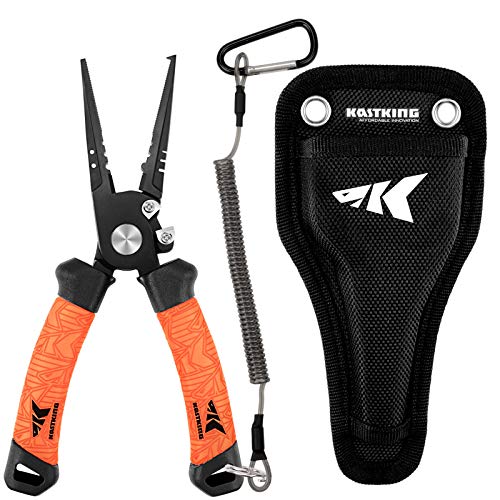
Best Fishing Pliers (2026): Braid Destroys Ordinary Cutters
Braided line is woven from the same fibre used in body armour, and it does not cut so much as fray under a normal blade. A pair of pliers that handles mono perfectly well will chew braid into a fuzzy mess, and the fix is a specific material rather than a sharper edge.

Best Tackle Box for Beginners (2026): 3 Real Picks
A tackle box is where all your lures, hooks, and terminal tackle live, and how you store it shapes how easily you fish. The real question isn't which box is 'best' but how much tackle you carry and how you get to the water: a simple tray box is perfect if you fish from one spot, a backpack is better if you hike or bank-hop, and a modular system is the answer once your collection grows. The key thing to understand is the standard that runs through all of them, the 3700 utility box, which lets you scale storage without starting over. Here are three good options across the range, plus how to choose.