Best Heat-Resistant Gloves (2026): The Rating Is Not the Whole Story
A glove rated to 932°F does not mean you can hold something at 932°F. It means the material survives that temperature for a stated brief contact, and the number on the box is measured under conditions nobody explains. What actually decides whether you get burned is how long your hand is in contact and how thick the insulation is.
HobbyStack may earn a commission from links on this page at no extra cost to you. Our picks are chosen on merit; the commission helps fund the research.
- Temperature ratings assume short contact. Holding something hot is a different test.
- Silicone grips well and conducts heat quickly. Neoprene insulates better and grips less.
- Longer cuffs matter more than a higher rating. Most roasting burns are on the forearm.
- Wet gloves conduct heat straight to skin. Steam burns are the common injury.
- Dexterity is a safety feature. Dropping a hot drum is worse than a warm hand.
 GORILLA GRIP Silicone MittsGrip and quick handling$20Check price
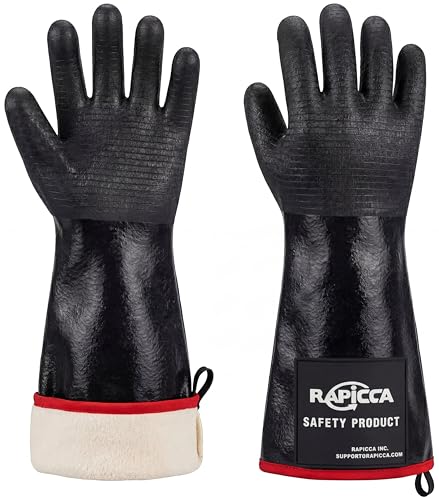 Our pickRAPICCA 14" NeopreneMost roasters$29Check price
- RAPICCA WaterproofWet and oily work$36Check price
What a temperature rating actually tells you
The headline figure on a heat glove is a material limit, not a promise about your hand.
It means the material will not melt, char or degrade at that temperature for a defined short exposure. It says nothing about how much heat reaches your skin, and that depends on two other things entirely.
Contact time. Brushing a hot surface for a second is a completely different exposure from gripping a roasting drum for thirty. Nearly all quoted ratings assume the former.
Insulation thickness. Heat moves through a glove at a rate set by the material and how much of it there is. A thin glove rated to a very high temperature can transmit more heat to your hand in ten seconds than a thicker glove with a lower rating.
So the useful reading of these numbers is comparative rather than absolute. A 932°F glove will outlast a 550°F one against the same hot object; neither lets you hold a hot drum indefinitely.
The practical habit that matters more than any rating: move deliberately and let go. Gloves buy you seconds to complete a movement, not permission to linger.
Silicone against neoprene
Two materials, two genuinely different characters.
Silicone is what the ridged, grippy mitts are made from. Its virtue is friction: a silicone surface holds a smooth hot pan or a glass carafe far better than fabric, which is the difference between carrying something hot and dropping it. It also wipes clean and is waterproof by nature. Its weakness is that silicone conducts heat reasonably well, so a thin silicone mitt can feel hot quickly, and thick silicone is clumsy.
Neoprene insulates better for its thickness and stays more flexible, which is why the longer BBQ-style gloves use it. It also handles the awkward middle case well: warm rather than scorching contact, sustained for a while, which is most of what roasting involves.
Cotton and aramid gloves are the third family, common in kitchens, and they have one serious failure mode: they absorb moisture, and a wet glove conducts heat straight through. Wet oven gloves are the classic burn.
For roasting, where you are handling a warm drum, a hot chaff collector and beans that need moving fast, the longer neoprene glove is the sensible default with a silicone mitt alongside for smooth hot objects.
 Best grip
GORILLA GRIP Silicone Oven Mitts
Silicone mitts rated to 550°F, and grip is the reason to own them rather than the temperature figure. The ridged silicone surface holds a smooth hot object — a glass carafe, a steel tray, a roasting drum with nothing to hook a finger round — far better than fabric does, and dropping something hot is worse than a warm hand. Waterproof by nature, so no wet-glove conduction problem, and they wipe clean rather than absorbing chaff and oil. At 12.5 by 8.3 inches they cover the hand and a little of the wrist. Two limits: the lowest rating here, and silicone conducts heat well enough that sustained contact with something genuinely hot warms through faster than neoprene would.
What's good
- Ridged silicone grips smooth hot objects properly
- Waterproof, so no wet-glove heat conduction
- Wipes clean of chaff and coffee oils
- Cheapest of the three
What's not
- 550°F is the lowest rating here
- Silicone warms through faster on sustained contact
- Short — very little forearm coverage
- Bulky for anything fiddly
 Best for most roasters
RAPICCA BBQ Grill Gloves
Rated to 932°F in neoprene, and at 14 inches long it covers the forearm — which is the specification that actually prevents the injuries. Most roasting burns are not on the palm; they are on the inside of the forearm, from reaching over a hot drum or into an oven, and a short glove leaves exactly that area bare. Neoprene insulates better than silicone for its thickness while staying flexible enough to work in, which suits the sustained warm-to-hot contact roasting involves: holding a drum steady, moving a chaff collector, tipping beans into a cooling tray. It is the sensible middle. The trade against silicone is grip on smooth surfaces, which is genuinely worse, so many roasters keep both.
What's good
- 14-inch cuff protects the forearm, where burns happen
- 932°F rating with good neoprene insulation
- Flexible enough to actually work in
- Right for sustained warm contact
What's not
- Grips smooth hot surfaces less well than silicone
- Not waterproof — wet gloves conduct heat
- Bulky to store
- Absorbs coffee oils over time
Best for wet and oily workRAPICCA Heat Resistant BBQ Grill Gloves: Oil Resistant
The same 932°F neoprene construction with oil resistance and a waterproof outer, which addresses the failure mode that catches people out: a damp glove conducts heat straight to skin, and steam burns are a more common roasting injury than dry heat. Water-cooling beans, washing down a drum, or working in a humid space all put moisture where you do not want it, and a waterproof glove keeps insulating. Oil resistance matters over time too — coffee oils soak into fabric and gradually stiffen and degrade it, so a sealed surface simply lasts longer. Beyond that it is the same glove as the 14-inch version at a small premium. Buy it if your process involves water or you roast often enough for oil saturation to matter.
What's good
- Waterproof, so it keeps insulating when damp
- Oil resistant — coffee oils do not soak in and stiffen it
- Same 932°F neoprene rating
- Lasts longer with frequent use
What's not
- Only a small improvement on the 14-inch version
- Waterproof outer breathes less, so hands get sweaty
- Still poorer grip than silicone on smooth objects
- Dearest of the three
Water conducts heat far better than the air trapped in an insulating material, so moisture in a glove creates a direct path to your skin — and it turns to steam on contact with something hot, which burns worse than dry heat does. Never pick up anything hot with a damp glove, and dry them fully between sessions. This is the most common burn in any kind of hot work.
Where roasting actually burns people
The hazards in home roasting are not where beginners expect, and knowing them changes what you buy.
Chaff is the fire risk. The papery skin comes off the bean during roasting, it is bone dry, and it ignites readily. A collector left full, or chaff blown near a heat source, is how roasting fires start. Empty it every roast.
The forearm, not the hand. Reaching over a hot drum or into an oven puts the inside of your forearm against the hottest air in the room. This is the argument for a 14-inch glove over a mitt.
Second crack and beyond. Beans keep releasing oils and heat, and a batch pulled dark and left sitting in a pile continues cooking and can scorch. Cool fast and spread thin.
Steam from cooling. Some people cool with a light water spray, which flashes to steam instantly. That is the moment for a waterproof glove.
Smoke. Roasting produces a great deal of it, particularly past second crack, so extraction matters. Not a burn, but the reason people end up roasting in a garage.
Before you buy
Length before rating. Most roasting burns are on the forearm.
Silicone for grip on smooth hot objects, neoprene for sustained contact.
Waterproof if your cooling involves any water at all.
Keep them dry. A damp glove conducts heat straight through.
Move deliberately. Gloves buy seconds, not permission to linger.
Heat glove questions
Does a 932°F rating mean I can hold something that hot?
Silicone or neoprene heat gloves?
Why does glove length matter for roasting?
Why are wet gloves dangerous?
Buy the 14-inch RAPICCA. The forearm coverage is worth more than any rating on a short glove, because that is where roasting actually burns people, and neoprene insulates well for sustained warm contact. Add the Gorilla Grip silicone mitts alongside for smooth hot objects where grip matters more than insulation. Take the waterproof RAPICCA instead if your cooling involves water. And never pick anything up with a damp glove.
Ready to actually do it?
The first coffee roasting quest takes an evening, and it tells you whether the gear was worth it better than any review can.
Start Coffee RoastingThe HobbyStack editorial team researches each guide against manufacturer specifications, published resources and practitioner sources. Every product is checked for availability and described against its current listing before publication, and prices are re-checked when guides are updated.
About our editorial process →More gear guides
All guides
Best Beginner Home Coffee Roaster 2026: Nuvo vs Fresh Roast SR540 vs Behmor 1600
Home roasting is one of those rare hobbies where the result is measurably better than what you can buy. Get the right roaster and you'll drink the best coffee of your life within a month.
Best Auto-Siphon (2026): Move the Beer Without Moving the Trub
Racking is moving beer off the sediment it has dropped, and there are two ways to ruin it. One is stirring up the trub so it comes with you. The other is splashing, which dissolves oxygen into finished beer and produces a stale, wet-cardboard flavour weeks later. An auto-siphon exists to avoid both, and it costs less than a bag of hops.

Best Bottling Wand (2026): Fill to the Brim, Then Let It Drop
A bottling wand looks like a length of tube with a valve on the end, and the clever part is what happens when you lift it out. You fill the bottle right to the brim, and withdrawing the wand removes exactly its own volume, leaving the correct headspace every time without measuring anything.
Best Brewing Sanitizer (2026): Clean First, Then Sanitise
More homebrew is ruined by infection than by any mistake in the recipe, and almost all of it traces back to one misunderstanding: cleaning and sanitising are two separate steps, and sanitiser does nothing on a surface that is not already clean. The good news is that the standard product costs very little and works in thirty seconds.

Best Brewing Thermometer (2026): Two Degrees Changes the Beer
Mash at 150°F and you get a dry, crisp beer. Mash at 156°F and you get a fuller, sweeter one from exactly the same grain bill. That is a six-degree window deciding the character of the finished beer, which makes an accurate thermometer less of an accessory than a recipe ingredient.

Best Beginner Winemaking Kit 2026: Craft a Brew vs North Mountain vs Master Vintner
Good news first: making wine at home is more forgiving than it sounds, and you don't need a cellar or a chemistry degree to end up with something you'd actually pour for a friend. A starter kit gives you the gear to ferment, rack, and bottle, and you supply the juice or fruit and a little patience. The catch nobody mentions is that "kit" means two different things. Some are all-in-one boxes with the juice included so you can start tonight, and some are just the reusable equipment that expects you to bring your own ingredients. This guide sorts out which is which, and picks three genuinely good ones: the easiest way to try it, the best gear for most beginners, and the full-size rig to grow into.