Best Brewing Thermometer (2026): Two Degrees Changes the Beer
Mash at 150°F and you get a dry, crisp beer. Mash at 156°F and you get a fuller, sweeter one from exactly the same grain bill. That is a six-degree window deciding the character of the finished beer, which makes an accurate thermometer less of an accessory than a recipe ingredient.
HobbyStack may earn a commission from links on this page at no extra cost to you. Our picks are chosen on merit; the commission helps fund the research.
- Mash temperature decides body. Lower is drier, higher is fuller, and the window is small.
- Calibrate in ice water. It should read 32°F, and dial thermometers drift constantly.
- Speed matters when the lid is open. Every second of reading is heat leaving the mash.
- Pitching temperature matters as much as mash. Hot yeast makes harsh beer.
- Take readings from the middle, not the edge. A mash tun is not one temperature.
 Taylor Candy/Deep Fry ThermometerLeaving in the kettle$11Check price
 Our pickThermoWorks ThermoPop 2Most brewers$47Check price
 ThermoWorks Thermapen ONESpeed and accuracy$125Check price
Why mash temperature does what it does
Mashing is enzymes converting starch into sugar, and there are two of them working at different temperatures — which is the whole reason a couple of degrees matters.
Beta-amylase works best around 140-150°F. It chops starch into maltose, a simple sugar yeast ferments completely. Favour it and you get a beer that is dry, crisp and higher in alcohol, with little body left behind.
Alpha-amylase works best around 154-162°F. It produces longer dextrins, which yeast largely cannot ferment. Favour it and those sugars stay in the finished beer as sweetness and mouthfeel.
Most mashes sit between the two, and where exactly decides the balance. 148-150°F for a dry, highly attenuated beer. 152°F as the common middle. 154-156°F for something fuller and maltier.
Both enzymes denature above about 168°F, which is why a mash that overshoots cannot be rescued by cooling — the enzymes are already destroyed and conversion stops.
So the accuracy you need is roughly ±1°F, and that is more than a cheap dial reliably gives.
Calibrating, and why dial thermometers drift
A thermometer that is confidently wrong is worse than none, because you brew to the number and blame the recipe.
Ice water is the check. Fill a glass with crushed ice, top with water, stir, and wait a minute. It is 32°F, near enough for this purpose, anywhere in the world. Anything more than a degree or two out needs correcting or replacing.
Boiling water is the second point, at 212°F at sea level — but it drops with altitude, so it is less useful unless you know yours.
Bimetal dial thermometers drift, and they drift more than people expect: knocks, heat cycling and time all move them, and they can be several degrees out within a season. Most have a nut under the dial for recalibration, which almost nobody uses. Check a dial thermometer every few brews.
Digital thermometers hold calibration far better, which is a large part of what you are paying for.
And whatever you use, check it against a second one occasionally. Two thermometers agreeing is decent evidence; one thermometer is a belief.
 Best to leave in the kettle
Taylor Candy/Deep Fry/Jelly Thermometer
A clip-on dial thermometer that lives in the pot, and its virtue is continuous presence rather than precision. Clipped to the side of a boil kettle it shows you the temperature at a glance the whole time, which is genuinely useful during a long ramp or while chilling wort — you see the trend rather than sampling it, and you notice a runaway before it happens. Long enough to reach into a deep kettle. What it is not is accurate enough to set a mash by: bimetal dials drift with knocks and heat cycling, and can be several degrees out within a season, which is the whole six-degree window that decides body. Use it as the at-a-glance gauge and confirm your mash with something digital.
What's good
- Stays clipped in the pot for a continuous reading
- Shows the trend while ramping or chilling
- Long probe reaches into a deep kettle
- Costs less than a packet of hops
What's not
- Bimetal dials drift, sometimes several degrees a season
- Not accurate enough to set a mash by
- Slow to respond to a change
- Needs recalibrating and most people never do
 Best for most brewers
ThermoWorks ThermoPop 2 — Best Value Instant Read Thermometer
ThermoWorks make the instrument the rest of the category is measured against, and the ThermoPop 2 is the version that costs a sensible amount — rated the number one instant-read by Wirecutter, and recognised by USA Today, Business Insider and Bon Appétit, which is unusual consensus for a kitchen tool. What matters for brewing is that it holds calibration in a way a dial thermometer does not, and reads fast enough that the mash tun lid is open for seconds rather than a minute. The rotating display means you can read it at any angle, including reaching over a hot kettle. It also does everything else in the kitchen. Slower and less precise than the Thermapen, and a third of the price, which is the right trade for most people.
What's good
- Holds calibration far better than any dial
- Fast enough to keep the mash tun lid open briefly
- Rotating display readable at any angle
- Useful across the whole kitchen, not just brew day
What's not
- Slower than the Thermapen
- Not waterproof to the same degree as the flagship
- Four times the dial thermometer
- Battery to remember
 Best speed and accuracy
ThermoWorks Thermapen ONE
The reference instant-read thermometer, reading in about a second, and the case for it on brew day is specifically about the lid. Every reading from a mash tun means opening it, and an open tun loses heat continuously — so a thermometer that settles in one second rather than eight costs you a fraction of the temperature drop over a sixty-minute mash with several checks. It is also more accurate than the ThermoPop, which matters given that a couple of degrees is the difference between a dry beer and a full one. Beyond brewing it is the thermometer most serious cooks own. The honest position: nearly three times the ThermoPop, and the difference is seconds and fractions of a degree rather than a different capability.
What's good
- Reads in about a second — minimal heat loss from the tun
- More accurate than the ThermoPop
- The reference instrument in its category
- Equally at home in the kitchen
What's not
- Nearly three times the ThermoPop
- The gain is seconds and fractions of a degree
- Overkill unless you brew often
- Easy to leave somewhere hot and damage
A mash tun is not one temperature. The edges lose heat to the vessel and the top loses it to the air, so a reading taken near the wall can be several degrees below the core. Stir gently to even it out, then read from the middle at mid-depth. A mash that seems to be dropping fast is often just being measured in the coldest place in it.
The other temperatures on brew day
Mash gets the attention and three more decide as much about the finished beer.
Strike water goes in hotter than your target, because the grain is at room temperature and will pull the mash down when it hits. Roughly 10-12°F above target for a typical ratio, adjusted for how cold your grain and tun are. Preheating the tun with hot water makes this far more predictable.
Sparge water around 168-170°F, which rinses sugars efficiently. Above about 170 you start extracting tannins from the husks, which makes beer astringent.
Pitching temperature is the one people rush, and it matters enormously. Yeast pitched too warm produces fusel alcohols and harsh, solventy flavours that never age out. Most ale yeast wants pitching in the 60s Fahrenheit and holding there — and the fermentation itself generates heat, so a beer left at ambient will run warmer than the room.
Serving temperature is the last one, and colder is not better: too cold and you cannot taste anything you spent a month making.
Before you buy
Calibrate in ice water before your first brew and every few after.
Digital holds calibration; dials drift. Use a dial for trend, digital for decisions.
Speed matters because reading means opening the tun.
Stir before reading, and read from the middle.
Get pitching temperature right too. It is as important as the mash.
Brewing thermometer questions
Why does mash temperature matter so much?
How do I calibrate a brewing thermometer?
Is an expensive thermometer worth it for homebrewing?
What temperature should I pitch yeast at?
The ThermoWorks ThermoPop 2 is the right buy for most brewers: it holds calibration where dial thermometers drift, reads fast enough that the mash tun lid is barely open, and it earns its keep in the kitchen the rest of the month. Keep a cheap clip-on dial in the boil kettle for the at-a-glance trend, but do not set a mash by it. The Thermapen ONE is worth it if you brew often and want the second back. Calibrate in ice water either way.
Ready to actually do it?
The first homebrewing quest takes an evening, and it tells you whether the gear was worth it better than any review can.
Start HomebrewingThe HobbyStack editorial team researches each guide against manufacturer specifications, published resources and practitioner sources. Every product is checked for availability and described against its current listing before publication, and prices are re-checked when guides are updated.
About our editorial process →More gear guides
All guides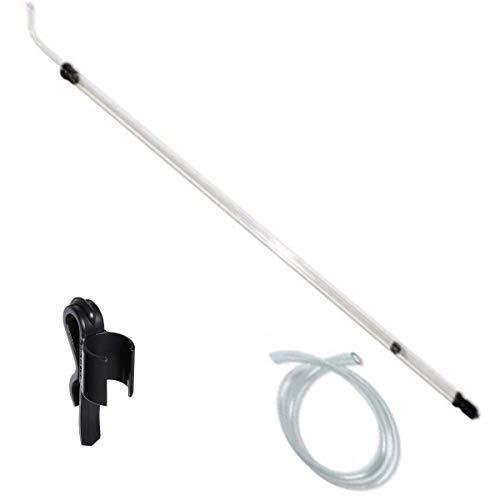
Best Auto-Siphon (2026): Move the Beer Without Moving the Trub
Racking is moving beer off the sediment it has dropped, and there are two ways to ruin it. One is stirring up the trub so it comes with you. The other is splashing, which dissolves oxygen into finished beer and produces a stale, wet-cardboard flavour weeks later. An auto-siphon exists to avoid both, and it costs less than a bag of hops.

Best Bottling Wand (2026): Fill to the Brim, Then Let It Drop
A bottling wand looks like a length of tube with a valve on the end, and the clever part is what happens when you lift it out. You fill the bottle right to the brim, and withdrawing the wand removes exactly its own volume, leaving the correct headspace every time without measuring anything.
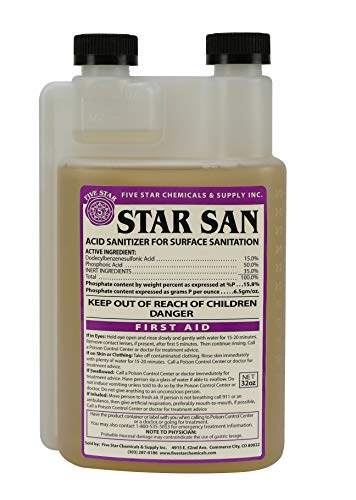
Best Brewing Sanitizer (2026): Clean First, Then Sanitise
More homebrew is ruined by infection than by any mistake in the recipe, and almost all of it traces back to one misunderstanding: cleaning and sanitising are two separate steps, and sanitiser does nothing on a surface that is not already clean. The good news is that the standard product costs very little and works in thirty seconds.

Best Beginner Winemaking Kit 2026: Craft a Brew vs North Mountain vs Master Vintner
Good news first: making wine at home is more forgiving than it sounds, and you don't need a cellar or a chemistry degree to end up with something you'd actually pour for a friend. A starter kit gives you the gear to ferment, rack, and bottle, and you supply the juice or fruit and a little patience. The catch nobody mentions is that "kit" means two different things. Some are all-in-one boxes with the juice included so you can start tonight, and some are just the reusable equipment that expects you to bring your own ingredients. This guide sorts out which is which, and picks three genuinely good ones: the easiest way to try it, the best gear for most beginners, and the full-size rig to grow into.

Best Pot for Cheese Making (2026): Milk Scorches Where the Pan Is Thin
Milk is unforgiving in two specific ways. It reacts with bare aluminium and copper, which taints the curd and discolours the pan, and it scorches wherever the base has a hot spot — and once a batch has caught, the whole thing tastes of it. Both problems are solved by the same purchase, and neither is solved by watching more carefully.
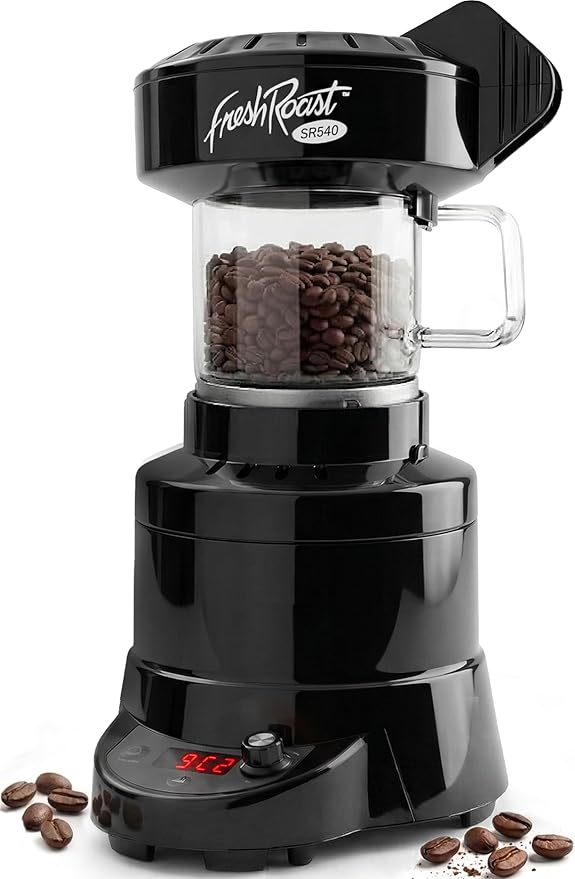
Best Beginner Home Coffee Roaster 2026: Nuvo vs Fresh Roast SR540 vs Behmor 1600
Home roasting is one of those rare hobbies where the result is measurably better than what you can buy. Get the right roaster and you'll drink the best coffee of your life within a month.