Best Brewing Sanitizer (2026): Clean First, Then Sanitise
More homebrew is ruined by infection than by any mistake in the recipe, and almost all of it traces back to one misunderstanding: cleaning and sanitising are two separate steps, and sanitiser does nothing on a surface that is not already clean. The good news is that the standard product costs very little and works in thirty seconds.
HobbyStack may earn a commission from links on this page at no extra cost to you. Our picks are chosen on merit; the commission helps fund the research.
- Clean first, sanitise second. Sanitiser cannot reach through a film of residue.
- Star San needs about 30 seconds of contact and does not need rinsing.
- Do not fear the foam. It is sanitiser, and it breaks down into yeast nutrient.
- Only sanitise what touches the wort after the boil. Before the boil does not matter.
- Mixed solution keeps for weeks if you use distilled water. Cloudy is still fine; use pH to judge.
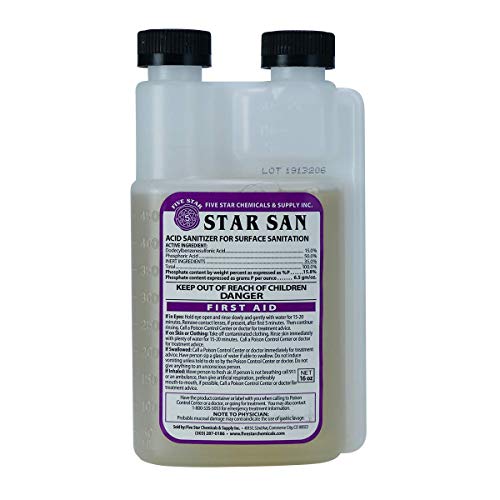 Our pickStar San 16ozA first bottle$20Check price
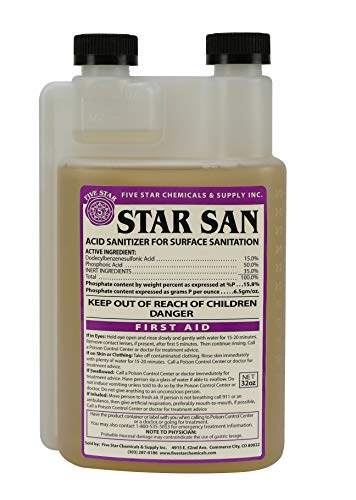 Star San 32ozBrewing regularly$29Check price
 Star San 1 gallonKegging and big batches$120Check price
Cleaning and sanitising are different jobs
This is the single most useful thing to understand, and it is why people who sanitise diligently still get infections.
Cleaning removes soil. Protein, sugar residue, hop matter, the beer stone that builds up in a fermenter. It is mechanical and chemical: a cleaner like PBW or oxygen brewery wash plus a soft brush.
Sanitising kills what remains. It is a chemical reaction against organisms on a surface, and it needs to physically contact them.
So the order is not negotiable. A film of dried wort protects everything living underneath it, and sanitiser applied over that film reaches the film and nothing else. That is how a fermenter that has been sanitised twice still infects a batch.
Scratched plastic is the other classic culprit. Every scratch is a place cleaner cannot reach and organisms can. This is why brewers use soft cloths and non-abrasive brushes on plastic, and why a badly scratched bucket is worth replacing rather than scrubbing harder.
Timing: anything that touches the wort after the boil must be sanitised — fermenter, airlock, siphon, hydrometer, spoon, your hands. Anything before the boil will be sterilised by the boil itself.
Contact time, foam, and no-rinse
Star San is an acid anionic sanitiser, and three properties follow from that.
Contact time is about 30 seconds. That is genuinely all — the surface has to be wet with solution for half a minute, which is why brewers spray or slosh rather than soak. Anything shorter is not sanitising, anything longer is not doing more.
It is no-rinse at the correct dilution, which is the point of it: rinsing with tap water would recontaminate everything you just treated. Left to dry on stainless it actually passivates the metal, which improves corrosion resistance rather than harming it.
It foams enormously, and this is the thing that alarms every new brewer. The foam is sanitiser. Getting it in the fermenter is fine, and the surfactant breaks down into something yeast can use. "Don't fear the foam" is the phrase you will see repeated, and it is correct.
Dilution matters. Roughly one ounce to five gallons is the standard, and too weak does not sanitise while too strong is wasteful and can leave residue. The dual-neck bottle exists to measure it without guessing.
Hard water shortens solution life. Distilled or reverse osmosis water keeps a batch usable for weeks.
 Best first bottle
Five Star - Star San - 16 Ounce - Brew Sanitizer High Foaming
Sixteen ounces, which at roughly an ounce per five gallons of solution is a great many brew days — for a five-gallon batch brewer this is most of a year. It comes in a dual-neck dosing bottle with built-in measurements, so you squeeze the required amount into the small chamber and pour that, which removes the guesswork that leads to weak or wasteful mixes. High foaming with little agitation, so it penetrates cracks and crevices you cannot reach with a brush, and no-rinse at 30 seconds contact. Left to dry on stainless it passivates and protects the metal. Works on carboys, kegs, fermenters, kettles, chillers and heat exchangers. The choice between the three sizes here is purely volume; the product is identical.
What's good
- Dual-neck dosing bottle measures for you
- No-rinse at 30 seconds contact time
- Foams into cracks a brush cannot reach
- Passivates stainless steel as it dries
What's not
- Does not clean — you still need a separate cleaner
- Foam alarms every new brewer
- Solution life is short in hard water
- Dearest per ounce of the three sizes
 Best for regular brewing
Five Star - 6022b_ - Star San - 32 Ounce - High Foaming
The same product in twice the volume, at well under twice the price, and that is the entire case for it. Sanitiser is a consumable you will not stop needing, it does not spoil in the concentrate, and the per-ounce cost of the 16oz bottle is the worst of the three — so if you have brewed more than a couple of batches and intend to continue, this is simply the sensible size. Identical chemistry: acid anionic, high foaming, 30 second contact, no rinse, passivates stainless. Nothing about how you use it changes. The only reasons to buy the smaller bottle instead are storage space and not yet being sure you will keep brewing, both of which are legitimate for a first batch and not for a fifth.
What's good
- Twice the volume for well under twice the price
- Concentrate does not spoil in storage
- Identical chemistry to the small bottle
- Right size for anyone brewing regularly
What's not
- More than a very occasional brewer needs
- Takes more shelf space
- Still not a cleaner
- Same short solution life in hard water
 Best for kegs and big batches
Five Star Chemicals Five Star
A full gallon, and the honest framing is that this is a bulk purchase rather than a better product — the chemistry is the same as the 16oz bottle. It makes sense at a specific point: when you are kegging, because filling and purging kegs consumes far more solution than a bucket of sanitiser for a carboy, or when you brew ten-gallon batches, or when a club or a group of friends buys together. At that volume the per-ounce saving is real and the bottle will still be in date long before it runs out. What it does not come with is the dual-neck dosing bottle, so you will want to keep an old one or measure carefully. For a five-gallon brewer on a normal schedule this is several years of sanitiser.
What's good
- Lowest cost per ounce by a wide margin
- Right volume for kegging or 10-gallon batches
- Concentrate keeps indefinitely
- Sensible for a club or a group buy
What's not
- No dual-neck dosing bottle — measure it yourself
- Several years of sanitiser for a small brewer
- Awkward to pour from and to store
- Identical product to the cheap bottle
Star San foams enormously and every new brewer assumes the foam must be kept out of the beer. It does not. The foam is sanitiser at working strength, and the surfactant breaks down into something yeast can use. Pouring wort onto a foamy fermenter is normal practice. What you should not do is rinse it out with tap water, which recontaminates everything you just sanitised.
Judging whether your solution is still good
Mixed Star San does not last forever, and the usual signals mislead people in both directions.
Cloudiness is not failure. Solution mixed with hard water goes milky within hours as minerals precipitate, and it is still perfectly effective. People throw away good sanitiser over this constantly.
pH is the real test. Star San works below about pH 3. Cheap pH strips will tell you in seconds whether a batch is still in range, and that is the only reliable check.
Distilled or RO water avoids the whole problem: mixed with it, solution stays clear and stays usable for weeks in a sealed container.
Keep it in a spray bottle. Far less solution used per session, it reaches inside a fermenter or a bottle without filling it, and one mix lasts much longer.
A bucket is still useful for soaking small parts — airlocks, stoppers, siphon ends, tubing — while you get on with the brew. Drop them in at the start and they are done by the time you need them.
Before you buy
Buy a cleaner too. Sanitiser is not a cleaner and cannot work over residue.
Mix with distilled or RO water and it lasts weeks, not hours.
Use a spray bottle. It stretches a mix a very long way.
Cloudy is fine. Judge by pH, not by looks.
Sanitise everything that touches wort after the boil, including your hands.
Sanitizer questions
What's the difference between cleaning and sanitising?
Do I need to rinse Star San off?
How long does Star San need to work?
My Star San solution went cloudy — is it dead?
Buy Star San and a separate cleaner, and get the order right — sanitiser does nothing over a film of residue. The 16oz bottle with its dual-neck doser is the right first purchase and lasts most of a year for a five-gallon brewer. Move to the 32oz once you know you will keep brewing, because the per-ounce cost of the small bottle is the worst of the three. The gallon is for kegging and clubs. Mix with distilled water, keep it in a spray bottle, and do not fear the foam.
Ready to actually do it?
The first homebrewing quest takes an evening, and it tells you whether the gear was worth it better than any review can.
Start HomebrewingThe HobbyStack editorial team researches each guide against manufacturer specifications, published resources and practitioner sources. Every product is checked for availability and described against its current listing before publication, and prices are re-checked when guides are updated.
About our editorial process →More gear guides
All guides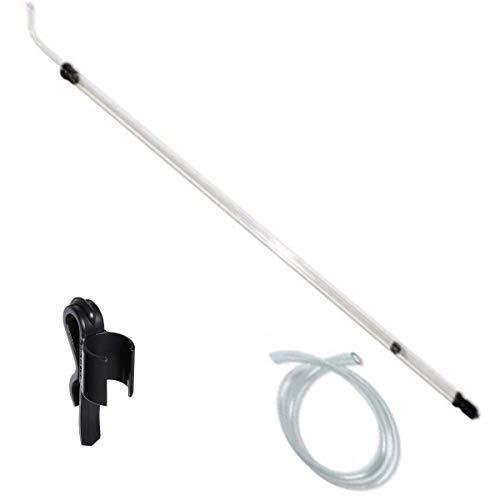
Best Auto-Siphon (2026): Move the Beer Without Moving the Trub
Racking is moving beer off the sediment it has dropped, and there are two ways to ruin it. One is stirring up the trub so it comes with you. The other is splashing, which dissolves oxygen into finished beer and produces a stale, wet-cardboard flavour weeks later. An auto-siphon exists to avoid both, and it costs less than a bag of hops.

Best Bottling Wand (2026): Fill to the Brim, Then Let It Drop
A bottling wand looks like a length of tube with a valve on the end, and the clever part is what happens when you lift it out. You fill the bottle right to the brim, and withdrawing the wand removes exactly its own volume, leaving the correct headspace every time without measuring anything.

Best Brewing Thermometer (2026): Two Degrees Changes the Beer
Mash at 150°F and you get a dry, crisp beer. Mash at 156°F and you get a fuller, sweeter one from exactly the same grain bill. That is a six-degree window deciding the character of the finished beer, which makes an accurate thermometer less of an accessory than a recipe ingredient.

Best Beginner Winemaking Kit 2026: Craft a Brew vs North Mountain vs Master Vintner
Good news first: making wine at home is more forgiving than it sounds, and you don't need a cellar or a chemistry degree to end up with something you'd actually pour for a friend. A starter kit gives you the gear to ferment, rack, and bottle, and you supply the juice or fruit and a little patience. The catch nobody mentions is that "kit" means two different things. Some are all-in-one boxes with the juice included so you can start tonight, and some are just the reusable equipment that expects you to bring your own ingredients. This guide sorts out which is which, and picks three genuinely good ones: the easiest way to try it, the best gear for most beginners, and the full-size rig to grow into.

Best Pot for Cheese Making (2026): Milk Scorches Where the Pan Is Thin
Milk is unforgiving in two specific ways. It reacts with bare aluminium and copper, which taints the curd and discolours the pan, and it scorches wherever the base has a hot spot — and once a batch has caught, the whole thing tastes of it. Both problems are solved by the same purchase, and neither is solved by watching more carefully.
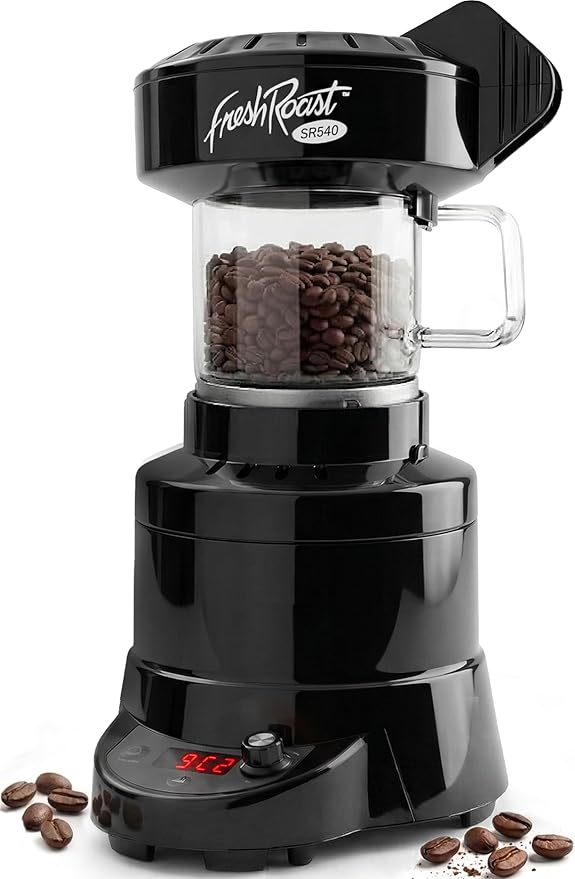
Best Beginner Home Coffee Roaster 2026: Nuvo vs Fresh Roast SR540 vs Behmor 1600
Home roasting is one of those rare hobbies where the result is measurably better than what you can buy. Get the right roaster and you'll drink the best coffee of your life within a month.