Best Laser Fume Extraction (2026): Ducting Outside Beats Filtering
Cutting anything with a laser vaporises it, and that vapour has to go somewhere. The honest hierarchy is simple and slightly awkward for a buying guide: sending fumes outside through a duct is better than filtering them, and it is also the cheapest option here. Filters are the answer when you have no window, not the upgrade.
HobbyStack may earn a commission from links on this page at no extra cost to you. Our picks are chosen on merit; the commission helps fund the research.
- Duct outside if you possibly can. It removes the problem rather than capturing it.
- A filter saturates silently. There is no warning, and you keep breathing.
- Never cut PVC or vinyl. It releases hydrogen chloride, which is toxic and eats the machine.
- HEPA catches particles, activated carbon catches the VOCs. You need both.
- Run extraction for several minutes after the job, not just during it.
 Our pickInline Fan, Carbon Filter and DuctAnyone with a window$79Check price
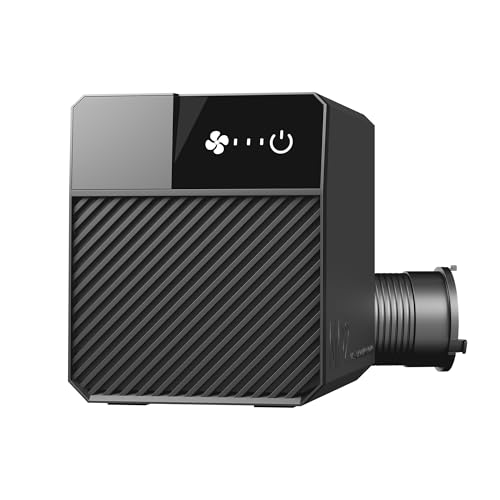 BlazeX 3-Stage PurifierNo window available$109Check price
 Creality Falcon AP1 MiniA sealed room$299Check price
What comes off a laser cut
Two categories, and they need different handling.
Particulate is the visible smoke: fine soot and vaporised material condensing back into solid particles. Much of it is small enough to reach deep into the lungs. A HEPA filter catches this, and so does a duct going outside.
Volatile organic compounds are the gases, and they are the part people underestimate because you cannot see them. Cutting acrylic releases methyl methacrylate. MDF releases formaldehyde from the resin binding it. Plywood depends entirely on the glue. Leather releases whatever it was tanned with, which for chrome-tanned leather is not something you want.
A HEPA filter does nothing to VOCs, because they are gases and HEPA is a mechanical filter. Removing them needs activated carbon, which adsorbs the molecules onto an enormous internal surface area.
So an adequate recirculating unit needs a pre-filter for the big stuff, HEPA for particulate, and carbon for VOCs — which is exactly the three-stage arrangement both filtering units here use.
Or you send the whole lot outside and skip the problem.
Why filtering is second best
A recirculating purifier takes contaminated air, cleans it, and puts it back in the room you are standing in. That works exactly as long as the filters work, and there is the difficulty.
Carbon saturates invisibly. Activated carbon has a finite capacity, and once the sites are full the VOCs pass straight through. There is no colour change, no alarm, and no smell — because carbon that has stopped adsorbing has also stopped removing odour, but by then you have grown used to the smell anyway. The unit keeps humming and you keep breathing.
Filter life depends entirely on what you cut. MDF and acrylic load carbon far faster than plain plywood, so any published lifespan is a guess about your usage.
Ducting outside has none of that. The fumes leave. There is no capacity to exhaust, no consumable to replace and no failure mode that hides.
The legitimate reasons to filter instead: no window or wall you can duct through, a rented space, cold or hot climates where venting conditioned air is expensive, or planning restrictions.
If you can duct, duct. If you filter, replace the carbon more often than you think.
 Best if you have a window
VIVOSUN 4" Inline Fan, Carbon Filter & 8ft Duct, Circulate
A complete three-part ducting kit — a 4-inch inline fan, an activated carbon filter and eight feet of aluminium ducting with two stainless clamps — and it is the pick because it does the technically correct thing: it moves the fumes out of the building rather than cleaning and returning them. The carbon filter handles odour on the way out, which keeps neighbours happy, and if you are venting to open air you can run it without the filter and simply exhaust. The ducting is aluminium, so it takes heat and does not corrode, and the fan comes with a mounting bracket. It is a grow-tent kit rather than a laser-branded one, which is why it costs a third of the fancy units and does more. You need somewhere to put the duct.
What's good
- Vents outside — removes fumes rather than capturing them
- No filter to saturate silently
- Carbon filter controls odour for neighbours
- Cheapest option and the technically best
What's not
- Needs a window, vent or wall you can duct through
- Exhausts heated or cooled air with the fumes
- Louder than a desktop purifier
- Sold as grow-tent kit, so no laser-specific fittings
 Best with no window
BlazeX Air Purifier for M3 & M2 Pro Laser Engraver
A desktop recirculating extractor with three-stage filtration — pre-filter, HEPA and activated carbon — which is the correct arrangement: the pre-filter takes the coarse debris so the HEPA lasts, the HEPA takes the particulate, and the carbon takes the VOCs from acrylic and wood. BlazeX claim it captures 99.97% of the exhaust gases from acrylic engraving and wood cutting. A brushless motor keeps it quiet enough for a home studio or a classroom, and filter replacement is tool-free, which matters because a filter that is annoying to change is a filter that does not get changed. Buy it when ducting genuinely is not an option. Remember the carbon saturates without warning, so replace it on a schedule rather than waiting for a sign.
What's good
- Correct three-stage arrangement: pre-filter, HEPA, carbon
- Quiet brushless motor suits a home studio
- Tool-free filter replacement
- No ducting or window needed
What's not
- Recirculates — cleaned air returns to your room
- Carbon saturates with no warning at all
- Ongoing filter cost
- Sized for desktop diode machines, not larger lasers
 Best sealed-room option
Creality Falcon AP1 Mini Smoke Purifier
The most capable recirculating unit here, and the numbers are the argument: 174 m³/h airflow at 1300Pa suction through a 360-degree intake, with a pleated filter giving 2.1 square metres of filtration area — roughly double a standard filter, which is what actually determines how long the carbon lasts before it saturates. Sealed multi-layer filtration with pre-filter, HEPA and carbon. Two features address the specific failure modes: a PM2.5 display so you can see particulate rather than guessing, and app control with automatic start and stop synced to the engraver, so extraction genuinely runs whenever the laser does rather than whenever you remember. Quiet at 56dB, tool-free filter changes. It is still recirculating, and it is nearly four times the ducting kit.
What's good
- 2.1 m² filter area — roughly double, so carbon lasts longer
- PM2.5 display shows particulate instead of guessing
- Syncs to the engraver so it cannot be forgotten
- 56dB and 360° intake
What's not
- Still recirculates rather than removing fumes
- Nearly four times the ducting kit
- Filters remain an ongoing cost
- App dependency for the automation
Cutting PVC releases hydrogen chloride gas, which forms hydrochloric acid with moisture — in your lungs and on every metal surface inside the machine. It is genuinely dangerous and it will corrode rails, mirrors and electronics over time. Ordinary "vinyl" sign material is PVC. If you cannot confirm what a material is, do not cut it: polycarbonate, ABS and anything fire-retardant are also on the do-not-cut list.
Making extraction actually work
A good extractor badly set up performs like a bad one.
Extract at the source. Air moves toward suction very poorly at distance — capture velocity falls off with roughly the square of the distance from the intake. An enclosure around the machine with the extraction pulling from it is worth more than a bigger fan across the room.
Short, straight duct runs. Every bend adds resistance and every metre of flexible duct costs you more airflow than the equivalent rigid pipe. If you can shorten the run, do.
Give it make-up air. A fan pulling air out of a sealed room quickly cannot, because there is nothing to replace it. Crack a door or window on the far side so there is a path through.
Run it after the job. Fumes linger, and the minutes after the cut finishes are when people open the lid and lean in. Two or three minutes of running on is free.
Clean the machine. Resin and soot build up on rails, lenses and mirrors, and a dirty lens absorbs power, heats up and eventually cracks.
Before you buy
Duct outside if there is any way to. It beats every filter.
A filtering unit needs pre-filter, HEPA and carbon. Two of three is not enough.
Budget for replacement filters. Carbon is a consumable, not a fitting.
Extract at the source, with an enclosure if you can.
Never cut PVC, vinyl, polycarbonate or ABS.
Laser extraction questions
Is a fume extractor or ducting outside better?
Do I need HEPA or activated carbon?
How do I know when to change a carbon filter?
What materials should I never laser cut?
If you have a window or a wall you can duct through, buy the inline fan kit — it is the cheapest thing here and it is also the technically correct answer, because fumes that leave the building cannot saturate a filter you forgot to change. The BlazeX is the right buy when ducting genuinely is not possible. The Creality Falcon adds a much larger filter area, a PM2.5 readout and automatic syncing to the laser, which addresses the human failure modes rather than the physics. And never cut PVC.
Ready to actually do it?
The first laser cutting & engraving quest takes an evening, and it tells you whether the gear was worth it better than any review can.
Start Laser Cutting & EngravingThe HobbyStack editorial team researches each guide against manufacturer specifications, published resources and practitioner sources. Every product is checked for availability and described against its current listing before publication, and prices are re-checked when guides are updated.
About our editorial process →More gear guides
All guides
Best Laser Engraver for Beginners (2026): Diode to Enclosed
A laser engraver burns designs into wood, leather, acrylic, and slate, and cuts thin materials, all from a design on your computer. For a beginner the two things that matter are power (how thick you can cut) and whether the machine is open-frame or enclosed (safety and mess). Here are three good ones, from an affordable 10W diode to a fully enclosed xTool you can run on the kitchen table.

Best Beginner 3D Printer 2026: Bambu A1 vs Ender 3 V3 SE vs P1S Combo
The 3D printer market changed completely in 2024–2025, auto-calibration is now table stakes and the "buy a kit and learn to fix it" era is over. Here's how to pick a first printer that just works, plus the budget pick that actually deserves your money and the premium pick that beats the K1 Max on reliability.
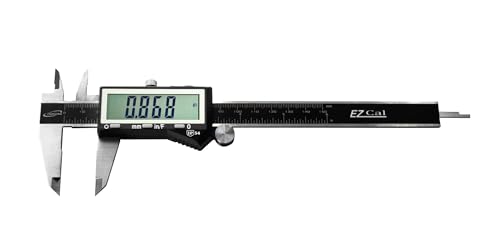
Best Digital Caliper for 3D Printing 2026: iGaging vs Neiko vs Mitutoyo
A digital caliper is the measuring tool that turns 3D printing from guesswork into precision: filament diameter, print dimensions, and the tolerances that make parts fit. The good news: every caliper worth buying resolves finely enough for printing, so the real choice isn't accuracy. It's whether the caliper remembers its zero, survives a dusty workshop, and repeats reliably for years. Here's how the picks stack up.

Best Flush Cutters for 3D Printing (2026): The First Tool You Need
Flush cutters are the tool you reach for after every single print — trimming supports, snipping a stringy blob, cutting filament to a clean point before loading. They are also the tool most often destroyed within a month, because they look like small pliers and people use them to cut wire. One snip through steel puts a permanent notch in the blade, and after that they crush plastic instead of slicing it.

Best Pottery Tool Set (2026): Six of the Twelve Do Nearly Everything
Open a twelve-piece pottery set and six tools will do nearly all your work: the wire cutter, a wooden rib, a metal rib, a loop trimming tool, a sponge and a needle tool. The rest get picked up once, found to duplicate something, and left in the canister for years.

Long Blade Freediving Fins (2026): Stiffness Is Matched to Your Legs, Not Your Ambition
Long blades are not about speed. A long blade moves a large volume of water per kick, so you cover distance at a slow, unhurried cadence instead of a fast one, and on a breath-hold the thing you are conserving is oxygen. A stiff blade you cannot load properly burns more of it than a soft blade you can.