Best Multimeter for Beginners 2026: AstroAI vs Fluke 101 vs Fluke 117
A multimeter is the first diagnostic tool any electronics or robotics hobbyist needs, it tells you what your circuit is actually doing. The good news for beginners: on the low-voltage DC work most hobbies involve, a $35 meter reads the same as a $380 Fluke. The real decision is about voltage and true-RMS, how much power you're measuring, and whether the AC is a clean sine wave. Here's the honest breakdown.
HobbyStack may earn a commission from links on this page at no extra cost to you. Our picks are chosen on merit; the commission helps fund the research.
- For most electronics and robotics hobbyists, the AstroAI Digital Multimeter (~$35) is the pick — it measures everything a beginner needs (AC/DC voltage, current down to milliamps, resistance, continuity) accurately enough for Arduino, LEDs, batteries, and low-voltage DC work, for a fraction of a Fluke. A genuinely capable first meter, not a toy.
- Want Fluke reliability and safety? The Fluke 101 (~$70) brings real Fluke build quality, calibration, a lifetime warranty, and a CAT III 600V safety rating. The catch to know before buying: it doesn't measure current at all — voltage, resistance, and continuity only. A reliability upgrade, not a do-more one.
- Working on mains, motors, or AC? The Fluke 117 (~$380) is the do-it-all electrician's meter — true-RMS accuracy on messy AC waveforms, CAT III safety for household and commercial wiring, and a built-in non-contact voltage detector. Overkill for pure low-voltage DC hobby; essential the moment you touch the wall.
- The decision is voltage and true-RMS, not budget. For 5–24V DC hobby electronics, the cheap AstroAI gives readings indistinguishable from a Fluke. The moment you work on mains AC, motor drives, dimmers, or PWM, you need a true-RMS, CAT III meter — that's where a Fluke earns its price.
- Skip: a no-name meter with no fuse or no real CAT rating if you'll go near mains (a genuine safety risk); paying for the Fluke 117's true-RMS if you only ever poke 5V Arduino circuits; and assuming pricier means more accurate on DC — for what a hobbyist measures, the AstroAI reads the same as the Fluke.
 AstroAI Digital Multimeter and Analyzer TRMS 6000 Counts Volt Meter…Pick$35Full-feature · DC hobby · valueMost hobbyists
 Fluke 101 Basic Digital Multimeter$80Fluke build · CAT III · no currentFluke on a budget
 Fluke 117 Electricians True RMS Multimeter$344True-RMS · CAT III · mainsAC / mains work
It's about voltage and true-RMS, not price
A multimeter measures voltage, current, resistance, and continuity — the four things you constantly need to know when something electronic isn't behaving. For a beginner, the gap between a $35 meter and a $380 one comes down to two questions: how much voltage are you working with, and do you need true-RMS?
If you work on low-voltage DC — Arduino and microcontroller projects, LEDs, batteries, robotics, 5–24V circuits — an inexpensive meter like the AstroAI gives readings indistinguishable from a Fluke. It measures voltage, current (amps and milliamps), resistance, and continuity, which covers essentially everything a hobby electronics bench throws at it. Spending more here buys you very little.
Two things change that. The first is mains voltage: the moment you measure anything connected to the wall — house wiring, appliances, mains-powered supplies — safety rating matters enormously. A meter's CAT rating (CAT II / III / IV) and a properly fused current input are what stand between a wiring fault and an arc at your hand. Cheap meters often overstate or skip these; a Fluke's CAT III rating is independently trustworthy.
The second is true-RMS. Cheap meters assume the AC they measure is a clean sine wave. The moment it isn't — motor drives, light dimmers, switching power supplies, anything PWM, audio amps — a non-true-RMS meter reads wildly wrong. A true-RMS meter (like the Fluke 117) measures the real value whatever the waveform.
So: low-voltage DC tinkering → the AstroAI is genuinely all you need. Mains, motors, or messy AC → step up to a true-RMS, CAT III meter, where a Fluke earns every dollar.
 Best for most hobbyists
AstroAI Digital Multimeter and Analyzer TRMS 6000 Counts Volt Meter…
The right first multimeter for electronics. The AstroAI covers the full set of measurements a beginner actually uses — AC/DC voltage, current down to milliamps, resistance, continuity with a beeper, plus diode test and often capacitance and frequency — and on the low-voltage DC circuits that make up hobby electronics and robotics, its readings are indistinguishable from a meter ten times the price. It auto-ranges (no guessing the scale), reads clearly, and costs little enough that you won't baby it. Its honest limits: it's not true-RMS (so it misreads non-sine AC like motor drives and dimmers), and its safety rating isn't in Fluke territory — neither of which matters for the 5–24V DC work most hobbyists actually do. Start here.
What's good
- Measures it all for a beginner: V, A (incl. mA), Ω, continuity
- DC-accurate — reads the same as a Fluke on hobby circuits
- Auto-ranging and easy to read
- Cheap enough to own and use without worry
What's not
- Not true-RMS — misreads motor drives, dimmers, PWM
- Safety rating not suited to serious mains work
- Build and longevity below Fluke's
 Fluke reliability on a budget
Fluke 101 Basic Digital Multimeter
A real Fluke — with one big caveat. The Fluke 101 gives you genuine Fluke build quality, factory calibration, a lifetime warranty, and a trustworthy CAT III 600V safety rating — the brand reliability pros depend on — at roughly half the price of Fluke's full meters. The caveat you must know first: it does not measure current at all. No amps, no milliamps. It does voltage, resistance, continuity, capacitance, frequency, and diode test only. That makes it a great pick for someone who mainly *verifies* — checking voltages and continuity with a meter they can trust near mains — but a poor fit for electronics work where measuring current draw matters. If you need amps, stick with the AstroAI or jump to the 117.
What's good
- Genuine Fluke build, calibration, and lifetime warranty
- Trustworthy CAT III 600V safety rating
- Compact and dependable for voltage/continuity checks
- Half the price of Fluke's full-feature meters
What's not
- No current measurement at all — no amps or milliamps
- Not true-RMS
- Little point if you only work on low-voltage DC anyway
 For mains and AC work
Fluke 117 Electricians True RMS Multimeter
The meter for when you touch the wall. The Fluke 117 is the electrician's standard for good reason: true-RMS accuracy that reads non-sine AC (motors, dimmers, switching supplies) correctly, a CAT III 600V safety rating built for household and commercial wiring, the full set of V/A/Ω/continuity/capacitance functions, and a built-in non-contact voltage detector that flags live wires before you probe them. Its low-impedance mode rejects the "ghost voltage" that makes cheaper meters lie. For pure low-voltage DC hobby work it's far more meter than you need — but the moment your projects involve mains power, motor control, or AC you can't trust a cheap meter on, it's the buy-once tool that's also the safe one.
What's good
- True-RMS — accurate on motors, dimmers, any AC waveform
- CAT III 600V — built and trusted for mains work
- Built-in non-contact voltage detector
- Full features plus Fluke reliability — the buy-once meter
What's not
- Expensive — far more than DC hobby work needs
- Overkill if you never go near mains or AC
- Heavier and more complex than a starter meter
On a 9V battery or a 5V Arduino, the worst a cheap meter does is read a little off. On mains voltage, a meter's safety rating can be the difference between a blown fuse and an arc-flash at your hand. Two things matter: a CAT rating matched to where you're measuring (CAT III for household and distribution wiring), and a properly fused current input so an overload blows a cheap fuse instead of the meter — or you. Budget meters frequently lack a real CAT rating or a proper fuse even when the label claims otherwise. The rule of thumb: measure low-voltage DC with whatever you like; never measure mains with a meter you don't trust. If your projects will ever touch the wall, that — not accuracy — is the reason to own a Fluke.
How to choose between the three
Pick the AstroAI if you're doing electronics or robotics on low-voltage DC — Arduino, LEDs, batteries, motors under 24V. It measures everything you need (including current), reads the same as a Fluke on these circuits, and costs almost nothing. For most hobbyists, this is the whole answer.
Pick the Fluke 101 if you want genuine Fluke reliability and CAT III safety mainly to verify voltages and continuity, and you're fine giving up current measurement. Know that limitation going in — it's not a meter for measuring how many milliamps your circuit draws.
Pick the Fluke 117 if your work touches mains power or AC — household wiring, motor control, dimmers, switching supplies. True-RMS accuracy and a trustworthy CAT III rating make it the safe, correct tool the moment cheap meters stop being either.
If you're unsure and you're here for hobby electronics, get the AstroAI. Add a Fluke only when you start working on things plugged into the wall.
Before you buy
Match the meter to your voltage. Low-voltage DC (Arduino, LEDs, robotics)? The AstroAI is plenty. Mains or AC? Buy CAT III and true-RMS — non-negotiable.
Auto-ranging saves beginners grief. You don't have to know the scale in advance — the meter picks it. All three here auto-range.
Want to measure current? Check the meter actually does. It's easy to assume every multimeter reads amps — the Fluke 101 doesn't. Confirm current ranges (A and mA) before buying if you need them.
True-RMS matters more than you'd think. If you'll measure anything but clean DC and pure sine AC — motors, dimmers, PWM — a non-true-RMS meter will lie to you.
Value the continuity beep and good probes. The beep (for testing connections and finding shorts) is the feature you'll use most; flimsy probes are a common cheap-meter weak point worth upgrading.
Common questions about multimeters
What multimeter should a beginner get?
Is a Fluke multimeter worth it?
What is true-RMS, and do I need it?
What doesn't the Fluke 101 do?
What CAT safety rating do I need?
How do I measure current (amps) with a multimeter?
For most electronics and robotics hobbyists, the AstroAI Digital Multimeter and Analyzer TRMS 6000 Counts Volt Meter… is the buy — it measures everything you need on low-voltage DC, reads the same as a Fluke there, and costs ~$35. Want Fluke reliability for voltage/continuity (and don't need to measure current)? The Fluke 101 Basic Digital Multimeter. Working on mains or AC? The Fluke 117 Electricians True RMS Multimeter's true-RMS accuracy and CAT III safety make it the right — and safe — tool. Match the meter to your voltage, not your budget.
Ready to actually do it?
The first robotics quest takes an evening, and it tells you whether the gear was worth it better than any review can.
Start RoboticsThe HobbyStack editorial team researches each guide using practitioner communities, published resources, and direct input from active hobbyists. Every guide is reviewed for accuracy before publication and updated when practices change.
About our editorial process →More gear guides
All guides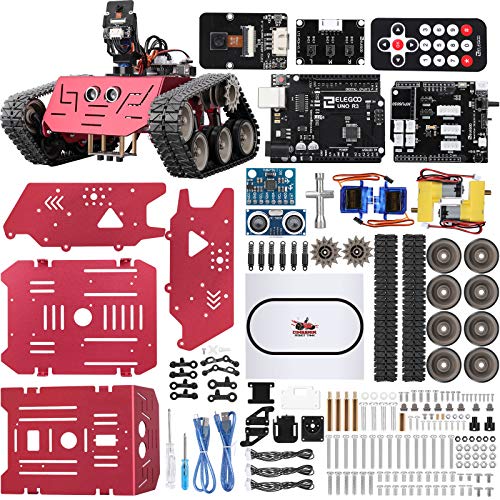
Best Robotics Starter Kit (2026): Build It or Just Code It
Robotics kits split into two philosophies that suit very different people. One gives you loose components and a wiring diagram, so you learn electronics on the way to a working robot. The other gives you a finished robot and asks what you want it to do. Neither is better — but buying the wrong one is the most common way a kit ends up in a cupboard half-built.

Best Beginner 3D Printer 2026: Bambu A1 vs Ender 3 V3 SE vs P1S Combo
The 3D printer market changed completely in 2024–2025, auto-calibration is now table stakes and the "buy a kit and learn to fix it" era is over. Here's how to pick a first printer that just works, plus the budget pick that actually deserves your money and the premium pick that beats the K1 Max on reliability.
Best Digital Caliper for 3D Printing 2026: iGaging vs Neiko vs Mitutoyo
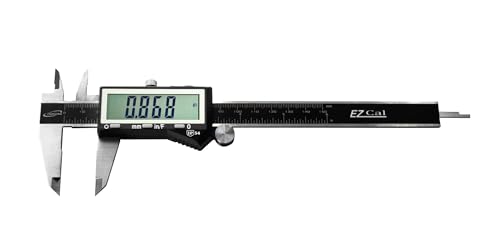
A digital caliper is the measuring tool that turns 3D printing from guesswork into precision: filament diameter, print dimensions, and the tolerances that make parts fit. The good news: every caliper worth buying resolves finely enough for printing, so the real choice isn't accuracy. It's whether the caliper remembers its zero, survives a dusty workshop, and repeats reliably for years. Here's how the picks stack up.

Best Flush Cutters for 3D Printing (2026): The First Tool You Need
Flush cutters are the tool you reach for after every single print — trimming supports, snipping a stringy blob, cutting filament to a clean point before loading. They are also the tool most often destroyed within a month, because they look like small pliers and people use them to cut wire. One snip through steel puts a permanent notch in the blade, and after that they crush plastic instead of slicing it.

Best Archival Brushes (2026): Soft, Dry, and Always Away From the Spine
The first rule of cleaning a book is that you almost never use water. Surface dirt comes off dry, with a soft wide brush and patience, and anything wet risks tidelines, cockling and lifting the very ink you were trying to save. The brush is the tool that does most of the real work.

Best Bottling Wand (2026): Fill to the Brim, Then Let It Drop
A bottling wand looks like a length of tube with a valve on the end, and the clever part is what happens when you lift it out. You fill the bottle right to the brim, and withdrawing the wand removes exactly its own volume, leaving the correct headspace every time without measuring anything.