Best Multimeter for Drone Building (2026): The Tool That Finds the Short
A multimeter turns two of the worst moments in building electronics into thirty-second checks. One is powering up a fresh board and watching smoke come out because two pads were bridged. The other is a pack that will not charge, which is either one dead cell or a broken lead, and there is no way to tell by looking.
HobbyStack may earn a commission from links on this page at no extra cost to you. Our picks are chosen on merit; the commission helps fund the research.
- Continuity beeping is the feature you will use most. Check for shorts before every first power-up.
- CAT rating is the safety spec nobody checks. It matters the moment you touch mains.
- True RMS only matters on non-sinusoidal AC. For DC electronics it changes nothing.
- Check LiPo cells individually. A pack reading fine can hide one cell that is dead.
- A cheap meter measures the same volts as an expensive one. You pay for safety and durability.
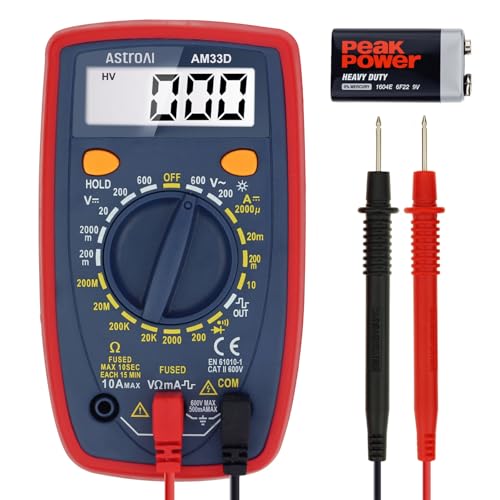 Our pickAstroAI 2000-CountBench electronics$17Check price
 Fluke 101Anything near mains$79Check price
 Fluke 117 with NIST certElectricians$380Check price
The four checks that matter on a build
You will use a fraction of what a multimeter does, and these four cover almost everything in a hobby workshop.
Continuity. The setting with the buzzer. Touch both probes together and it beeps; touch two points that should not be connected and silence is what you want. Run it across adjacent solder pads before you ever apply power, because a bridged pad is the difference between a working board and a dead one.
DC voltage. Battery packs, regulator outputs, whether 5V is really 5V. This is most of the day-to-day.
Resistance. Confirming a resistor is what the colour bands claim, and checking whether a motor winding is open.
Diode test. Checking MOSFETs and diodes for a dead short, which is the usual failure mode after a crash.
What you probably will not use: AC current, frequency, capacitance and temperature. Meters advertise them; hobby electronics rarely needs them. Note that the budget meter here cannot measure AC current at all, which its listing states plainly, and for bench work that costs you nothing.
CAT ratings, which are about not being hurt
This is the specification that separates a fifteen-pound meter from a seventy-pound one, and it is nothing to do with accuracy.
CAT (category) ratings describe how much energy is behind the circuit you are probing. The danger in a high-energy circuit is not the voltage — it is that a fault can create an arc that keeps burning, and a meter not built to interrupt it becomes the fault.
CAT I — protected electronics. Battery packs, low-voltage bench work. CAT II — appliances plugged into a socket. CAT III — building distribution: fixed wiring, breaker panels, three-phase motors. CAT IV — the utility supply and outside lines.
The Fluke 101 is CAT III 600V, meaning it is built with the fusing, clearances and internal barriers to fail safely at that energy level.
For measuring LiPo cells on a bench, a cheap CAT I meter is genuinely fine. The moment you might probe a wall socket or a breaker panel, buy something rated for it — this is one of the few hobby purchases where the cheap option can hurt you rather than just disappointing you.
 Best for bench electronics
AstroAI Digital Multimeter Tester 2000 Counts
A 2000-count meter that does everything a build bench needs: DC and AC voltage, DC current, resistance, diode test, and a continuity buzzer, with a backlit screen so you can read it under a desk lamp at an angle. It has a double fuse for overload protection, a low-battery indicator, data hold, and a silicone cover that survives being knocked off the bench. Leads and batteries are included. Two honest limits, both stated in its own listing: it cannot measure AC current at all, and it will not read AC voltage below 100mV. Neither matters for LiPo packs, ESCs or flight controllers, which is what you actually probe. Buy this if your work stays on the bench and away from mains.
What's good
- Covers every check a build bench needs
- Continuity buzzer and diode test included
- Double fuse and silicone protective cover
- Leads, batteries and manual in the box
What's not
- Cannot measure AC current at all
- Will not read AC voltage under 100mV
- No CAT III rating — keep it away from mains
- 2000 counts is low resolution for fine work
 Best near mains
FLUKE-101 Digital Multimeter
The reason to spend five times more is one line on the spec sheet: CAT III 600V. That means it is built with the internal fusing, creepage distances and barriers to fail safely if you probe something with real energy behind it, which a cheap meter is not — and that is a safety difference rather than a measurement one. Basic DC accuracy of 0.5%, a diode and continuity test with a buzzer, and a small light body genuinely designed for one-handed use, which matters when your other hand is holding a probe. Rugged enough to be dropped. It has fewer functions than meters costing a third as much, and that is the trade Fluke make deliberately: fewer features, built properly.
What's good
- CAT III 600V — safe on building wiring
- 0.5% basic DC accuracy
- One-handed operation while probing
- Built to survive being dropped
What's not
- Fewer functions than cheaper meters
- No True RMS
- Five times the budget meter for safety, not features
- No backlight
 Best for electricians
Fluke - 117CAL 117 Electricians True RMS Multimeter
An electrician's meter rather than a hobbyist's, and it is worth being clear that almost none of what you pay for here helps with drones. True RMS measures AC accurately when the waveform is not a clean sine wave, which is the norm on circuits feeding switching supplies, dimmers and variable-speed drives — and irrelevant to DC battery work. It ships with a NIST-traceable calibration certificate with data, so it arrives provably meeting specification, which matters for quality systems and regulatory work and not at all on a workbench. A bright white-backlit LED display and compact one-handed shape. Buy it if you work on building electrical systems; do not buy it to check LiPo cells.
What's good
- True RMS for non-sinusoidal AC waveforms
- NIST-traceable calibration certificate included
- Bright LED display with white backlight
- Compact for one-handed use in a panel
What's not
- None of the extra capability helps with drones
- Nearly five times the Fluke 101
- The calibration certificate is a compliance feature
- Overkill for any bench hobby
A 4S pack reading 14.8V looks healthy and can be hiding one cell at 2.5V and another at 4.2V. Probe each cell through the balance lead: adjacent pins, one pair at a time. A cell below about 3.0V is damaged and a pack with one damaged cell is a fire risk, not a charging problem. This check takes thirty seconds and is the single most useful thing a multimeter does for a drone builder.
Using the continuity buzzer properly
The buzzer is the most useful setting on the meter and most people use it backwards.
Test the meter first. Touch the probes together. If it does not beep, you are on the wrong setting or a lead is broken, and you are about to trust a silent meter that is telling you nothing.
Power off, always. Continuity mode pushes a small current through the circuit to test it. On a live board the readings are meaningless and you can damage components.
Silence is what you want when checking adjacent pads for a bridge. A beep between a signal pad and ground is a short, and finding it before power-up saves the board.
Beeping is what you want when checking a wire end to end, or a connector that has been crimped. This is how you find a broken lead inside intact insulation, which is invisible.
Watch for partial shorts. Some meters beep on anything under about 50 ohms, so a beep through a low-resistance winding can be normal. Switch to resistance mode when a result surprises you and read the actual number.
Before you buy
Continuity buzzer is non-negotiable. It is the setting you will use daily.
CAT III if you will ever probe a socket or panel. CAT I is fine for a bench.
True RMS only matters for messy AC waveforms, not DC.
Check the leads. Cheap meters ship with leads that fail before the meter does.
Auto-ranging saves a lot of dial twiddling for a small premium.
Multimeter questions
What multimeter settings do I actually need?
What does a CAT rating mean on a multimeter?
Do I need True RMS?
How do I check a LiPo battery with a multimeter?
For bench electronics the AstroAI does everything you need for the price of a couple of propellers, and its limitations — no AC current, no low AC voltage — are things a drone builder never touches. Step up to the Fluke 101 the moment your work might involve a wall socket or a breaker panel, because CAT III 600V is a safety rating rather than a feature. The Fluke 117 is an electrician's instrument and none of what it adds helps with drones.
Ready to actually do it?
The first drone racing quest takes an evening, and it tells you whether the gear was worth it better than any review can.
Start Drone RacingThe HobbyStack editorial team researches each guide against manufacturer specifications, published resources and practitioner sources. Every product is checked for availability and described against its current listing before publication, and prices are re-checked when guides are updated.
About our editorial process →More gear guides
All guides
Best FPV Goggles (2026): Box or Low Profile, and Why Diversity Matters
The signal in analog FPV degrades gracefully. It goes fuzzy, then it breaks into static, then it drops, and every one of those steps happens while your drone is still flying at 60 miles an hour. The goggles are what stand between you and that, which is why a diversity receiver is worth more than a nicer screen.
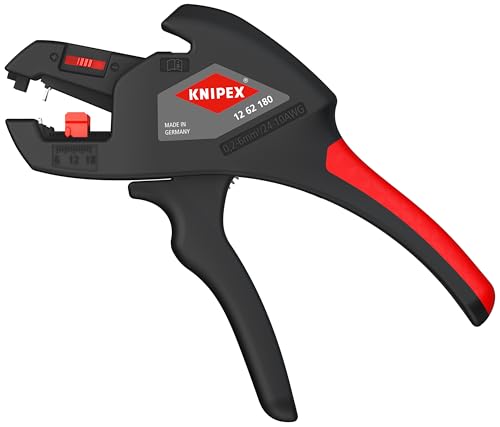
Best Wire Strippers (2026): Nicked Copper Is a Wire That Will Break
Strip a wire with a knife or the wrong gauge notch and you cut into the copper. The wire still works, right up until vibration finds the weak point and it fails somewhere inside the insulation where nothing is visible. On something that flies, that is not a nuisance, and it is entirely avoidable with a tool that adjusts itself.

Best Pottery Tool Set (2026): Six of the Twelve Do Nearly Everything
Open a twelve-piece pottery set and six tools will do nearly all your work: the wire cutter, a wooden rib, a metal rib, a loop trimming tool, a sponge and a needle tool. The rest get picked up once, found to duplicate something, and left in the canister for years.

Long Blade Freediving Fins (2026): Stiffness Is Matched to Your Legs, Not Your Ambition
Long blades are not about speed. A long blade moves a large volume of water per kick, so you cover distance at a slow, unhurried cadence instead of a fast one, and on a breath-hold the thing you are conserving is oxygen. A stiff blade you cannot load properly burns more of it than a soft blade you can.

Best Millinery Wire (2026): Gauge Decides Whether the Brim Holds Its Line
Wire gauge runs backwards, so an 18 gauge wire is thicker than a 20. That catches people out in exactly the wrong direction: they buy a high number expecting something substantial, wire a brim with it, and watch the brim sag the first time the hat is picked up.

Best Go Books (2026): Beginners Want Joseki and Need Life and Death
Every beginner reaches for a book of joseki, the memorised corner sequences, because they look like the secret. They are not. Strength at Go comes from reading life and death and recognising good shape, and a player who has memorised openings without those will play twenty moves of professional theory and then lose the group.