Best Wire Strippers (2026): Nicked Copper Is a Wire That Will Break
Strip a wire with a knife or the wrong gauge notch and you cut into the copper. The wire still works, right up until vibration finds the weak point and it fails somewhere inside the insulation where nothing is visible. On something that flies, that is not a nuisance, and it is entirely avoidable with a tool that adjusts itself.
HobbyStack may earn a commission from links on this page at no extra cost to you. Our picks are chosen on merit; the commission helps fund the research.
- Nicked strands are the failure you cannot see. A stripper that self-adjusts prevents them.
- AWG numbers run backwards: smaller number means thicker wire.
- Self-adjusting strippers handle a range without you picking a notch. That is the whole point.
- A length stop matters for repetitive work. Same strip length every time, no measuring.
- Buy strippers that take replacement blades if you strip a lot. Blades dull, tools do not.
 Our pickIRWIN Vise-Grip Self-AdjustingMost people$23Check price
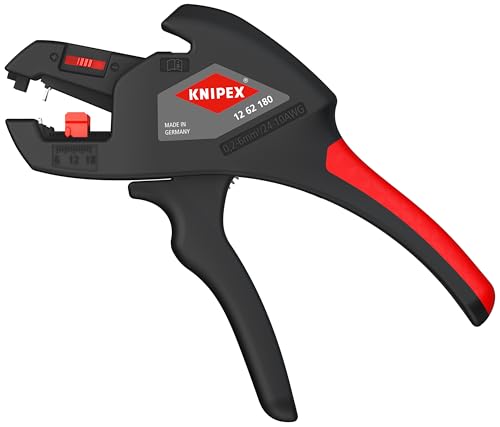 KNIPEX ComStripVolume work$55Check price
 KNIPEX EvoStripWidest range$105Check price
AWG, and why the numbers run backwards
American Wire Gauge numbers get bigger as the wire gets thinner, which catches everyone out once.
The scale comes from manufacturing: wire was drawn through progressively smaller dies, and the number counted how many times it had been drawn. More passes, thinner wire, higher number.
For context in a hobby workshop:
- 8-10 AWG — thick. Main battery leads on larger models.
- 12-14 AWG — battery leads and high-current ESC wiring.
- 16-18 AWG — motor wires, moderate current.
- 20-24 AWG — signal wiring, servo leads, telemetry.
- 26-32 AWG — very fine. Balance leads, small sensors, some camera wiring.
That range is why tool coverage matters. A stripper rated 10-24 AWG covers most of a build and stops short of the finest signal wire; the EvoStrip's 8-32 AWG covers everything from a battery lead to a balance wire.
And wire size is not arbitrary. Too thin for the current and the wire heats, which is how insulation melts and packs catch fire. If you are replacing a lead, match the gauge that was there.
Self-adjusting, automatic, and plain notched
Three mechanisms, and the difference is how much judgement they ask of you.
Notched strippers have a row of holes, each labelled with a gauge. You pick the right hole and squeeze. Cheap, and entirely dependent on you choosing correctly — one notch too small and you cut strands, one too big and the insulation does not part.
Self-adjusting strippers clamp the wire and pull the insulation off in a single squeeze, with a mechanism that conforms to whatever diameter it finds. No gauge selection, no judgement, and it is why they are the right default: the most common way to damage a wire is choosing the wrong notch, and this removes the choice.
Automatic strippers go further, gripping and pulling in one motion with a fine adjustment dial for cutting depth, so you can tune for unusually hard or soft insulation, or for cold weather when plastic stiffens.
All three tools here are self-adjusting or automatic. For hobby wiring where you switch between a 14 AWG battery lead and a 24 AWG signal wire constantly, that is the feature worth paying for.
 Best for most people
IRWIN Vise-Grip Wire Stripper
Self-adjusting across 10 to 24 AWG, which covers battery leads down through motor wiring to servo and signal leads — most of a build without touching a dial. The adjustable stopper sets how much conductor is exposed, so twenty connections get the same strip length without measuring any of them, which matters more for consistency than it sounds. It also crimps: 10-22 AWG insulated and non-insulated terminals, plus 7-9mm ignition terminals, so one tool covers stripping and terminating. Two-inch jaws and a comfortable grip. It is not as refined as the KNIPEX tools and the mechanism will eventually wear rather than being rebuilt, but at a quarter of the price it does the same job on the same wires.
What's good
- Self-adjusting 10-24 AWG — no notch to choose
- Adjustable stopper gives consistent strip length
- Crimps insulated, non-insulated and ignition terminals
- A quarter the price of the automatic tools
What's not
- Mechanism wears and cannot be rebuilt
- No fine adjustment for unusual insulation
- Does not reach the finest signal wire below 24 AWG
- Heavier in the hand than the KNIPEX
 Best for volume
KNIPEX Tools 12 62 180 SBA ComStrip Automatic Wire Stripper
An automatic stripper over the same 10 to 24 AWG range, and the case for it over the self-adjusting tool is repetition. Automatic strippers grip, cut and pull in one motion, so a harness with forty connections stops being a job and becomes a rhythm — and your hand is far less tired at the end, which is when mistakes happen. KNIPEX build quality is the other half: the mechanism stays precise over years rather than gradually going sloppy, which is what eventually ruins a cheap stripper. It does not crimp, so you need a separate crimper. Two and a half times the IRWIN for speed and longevity rather than a different result on any single wire.
What's good
- Automatic action — grip, cut and pull in one motion
- Much faster and less tiring on a long harness
- Mechanism stays precise over years of use
- Same 10-24 AWG coverage as the IRWIN
What's not
- Does not crimp — that is a separate tool
- Two and a half times the IRWIN
- Same gauge range, so no extra coverage
- Automatic mechanisms have more to go wrong
 Best range and rebuildable
KNIPEX 12 40 200 EvoStrip Automatic Wire Stripper, 8-32 AWG
The widest coverage here at 8 to 32 AWG, which reaches from a thick battery lead all the way down to a balance lead or a fine sensor wire — a range no other tool in this comparison touches. It adapts automatically to diameter to avoid nicking the conductor, and a fine adjustment dial tunes cutting depth for unusual insulation or cold weather when plastic goes stiff. The length stop adjusts from 1/8 to 7/8 of an inch. The reason it justifies the price over years is that it is rebuildable: blades, torsion spring, coil spring and length stop are all sold as replacement parts, so a worn tool is serviced rather than binned. It also cuts copper and aluminium, and has a tether point for working at height.
What's good
- 8-32 AWG — from battery leads to balance wires
- Fine adjustment dial for odd insulation or cold
- Fully rebuildable: blades and springs sold separately
- Cuts copper and aluminium as well as stripping
What's not
- Four and a half times the IRWIN
- Does not crimp
- More adjustment means more to set up wrongly
- Overkill unless you strip a very wide gauge range
Cutting into the copper reduces the conductor cross-section, which raises resistance and creates a stress point exactly where the insulation hides it. Under vibration that point work-hardens and eventually breaks, often long after the build, and the fault is invisible from outside. Strip a test length and look at the copper: if you can see bright scoring or missing strands, the tool or the setting is wrong.
Stripping and soldering silicone wire
Most hobby-grade wire is silicone insulated, which behaves differently from the PVC these tools were originally designed around.
Silicone is soft and grippy, so it tends to stretch and tear rather than slicing cleanly, and a stripper set slightly too deep will drag strands out with it. Automatic tools with a depth adjustment handle this better than fixed notches.
It is also very heat tolerant, which is the reason it is used: you can solder a joint without the insulation shrinking back and exposing conductor, which PVC does readily.
Tin the strands first. Twist them, apply solder until it wicks in, and the wire becomes far easier to place — and it stops individual strands escaping to touch something they should not.
Do not tin a wire going into a screw terminal, though. Solder creeps under pressure, so the joint loosens over time. Screw terminals want bare stranded wire, or a ferrule.
Heatshrink before you solder, not after. Everyone learns this the same way.
Before you buy
Self-adjusting at minimum. Choosing a notch is how wires get nicked.
Check the AWG range covers your thinnest wire, not just your thickest.
A length stop pays for itself on any harness with repeated connections.
Replaceable blades matter if you strip daily.
Inspect the copper after stripping. Bright scoring means adjust or replace.
Wire stripper questions
Why do AWG numbers get bigger as wire gets thinner?
What is wrong with nicking the copper?
Are automatic wire strippers worth it?
Should I tin stranded wire before connecting it?
The IRWIN Vise-Grip is the sensible buy: self-adjusting so there is no notch to get wrong, an adjustable stopper for consistent strip lengths, and it crimps as well, which saves a second tool. Step up to the KNIPEX ComStrip if you build harnesses often enough that speed and a hand that is not tired matter. The EvoStrip earns its price on range and on being rebuildable — 8 to 32 AWG covers everything from a battery lead to a balance wire.
Ready to actually do it?
The first drone racing quest takes an evening, and it tells you whether the gear was worth it better than any review can.
Start Drone RacingThe HobbyStack editorial team researches each guide against manufacturer specifications, published resources and practitioner sources. Every product is checked for availability and described against its current listing before publication, and prices are re-checked when guides are updated.
About our editorial process →More gear guides
All guides
Best FPV Goggles (2026): Box or Low Profile, and Why Diversity Matters
The signal in analog FPV degrades gracefully. It goes fuzzy, then it breaks into static, then it drops, and every one of those steps happens while your drone is still flying at 60 miles an hour. The goggles are what stand between you and that, which is why a diversity receiver is worth more than a nicer screen.

Best Multimeter for Drone Building (2026): The Tool That Finds the Short
A multimeter turns two of the worst moments in building electronics into thirty-second checks. One is powering up a fresh board and watching smoke come out because two pads were bridged. The other is a pack that will not charge, which is either one dead cell or a broken lead, and there is no way to tell by looking.

Best Pottery Tool Set (2026): Six of the Twelve Do Nearly Everything
Open a twelve-piece pottery set and six tools will do nearly all your work: the wire cutter, a wooden rib, a metal rib, a loop trimming tool, a sponge and a needle tool. The rest get picked up once, found to duplicate something, and left in the canister for years.

Long Blade Freediving Fins (2026): Stiffness Is Matched to Your Legs, Not Your Ambition
Long blades are not about speed. A long blade moves a large volume of water per kick, so you cover distance at a slow, unhurried cadence instead of a fast one, and on a breath-hold the thing you are conserving is oxygen. A stiff blade you cannot load properly burns more of it than a soft blade you can.
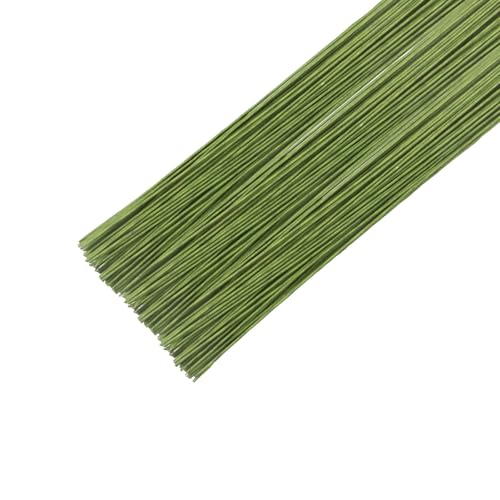
Best Millinery Wire (2026): Gauge Decides Whether the Brim Holds Its Line
Wire gauge runs backwards, so an 18 gauge wire is thicker than a 20. That catches people out in exactly the wrong direction: they buy a high number expecting something substantial, wire a brim with it, and watch the brim sag the first time the hat is picked up.

Best Go Books (2026): Beginners Want Joseki and Need Life and Death
Every beginner reaches for a book of joseki, the memorised corner sequences, because they look like the secret. They are not. Strength at Go comes from reading life and death and recognising good shape, and a player who has memorised openings without those will play twenty moves of professional theory and then lose the group.