Best PFD for Paddle Boarding (2026): The Belt Pack Only Works If You Are Awake
A paddle board counts as a vessel once you leave a surfing or swimming area, which means a Coast Guard approved flotation device has to be with you. The real decision is not whether to carry one, it is whether you choose something that floats you automatically or something you have to activate yourself.
HobbyStack may earn a commission from links on this page at no extra cost to you. Our picks are chosen on merit; the commission helps fund the research.
- Outside surf and swim zones a paddle board is a vessel. A USCG-approved PFD has to be aboard.
- A belt pack only counts as approved while you are wearing it, and only inflates if you pull the handle.
- Foam works whether you are conscious or not. That is the whole argument for a vest.
- Carry a whistle. It is required equipment and it lives on most vests already.
- Cold water changes everything. Gasp reflex means you may not get a chance to pull anything.
 Onyx M-16 belt packWarm flat water$68Check price
 Our pickOnyx MoveVent DynamicMost paddlers$73Check price
 NRS VaporAll-day paddling$110Check price
What the rules actually say
In US waters the Coast Guard treats a stand-up paddle board as a vessel whenever you are outside a designated surfing, swimming or bathing area. That brings three requirements with it.
- A USCG-approved PFD for each person aboard. For adults it has to be aboard and accessible, not necessarily worn. Children under 13 generally must wear one, and state rules vary.
- A sound signalling device — a whistle is enough, and most vests have one attached already.
- A light if you are out between sunset and sunrise. A white light you can show in time to prevent a collision.
The important detail is a Type V device, which is what an inflatable belt pack is, is only approved while you are wearing it. A foam vest strapped to your board still satisfies the requirement. A belt pack in your dry bag does not satisfy anything.
Rules differ by state and country. Check locally before you go, because inland lakes and rivers often have their own requirements on top.
Belt pack or foam, decided honestly
This is the whole choice and it comes down to one question: what happens if you are not conscious?
A belt pack is a small pouch on your waist holding a folded bladder and a CO2 cartridge. To use it you pull a handle, the cartridge fires, and you pull the bladder over your head. It is light, cool, and completely out of the way, which is why so many paddlers wear one.
It also does nothing at all unless you act. If you hit your head on the board on the way in, or the cold water hits you and you gasp, you may not get the chance.
A foam vest floats you the instant you are in the water, whatever state you are in. It is warmer to wear, more visible, and it has pockets and a whistle. The cost is that you feel it in hot weather.
Cold water is where this stops being a preference. Below about 60°F, sudden immersion triggers an involuntary gasp and a minute or so where you cannot control your breathing or usefully use your hands. That is exactly the window a manual belt pack asks you to work in. In cold water, wear foam.
In warm, flat, familiar water with people nearby, a belt pack you actually wear beats a vest you leave at home.
 Best for warm flat water
Onyx M-16 Manual Inflatable Belt Pack Life Jacket
A Coast Guard approved belt pack that weighs under a pound and sits at your waist, which is why people wear it when they would leave a vest at home. Pull the handle and a 16 gram cartridge gives 17 pounds of buoyancy, with oral top-up to 26.5. Fits waists to 52 inches, for users 16 and over and above 80 pounds. It only counts as approved while worn, and only works if you pull it.
What's good
- Under a pound and completely out of the way
- Cool in hot weather, so you actually wear it
- 17 lb of buoyancy, 26.5 with oral top-up
- Handle clips down to prevent snagging
What's not
- Useless if you are knocked out or gasping
- Only approved while worn, not stowed
- Needs a rearming kit after every use
- Not for under-16s or under 80 lb
 Best for most paddlers
Onyx MoveVent Dynamic Paddle Vest Adult Life Jacket
A foam paddling vest that floats you whether or not you are awake, with the ventilation that makes wearing one bearable. Mesh panels front and back move air, and the back panel is cut to clear a kayak or canoe seat. Large armholes keep the stroke free, and sculpted foam stays put rather than riding up. Approved in both the US and Canada, with a built-in whistle, reflective accents and a zip pocket.
What's good
- Floats you conscious or not
- Mesh front and back keeps it wearable in heat
- Whistle built in, which is required kit anyway
- Large armholes leave the stroke unrestricted
What's not
- Warmer than a belt pack whatever the venting
- Bulkier to pack and carry
- Foam is more visible than some people want
- Fit needs adjusting properly to stop ride-up
 Best for all-day paddling
NRS Vapor Lifejacket (PFD) (Flare, M/L)
Built around getting out of your way over long hours on the water. It goes on at the side rather than through a front zip, which removes the bulk and stiffness a zipper adds, and the thin low-profile foam leaves the shoulders genuinely free. Six adjustment points mean it can be set to sit still rather than shift with every stroke. A silicone waistband grips so it does not ride up when you swim.
What's good
- Side entry removes zipper bulk and stiffness
- Thin foam leaves shoulders and torso free
- Six adjustment points for a fit that stays put
- Silicone waistband stops ride-up in the water
What's not
- Side entry is fiddly the first few times
- Dearest here, and sized rather than universal
- Fewer pockets than the MoveVent
- Still foam, so still warm in summer
These do different jobs and you need both. The leash keeps the board with you, and the board is the biggest floating object you have. The PFD keeps you up if you get separated from it. One important exception: in moving water a coiled ankle leash can snag and hold you under, which is why river paddlers use a quick-release belt leash instead. Match the leash to the water, and wear the PFD regardless.
Fit, and looking after it
A PFD that fits badly is close to no PFD at all, because it rides up over your face when you are in the water.
Check the fit on land. Do it up, tighten the side straps, then have someone pull firmly up on the shoulders. If it lifts past your ears, it is too loose or too big. Adjust from the bottom up, waist first.
Foam sizing goes by chest measurement, not clothing size, and the number on the label is a range. Being at the top of one range usually beats being at the bottom of the next.
Rinse it in fresh water after salt, and dry it out of direct sun. UV degrades the fabric and the foam, and a vest left on a hot deck all summer ages fast.
Never use it as a cushion or a fender. Compressing foam permanently reduces the buoyancy it can provide, and there is no way to tell by looking.
Inflatables need checking. Unscrew the cartridge every so often to confirm it is not corroded or already fired, and know how to rearm it. The Onyx takes a specific rearming kit, so buy one alongside it and practise with the first.
Before you buy
Foam if the water is cold, unfamiliar, moving, or you paddle alone.
A belt pack you wear beats a vest you leave behind, in warm flat water only.
Check it has a whistle, or buy one, since it is required kit.
Size foam by chest measurement, not clothing size.
If you buy an inflatable, buy a spare rearming kit at the same time.
Paddle board PFD questions
Do I legally need a PFD on a paddle board?
Is a belt pack PFD good enough?
Why is cold water different?
Does a leash replace a PFD?
The Onyx MoveVent Dynamic is the right default: it floats you whether you are conscious or not, and the mesh venting means you will actually keep it on. Choose the M-16 belt pack only for warm, flat, familiar water where the alternative is honestly leaving a vest at home. Pay up for the NRS Vapor if you paddle for hours and want something that stops registering. In cold or moving water, wear foam.
Ready to actually do it?
The first stand-up paddleboarding quest takes an evening, and it tells you whether the gear was worth it better than any review can.
Start Stand-up PaddleboardingThe HobbyStack editorial team researches each guide against manufacturer specifications, published resources and practitioner sources. Every product is checked for availability and described against its current listing before publication, and prices are re-checked when guides are updated.
About our editorial process →More gear guides
All guides
Best Inflatable Paddle Board for Beginners (2026): 3 Picks That Come With Everything
For a beginner, an inflatable paddle board (an iSUP) is almost always the right call over a hard board: it is more stable, more forgiving if you bang it, and it packs down into a backpack you can keep in a closet or a car boot. The good news is that most beginner iSUPs come as a complete package, board, pump, paddle, leash, and carry bag, so one purchase gets you on the water. What separates them is build quality and how wide and stable the board is. Here are three that come with everything you need, from an affordable all-rounder to a premium board built to last for years.

Best SUP Leash (2026): The Right One Depends on the Water, Not the Board
A paddleboard blown away from you across open water is faster than you can swim, which is why a leash is the single most important safety item in the sport. But the ankle leash that keeps you safe on a lake is the one that can kill you in a river, and that difference is the most important thing on this page.

Best Beginner Kayak (2026): 3 Stable Sit-On-Tops to Start Paddling
For a first kayak, the easy answer is a sit-on-top: you sit on top of it rather than inside, so it feels stable, it will not fill with water, and if you do tip over you can just climb back on. What matters most for a beginner is stability, weight (can you carry it and get it on your car), and a comfortable seat. Here are three good ones, from a paddle-included starter to a supremely comfy do-it-all boat.

Best Kayak PFD (Life Jacket) for Beginners (2026): 3 Real Picks
A PFD, or personal flotation device, is the one piece of kayaking gear you never skip, and for paddling you want a specific kind: a US Coast Guard-approved Type III paddling vest cut short and high so it doesn't jam against your kayak's seat back or trap your arms. Any approved vest keeps you afloat; what more money buys is ventilation, better arm freedom, and pockets. The most important thing is simply that you wear it, every time, so it has to be comfortable enough that you actually do. Here are three good ones across the range, plus what actually matters when you choose.

Best Beginner Bike Helmets (2026): 3 Safe Picks
A helmet is the one piece of cycling gear you should never skip, and the good news is a great one doesn't cost much. The thing to look for is MIPS, a liner that helps with the angled hits that cause most head injuries. All three picks below have it, from a cheap first lid to a lighter, better-vented upgrade.
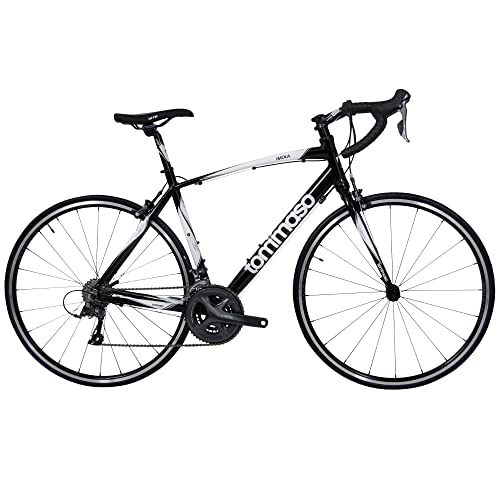
Best Beginner Road Bike (2026): 3 Real Picks You Can Actually Buy Online
A good first road bike is less about the brand on the frame and more about a few basics: a light aluminum frame, a Shimano drivetrain that shifts cleanly, and a fit that suits you. Quality road bikes are surprisingly scarce and pricey on Amazon, so it pays to skip the no-name bargains and stick to real brands. Here are three you can genuinely buy, from an affordable Schwinn to a carbon-fork Tommaso to grow into.