Best Practice Locks for Lock Picking (2026): Learn on Real Locks
Locksport is the hobby of picking locks you own, and its learning curve is unusual: the skill is entirely in your fingertips, because you cannot see anything you are doing. That makes the choice of lock more important than the choice of picks. Start on something too hard and you learn nothing but frustration; start on the clear acrylic lock everyone buys first and you learn the wrong thing.
HobbyStack may earn a commission from links on this page at no extra cost to you. Our picks are chosen on merit; the commission helps fund the research.
- Start with a cheap brass padlock. Standard pins, forgiving tolerances, and it teaches real feedback.
- Clear practice locks look educational and teach you to use your eyes, which is the one sense picking cannot use.
- Security pins (spool, serrated, mushroom) are the next step up. They give false sets that feel like success.
- Buy keyed-alike multi-packs so you can practise repeatedly without hunting for the key.
- Only pick locks you own. Legality varies by jurisdiction, and carrying picks is restricted in some places.
 Our pickMaster Lock 140DYour first lock$9Check price
 ABUS 64TI/40The step up$21Check price
 Master Lock 140Q (4 pack)Repetition and friends$30Check price
Why clear locks are the classic mistake
The transparent acrylic practice lock is the first thing most people buy, and it is close to useless for learning the actual skill.
Picking works by feel. You apply light rotational pressure with a tension wrench, which binds one pin at a time, and you find that pin by feeling for the one that resists. Everything you learn is in your fingertips.
A clear lock lets you watch the pins set, so your eyes do the work your fingers should be learning to do. People get quick at clear locks and then cannot open an ordinary padlock, because they never built the feedback.
Worse, acrylic housings flex, so the feel is not even representative of the metal locks you will move on to.
They are genuinely useful for one thing: understanding the mechanism before you start. Look at one, or watch a cutaway video, then put it away and learn on brass.
Standard pins, then security pins
A basic pin tumbler has a stack of driver and key pins in each chamber. Under light tension, manufacturing tolerances mean the pins bind one at a time, so you find the binding pin, push it to the shear line, feel a tiny give, and move on. Set them all and it opens.
Security pins change that. Spool pins are waisted in the middle, serrated pins have grooves, and mushroom pins are shaped so the plug rotates slightly and then jams — a false set. It feels like the lock is opening when it is not, and the correct response is counter-intuitive: reduce tension slightly and let the pin reset rather than pushing harder.
Learning that recovery is the real second stage of the hobby, and it is why you want a lock with a couple of security pins once standard ones stop being interesting.
Go in order. Security pins on your first lock will just teach you that you cannot do this.
 Best first lock
Master Lock 140D Solid Brass Padlock with Key
The lock most people learn on, and the right one to start with for reasons that are not obvious. It has standard pins and relatively loose tolerances, which means the binding order is clear and each pin gives a definite, findable click — exactly the feedback a beginner needs to build. It is cheap enough to buy several, and solid brass so the feel is representative of real locks rather than the flex of an acrylic trainer. Its limitation is that it becomes easy fairly quickly: once you can open it consistently in under a minute it has taught you what it can. That is a feature of a first lock, not a fault. Keep it for warming up.
What's good
- Clear, findable feedback on each pin
- Solid brass — representative feel
- Cheap enough to buy several
- The standard first lock for good reason
What's not
- Becomes easy within weeks
- No security pins to progress onto
- Keys differ between units unless you buy keyed alike
- Not a lock you keep learning from
 Best step up
ABUS 64TI/40 Titalium Aluminum Alloy Padlock
The natural second lock, and the point at which the hobby gets interesting. Tighter manufacturing tolerances mean the binding order is less obvious and the feedback is subtler, so you have to slow down and pay attention rather than raking at it. That is precisely the skill that separates people who can open one lock from people who can pick. Keyed alike is genuinely useful: buy two and you can reset one while working the other without hunting for a second key. It will beat you for a while, which is the point — but do not make it your first lock, because being unable to tell a bound pin from a stiff one teaches nothing.
What's good
- Tighter tolerances demand real technique
- Keyed alike — practise without key-hunting
- Corrosion-resistant body
- The right difficulty after a 140D
What's not
- Genuinely frustrating as a first lock
- Subtle feedback needs patience
- Twice the price of the entry lock
- Still no heavy security pinning
 Best for repetition
Master Lock 140Q Solid Brass Padlock with Key
Four identical locks keyed alike, and the value is repetition rather than difficulty. Picking is a motor skill, and motor skills are built by doing the same thing many times in a row — four locks means you can work through them in sequence without stopping to reset, which keeps you in the rhythm where learning actually happens. It is also the sensible buy if more than one person is learning, since everyone gets the same lock and can compare notes on the same binding order. They are the same standard-pin difficulty as the single 140D, so this is quantity, not progression. Buy the ABUS as well if you want the lock to get harder.
What's good
- Four locks, one key — uninterrupted practice
- Repetition is how the motor skill builds
- Good for teaching someone alongside you
- Cheaper per lock than buying singly
What's not
- No increase in difficulty — same standard pins
- Four of the same lock takes space
- Not a progression purchase
- You will outgrow all four together
Locksport has a firm ethic: pick only locks that belong to you, and never a lock that is in use securing something. Beyond the ethics, the law differs by country and by state — in some places possessing picks is itself restricted, and in others it depends on demonstrable intent. Check your local position before buying, and keep your practice to your own locks on your own table.
The order to learn in
Single pin picking first, always. Find the binding pin, set it, move to the next. It is slower than raking and it is the skill everything else builds on, because it teaches you what the lock is telling you.
Raking — scrubbing a serrated pick across the pins while applying tension — opens simple locks quickly and is genuinely satisfying. Learn it second, or it becomes a crutch and you never develop the feel.
Security pin recovery third, once false sets start appearing. Lighter tension, let the pin reset, try again.
And tension is where almost every beginner goes wrong: far too much of it. Light enough that pins can move, heavy enough that one binds. Most people use several times what they need, which jams everything and makes the lock feel impossible.
Before you buy
Start with a cheap standard-pin brass padlock, not a clear acrylic one.
Buy keyed alike if you can — resetting without hunting for a key matters more than it sounds.
Add security pins only once standard locks are consistent.
Use far less tension than feels natural. That is the single most common beginner error.
Check the law where you live before buying picks.
Practice lock questions
Should I buy a clear practice lock?
What is a security pin?
Is lock picking legal?
Why can I not feel the pins setting?
Start on a cheap standard-pin brass padlock and ignore the clear acrylic ones — they teach your eyes, and picking is a fingertip skill. The Master Lock 140D is the right first lock: clear feedback, cheap, and honest about being outgrown. Move to the ABUS when standard pins stop being interesting. Buy the four-pack if you want uninterrupted repetition or someone is learning alongside you. And use far less tension than feels natural.
Ready to actually do it?
The first lock picking quest takes an evening, and it tells you whether the gear was worth it better than any review can.
Start Lock PickingThe HobbyStack editorial team researches each guide against manufacturer specifications, published resources and practitioner sources. Every product is checked for availability and described against its current listing before publication, and prices are re-checked when guides are updated.
About our editorial process →More gear guides
All guides
Best Speed Cubes for Beginners (2026)
The jump from a stiff hardware-store Rubik's Cube to a real magnetic speed cube is the single biggest upgrade in solving: it turns smoothly, corner-cuts instead of locking up, and the magnets snap each layer into place. Here are three, from a $10 cube that already does all that to a maglev flagship.

Best Miniature Paint Set for Beginners (2026): 3 Picks That Actually Work
The paint set is the heart of miniature painting, and the beginner trap is buying random craft acrylics that go on thick and hide all the detail. A proper miniature paint set is finely pigmented, flows off the brush, and is built to layer. Here are three good ones, from a loaded all-in-one kit to a pro-grade range.

Best Beginner Chess Sets (2026): 3 Real Picks
A tournament-style set is the right first chess set: standard-size Staunton pieces, weighted so they don't tip, on a board with 2.25 inch squares. Skip the decorative themed sets for now. The one real decision is vinyl (cheap, portable, what clubs actually use) versus wood (nicer to own, costs more). Everything below is a set people genuinely buy and play on.
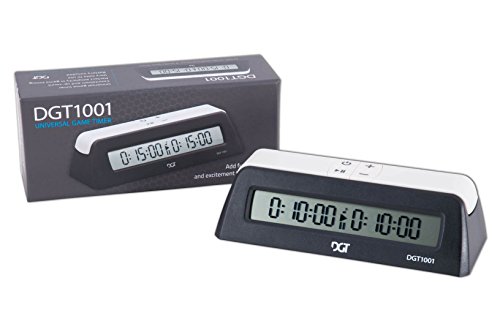
Best Chess Clock (2026): Delay, Increment and Why It Matters
A chess clock changes the game more than any other piece of equipment, because it turns thinking time into a resource you can run out of. The part beginners rarely have explained is that not all timed chess is the same: delay and increment are different rules that produce very different endgames, and the clock you buy determines which ones you can play.

Best Needle File Set (2026): Swiss Cut Numbers Run Backwards
Two things about needle files surprise people. Swiss cut numbers run the opposite way to sandpaper grit, so a higher number is finer, not coarser. And the most expensive set on this page is the coarser one, because cut grade and price are unrelated. Knowing both saves buying a set that does the wrong job beautifully.

Best Pottery Tool Set (2026): Six of the Twelve Do Nearly Everything
Open a twelve-piece pottery set and six tools will do nearly all your work: the wire cutter, a wooden rib, a metal rib, a loop trimming tool, a sponge and a needle tool. The rest get picked up once, found to duplicate something, and left in the canister for years.