Best Quilting Precuts (2026): Fat Quarters, Layer Cakes and Jelly Rolls
Precuts are the same fabric sold in standard shapes, and the names tell you nothing until someone explains them. A fat quarter is a rectangle, a layer cake is ten-inch squares, a jelly roll is two-and-a-half-inch strips. Patterns are written around those sizes, so buying the wrong one means cutting everything down and wasting most of it.
HobbyStack may earn a commission from links on this page at no extra cost to you. Our picks are chosen on merit; the commission helps fund the research.
- Fat quarter: 18 by 22 inches. Layer cake: 10-inch squares. Jelly roll: 2.5-inch strips. Charm pack: 5-inch squares.
- Read the pattern first. It will specify which precut it is written for.
- Precuts come from one coordinated collection, so the colours already work together.
- They cost more per yard than yardage. You are buying cutting time and colour matching.
- Precut edges are often pinked, so measure from the middle of the zigzag.
 Our pickKona Fat Quarter Bundle, 12Flexibility$34Check price
 Moda Bella Layer Cake, 42Fast big blocks$37Check price
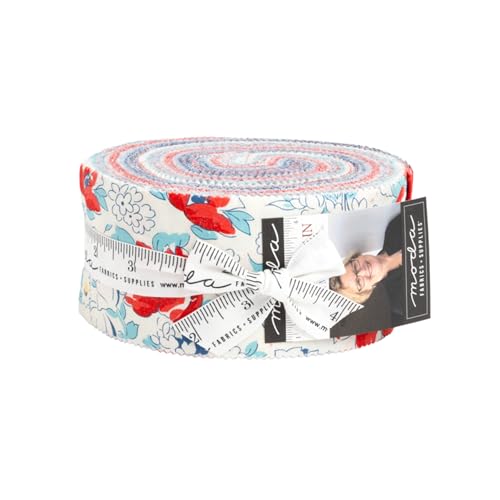 Moda Jelly Roll, 40Strip piecing$49Check price
What each precut actually is
The names are marketing; the dimensions are the useful part.
Fat quarter — 18 by 22 inches. A quarter of a yard cut as a rectangle rather than a long thin strip. That shape is why quilters prefer it: a standard quarter yard is 9 by 44 inches, which is too narrow for many block pieces, while a fat quarter gives you a usable rectangle from the same amount of fabric.
Layer cake — 10-inch squares, usually 42 of them. Big enough to cut into most block units, and fast if a pattern uses large simple shapes.
Charm pack — 5-inch squares, usually 42. The smaller sibling, good for scrappy patterns.
Jelly roll — 2.5-inch strips the full width of fabric, usually 40. Strip piecing sews long strips together and then cuts across them, which is far faster than cutting individual pieces.
Honey bun — 1.5-inch strips, and turnover — triangles, both less common.
The key point: patterns are written for a specific precut. Check before buying.
What precuts cost you and what they buy
Precuts are more expensive per yard than buying yardage. That is not a trick, and it is worth knowing what the premium actually purchases.
Cutting time. A jelly roll is 40 strips already cut accurately across the full fabric width. Cutting those yourself is an evening with a rotary cutter and a lot of opportunity to drift off square.
Colour matching. A precut comes from one designer collection, so the prints and solids are already built to work together. Choosing forty coordinating fabrics from a shop wall is genuinely difficult and where beginners most often go wrong.
Variety in small amounts. Forty different fabrics as yardage would be an enormous outlay; as a precut it is one purchase.
What you give up is control and yield. You get the collection's colours, not yours, and you cannot get a large piece for a border or backing from a precut.
The practical pattern most quilters settle into: precuts for the top, yardage for backing, binding and any large background.
 Best for flexibility
Studio RK Kona Cotton Solids Not Quite White 12 Fat Quarter
Twelve fat quarters at 18 by 22 inches in Kona cotton, which is the solid most quilt shops treat as the reference. Fat quarters are the most flexible precut because the rectangle can be cut down into squares, strips or triangles as a pattern needs, rather than committing you to one shape. These are a near-white palette, so they work as background and low-volume fabric across many projects rather than only one.
What's good
- Most flexible precut — cuts down into any shape
- Kona is the reference quilt-shop solid
- Near-white palette works as background in many projects
- Twelve coordinated pieces in one purchase
What's not
- Fewer pieces than a layer cake or jelly roll
- Solids only, so no prints
- You still do the cutting a pattern needs
- Not what a jelly-roll pattern asks for
 Best for fast blocks
Bella Solids White Layer Cake 42 10-inch Squares Moda Fabrics
Forty-two 10-inch squares of Moda Bella Solids in white. Ten inches is the useful size for large simple blocks: a square that big cuts into four 5-inch units, or two half-square triangles, without much waste, so patterns built on layer cakes come together quickly. White solid is the workhorse background of modern quilting and there is no such thing as having too much. Check your pattern calls for 10-inch squares.
What's good
- 42 squares — a lot of fabric in one purchase
- 10 inches cuts down cleanly into smaller units
- White Bella is a modern-quilting staple
- Layer cake patterns come together fast
What's not
- Committed to 10-inch squares from the start
- Solid white shows every mark while you work
- Wrong precut for a strip-pieced pattern
- Less flexible than fat quarters
 Best for strip piecing
Linzee Kull McCray Time and Again Jelly Roll 40 2.5-inch
Forty 2.5-inch strips cut the full width of the fabric, from a coordinated print collection rather than solids. Strip piecing is the reason to buy one: you sew long strips together, press, then cut across the seams, which produces pieced units far faster than cutting and joining individual squares. It is also the most beginner-friendly technique in quilting, because long straight seams are much easier to keep accurate than small pieces.
What's good
- Strip piecing is fast and beginner-friendly
- 40 coordinated prints from one collection
- Long straight seams are easier to sew accurately
- Very little cutting before you start sewing
What's not
- 2.5-inch strips limit you to strip-based patterns
- Prints rather than solids, so less versatile as background
- Pinked edges make measuring fiddly
- Dearest of the three
Most precuts are cut with a pinking blade, so the edge is a zigzag rather than a straight line. Measured from the outer points, a 2.5-inch strip can read closer to 2.625 inches. The convention is to measure from the middle of the zigzag, and to check what your pattern assumes — this small ambiguity is behind a surprising number of blocks that end up the wrong size.
The quarter-inch seam, which decides everything
Quilting is arithmetic. Every block is built from pieces whose finished size assumes a quarter-inch seam allowance, and small errors compound across a quilt.
A seam that is a sixteenth of an inch too wide, repeated across a block with ten seams, loses more than half an inch. Do that on twenty blocks and nothing lines up.
The scant quarter inch is the convention, and it exists because the fabric itself takes up a little width when the seam is pressed to one side. So quilters sew a hair under a quarter inch to end up at a true quarter once pressed.
Test it before a project. Sew three 2.5-inch strips together and measure: the middle strip should finish at exactly 2 inches. If it does not, adjust the needle position or your guide until it does.
Press, do not iron. Lift and place rather than sliding, because sliding an iron across pieced seams distorts them on the bias.
Getting this right matters more than any fabric choice.
Before you buy
Read the pattern first. It will name the precut it is written for.
Fat quarters if you are unsure. They cut down into anything.
Buy yardage separately for backing, binding and large backgrounds.
Measure from the middle of a pinked edge, not the points.
Test your quarter-inch seam before cutting into anything good.
Quilting precut questions
What is a fat quarter?
What's the difference between a layer cake and a jelly roll?
Are precuts worth the extra cost?
Why do precut edges look zigzagged?
Read your pattern before buying, because it will name the precut it expects and the wrong one means cutting everything down. If you are choosing without a pattern, fat quarters are the most flexible — an 18 by 22 rectangle cuts into whatever you need. Layer cakes are the fast route to large blocks, and jelly rolls make strip piecing, which is the most forgiving technique in quilting. Buy yardage separately for backing and binding.
Ready to actually do it?
The first quilting quest takes an evening, and it tells you whether the gear was worth it better than any review can.
Start QuiltingThe HobbyStack editorial team researches each guide against manufacturer specifications, published resources and practitioner sources. Every product is checked for availability and described against its current listing before publication, and prices are re-checked when guides are updated.
About our editorial process →More gear guides
All guides
Best Rotary Cutting Set for Quilting (2026): 3 Picks for Clean, Fast Cuts
The rotary cutter, self-healing mat, and acrylic ruler are the trio that makes quilting possible: together they cut fast, straight, accurate strips through several layers of fabric at once, which scissors simply cannot do. A set bundles all three so you can start cutting properly on day one. Here are three good ones, from a complete value set to a premium Fiskars kit.
Best Jewelry Making Kit for Beginners (2026): 3 All-in-One Picks
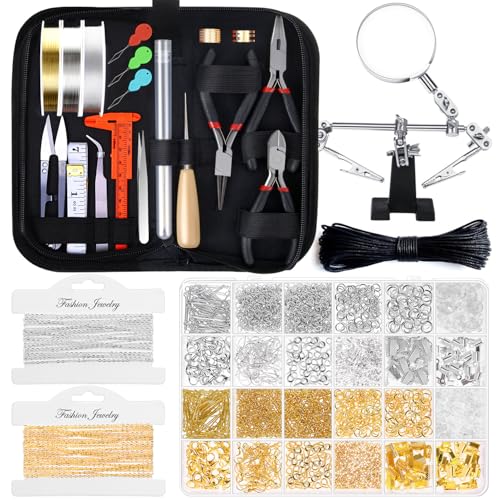
A good starter kit is the fastest way into jewelry making, because it bundles the beads, findings, and tools you need to actually finish a bracelet or pair of earrings, rather than ordering pieces one at a time and waiting. The three tools that matter most are pliers and wire cutters, and a kit puts them in your hands with everything else. Here are three good ones, from a tool-first starter to a guided premium kit.

Best Beginner Embroidery Kits (2026): 3 Starter Kits Worth Buying
A beginner embroidery kit is a box that has everything you need to start stitching in one go: a hoop, floss, needles, fabric, and usually a pattern already printed on the cloth. The one spec that actually matters for a first kit is whether the fabric comes stamped with a pattern, because tracing your own design is the thing most people give up on before they even start.
Best Embroidery Floss (2026): Six Strands, and You Rarely Use All Six
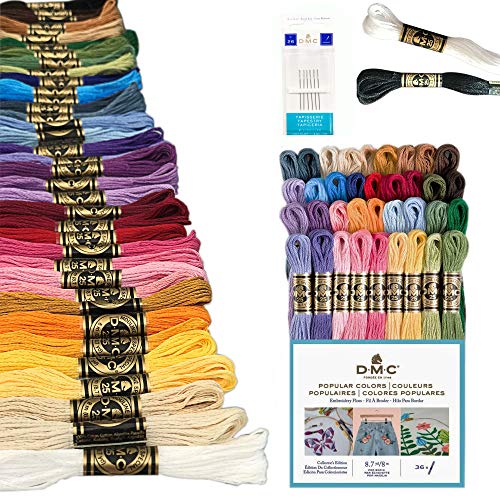
A skein of embroidery floss is six loosely twisted strands, and almost every pattern asks you to pull some of them out before you start. Stitching with all six because that is how it came off the shelf is the single most common beginner mistake, and it is why beginner work looks lumpy where it should look smooth.

Best Embroidery Hoop (2026): Drum-Tight Fabric Is the Whole Job
A hoop has one job: hold the fabric tight enough that your stitches sit where you put them. A hoop that slips lets the fabric sag, and a sagging ground gives you uneven tension, puckered stitches and a finished piece that will not lie flat. Almost every hoop complaint is really a grip complaint.

Best Embroidery Scissors (2026): Sharp All the Way to the Tip
Embroidery scissors do one job that ordinary scissors cannot: cut a single thread flush against the fabric without nicking it. That needs blades sharp right to the very point, meeting cleanly with no gap. It is a surprisingly demanding specification, and it is why a good small pair costs more than a large pair of household scissors.