Best Archaeology Trowel (2026): One Piece of Forged Steel, Four Inches Long
An archaeology trowel is a pointing trowel from a bricklayer, borrowed wholesale, and the profession is unusually specific about it. Four to five inches, one piece of forged high-carbon steel from tip to tang, and a blade that will be worn down to a stub over a career. Welded trowels snap at the neck, and everyone has seen it happen.
HobbyStack may earn a commission from links on this page at no extra cost to you. Our picks are chosen on merit; the commission helps fund the research.
- One-piece forged steel. Welded-neck trowels break, usually at the worst moment.
- Four to five inches. Longer blades are for mortar, not for stratigraphy.
- A new trowel is useless until it is worn in. The edge has to be worked sharp.
- You scrape sideways with the edge, not dig with the point.
- Never leave it out. Rust pits the blade and ruins the working edge.
 Our pickMarshalltown 45-5The standard$27Check price
 Spear & Jackson TyzackA springier blade$34Check price
 Marshalltown 5 inchMoving more soil$40Check price
One piece, and why that is not fussiness
A cheap trowel is made in parts: a blade, a separate neck, and a handle tang, welded or riveted together. It works fine for bricklaying, where the load is spread across a flat blade full of mortar.
Archaeology loads a trowel differently. You lever with the tip, you scrape edge-on for hours, and you occasionally meet a stone you did not expect. That puts the stress right at the neck, which is exactly where a welded trowel is weakest.
So the standard is one piece of forged high-carbon steel from blade tip through the neck to the tang inside the handle. There is no join to fail. The Marshalltown trowels here are forged this way, which is why they have been the profession's default for decades.
High carbon steel matters too. It takes and holds a working edge as it wears, where a softer stainless blade goes dull and stays dull. It will rust if you leave it out, which is the trade.
Length is four to five inches, and this is a genuine functional limit rather than tradition. Stratigraphy is read by scraping thin, even passes across a surface. A long blade cannot follow a small feature or work in a narrow sondage, and it removes too much material per pass to see a change in soil colour before you have gone through it.
Which is why the 14-inch finishing trowel you will find under the same brand is a completely different tool. It is for smoothing concrete.
Wearing one in, and using it edge-on
A new trowel does not work properly. It comes with rounded, blunt edges suited to mortar, and it has to be worn in before it does what you need.
That happens through use. Weeks of scraping wear the edges of the blade thin and sharp, and gradually reshape the whole blade as it loses steel. An archaeologist's trowel of a few seasons is visibly smaller than a new one, and considerably better. Some people speed this up on a stone or a file; most just use it.
The technique is the surprise for anyone new. You do not dig with the point. You hold the trowel almost flat and scrape sideways with the long edge, taking off a millimetre or two at a time across the whole surface you are working.
That is what lets you see a change: soil colour and texture shift gradually, and a thin even pass reveals the boundary between two contexts while a plunging point drives straight through it.
You listen as well as look. A scrape across compacted surface sounds different from one across a fill, and that difference often arrives before you can see anything.
Keep the surface clean. Sweep loose soil away as you go with a brush, because you cannot read a surface through the spoil you just made.
Point-first work is for cleaning around a find or defining an edge, and it is the exception rather than the method.
 The standard
MARSHALLTOWN Archaeology Pointing Trowel
The trowel most archaeologists carry, and it earns that by being one piece of forged high carbon steel with no welded neck to snap under levering. Four and a half inches is the classic size for reading stratigraphy: short enough to follow a small feature, long enough to work a surface efficiently. The steel takes an edge as it wears. Choose between standard and London pointing blade patterns, which differ in shoulder shape.
What's good
- One-piece forged steel, no neck to snap
- The profession-standard 4.5 inch size
- High carbon steel sharpens as it wears in
- Choice of standard or London pointing pattern
What's not
- Blunt and awkward until it is worn in
- High carbon steel rusts if left damp
- Handle is plain and unpadded
- Not stainless, so it needs drying after use
 Best for a springier blade
Spear & Jackson Tyzack Archaeology Pointing Trowel
The British alternative, and the difference is in the blade rather than the badge. Taper grinding thins the steel progressively toward the edge and the tip, which gives a flexible, springy blade that follows an uneven surface instead of skipping across it. Plenty of archaeologists prefer that feel to a stiffer American blade, and it is genuinely a preference rather than a ranking. Currently stocked thinly, so availability varies.
What's good
- Taper ground for a progressively flexible blade
- Follows an uneven surface rather than skipping
- The long-standing British trade standard
- Well finished handle and ferrule
What's not
- Stocked thinly, so availability comes and goes
- Flexible blade suits some hands and not others
- Dearer than the Marshalltown 45-5
- Also needs drying to avoid rust
 Best for moving more soil
Marshalltown Archaeology Pointing Trowel
The same one-piece forged construction in a five by two and a half inch blade, which covers noticeably more ground per pass. That matters on large open-area excavation and on cleaning big surfaces, where a 4.5 inch blade turns a day of work into two. The cost is precision: the extra half inch makes it clumsier in a narrow sondage or around a delicate feature, so most people who own this also own a smaller one.
What's good
- Covers more surface per pass on open areas
- Same one-piece forged high carbon build
- Faster for cleaning large surfaces
- Assembled in the USA like the 45-5
What's not
- Clumsy in a narrow sondage
- Too much blade around delicate features
- Most people end up owning both sizes
- Dearest of the three
Excavation destroys the thing it studies, and an undocumented hole removes information nobody can recover. Most countries protect archaeological sites by law, and metal detecting or digging on protected land, or on private land without the owner's permission, is an offence. If you want to dig, join a local society or a community excavation. They are usually glad of the hands and they will teach you more in a weekend than a season of digging alone.
Keeping one alive
Dry it every single time. High carbon steel rusts fast, and rust pits the blade surface. A pitted trowel drags across a surface instead of gliding and stops giving you a clean scrape.
Wipe it with an oily rag at the end of a season or before it goes in a bag for a while. Any light oil works.
Never leave it in the ground overnight, in a bucket of water, or in a wet tool bag. All three are how trowels are lost and ruined.
Mark it. Trowels are close to identical and they migrate across a site relentlessly. Coloured tape on the handle, or your initials, saves a lot of arguing.
Do not lever rocks with it. That is what a mattock, a spade or a bar is for. Levering is what finally kills even a forged trowel, usually by bending the neck rather than snapping it.
Retire it gracefully. A trowel worn down to a stub is a badge of a lot of hours, and it also stops being usable at some point. Keep it and buy another.
Carry a small brush and a plastic leaf trowel too. The metal trowel is not the right tool near fragile material.
Before you buy
One-piece forged construction, no welded neck.
Four to five inches. Anything longer is a bricklaying tool.
High carbon steel over stainless, and accept that it rusts.
Expect it to be blunt and awkward until it wears in.
Mark the handle so it comes home with you.
Archaeology trowel questions
Why does an archaeology trowel have to be one piece?
What size trowel do archaeologists use?
Why is my new trowel so bad at this?
Do you dig with the point?
The Marshalltown 45-5 is the trowel to buy, and it is the one most of the profession already carries: one piece of forged high carbon steel at the classic four and a half inches. Choose the Spear and Jackson Tyzack if you prefer a springier taper-ground blade that follows an uneven surface. Take the 5 inch Marshalltown as a second trowel for large open areas. Then spend a season wearing it in.
Ready to actually do it?
The first field archaeology quest takes an evening, and it tells you whether the gear was worth it better than any review can.
Start Field ArchaeologyThe HobbyStack editorial team researches each guide against manufacturer specifications, published resources and practitioner sources. Every product is checked for availability and described against its current listing before publication, and prices are re-checked when guides are updated.
About our editorial process →More gear guides
All guides
Best Mushroom Grow Kit for Beginners (2026): Spray-and-Grow to Monotub
A mushroom grow kit is the easiest way into growing your own: the simplest ones are a block you open, mist daily, and harvest gourmet mushrooms from in a couple of weeks, with nothing to sterilize and no experience needed. Here are three good ones, from a foolproof spray-and-grow box to a full monotub setup you inoculate yourself.

Best Stereo Microscope for Entomology (2026): 3 Real Picks for Studying Insects
The moment you want to identify an insect, you need a stereo microscope, and it is worth being clear that this is the right type. A stereo (or dissecting) microscope gives a low-power, upright, 3D view of a whole specimen on the stage, which is how you examine a pinned beetle or a fly's wing. It is a different tool from the compound microscope from biology class, which magnifies far more but only sees thin slides. For entomology you want roughly 10X to 45X, good working distance, and enough light. Here are three good ones across the range.

Best Handheld Anemometer (2026): Where You Stand Changes the Reading
Wind speed is quoted at ten metres above open ground, because that is the standard. Standing in a garden holding a meter at chest height behind a fence, you will read a fraction of the real figure, and no instrument fixes that. Where and how you measure matters more than what you measure with.
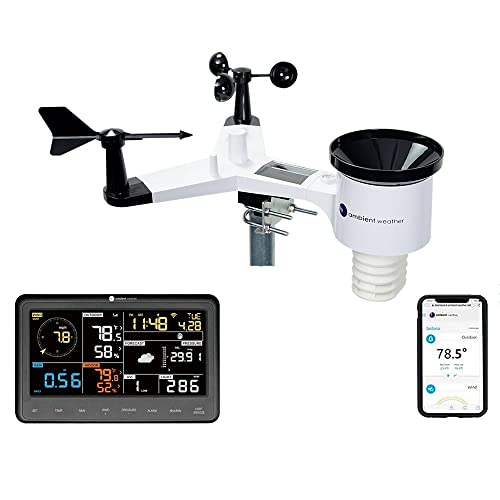
Best Home Weather Station (2026): 3 Picks from Starter to Pro
A home weather station puts a sensor outside that measures your own backyard's temperature, humidity, wind, and rain, and sends it to a display, and often a phone app, indoors. The big decision is how much accuracy you want and whether you want it connected to WiFi. All three here are complete all-in-one stations, from an easy, affordable starter to a professional-grade unit that serious weather watchers keep for years.
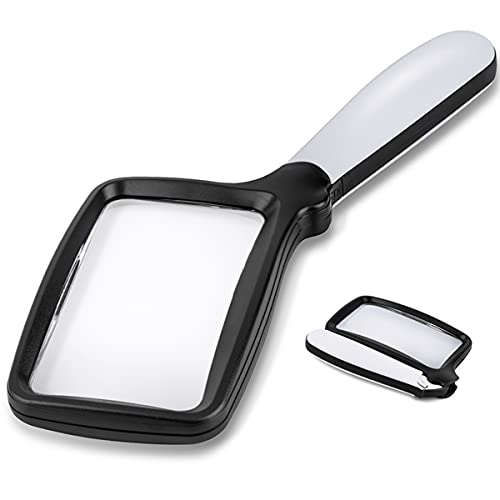
Best Magnifying Glass for Documents (2026): Light Matters More Than Power
Reading faded handwriting on old paper is a lighting problem at least as much as a magnification one. Higher power sounds like the answer and quietly makes things worse — the field of view shrinks, the working distance drops, and you end up examining letters one at a time with your nose on the document. Most people want less magnification and more light than they think.

Best Pottery Tool Set (2026): Six of the Twelve Do Nearly Everything
Open a twelve-piece pottery set and six tools will do nearly all your work: the wire cutter, a wooden rib, a metal rib, a loop trimming tool, a sponge and a needle tool. The rest get picked up once, found to duplicate something, and left in the canister for years.