Best Hobby Knife Set for Models & Dioramas (2026): X-Acto vs Budget Kits
A dull, wobbly blade ruins more parts than any lack of skill. Spend $8 to $52 on a real hobby knife set with sharp blades and a tight collet, and your cuts get clean overnight.
HobbyStack may earn a commission from links on this page at no extra cost to you. Our picks are chosen on merit; the commission helps fund the research.
- One good knife with a #11 blade does about 90% of diorama and model work. A 'set' matters for the spare blades and the extra shapes (gouges, chisels) you grow into, not because you need three handles on day one.
- Our pick: the X-Acto Compression Basic Set (~$31). Three genuine X-Acto handles, 13 blades, and a hard case that stops loose blades rolling around your desk. Real X-Acto steel holds an edge far longer than bargain knives.
- Tight budget: the JETMORE 16-Piece Set (~$8). Three handles and 13 SK5-steel blades for under ten dollars. The steel dulls faster, but you get every shape to learn on, and at this price you just swap blades instead of sharpening.
- Buy-once: the X-Acto X5282 16-Piece Set (~$52). Adds gouges and routing blades in a wood box for carving foam terrain and shaping, not just slicing. More than a beginner needs on day one, but likely the last knife set you buy.
- Skip: a utility or box cutter (the blade is too thick to cut clean curves), dollar-store knives with wobbly collets (the blade shifts mid-cut and ruins the part), and anything sold as a 'never dull' blade (they do not exist; cheap replacements are the answer, not an eternal edge).
 Our pickX-Acto Compression Basic Knife SetBest for most builders$22Check price
 JETMORE 16-Piece Hobby Knife SetBest under $10$9Check price
 X-Acto X5282 Basic Knife Set (16-Piece)The buy-once carving set$52Check price
What actually matters in a hobby knife
The handle gets the marketing. The blade does the work.
A hobby knife is a holder for a thin, very sharp blade. What separates a knife that cuts clean styrene and thin plasticard from one that tears it is almost entirely how sharp the blade is right now, and secondarily how steady the handle holds that blade. So the two things worth caring about:
- The #11 blade. This is the long, fine-pointed blade you will use for nearly everything: trimming parts off the sprue, cleaning mould lines, scoring plastic to snap it, cutting card and foam. Every set here includes them, and you will go through them. A fresh #11 is the single biggest upgrade to your cutting, more than any handle.
- The collet (the metal chuck that grips the blade). On cheap knives it loosens and lets the blade wobble a fraction of a degree, which is the difference between a clean cut and a torn one. X-Acto's aluminium collet clamps tight and stays tight. This is the main thing you pay for when you move up from a dollar-store knife.
Why buy a set at all if one #11 knife does most jobs? Two reasons. First, spare blades: a set gives you a stock so you always have a sharp one, and swapping a dull blade is faster and cheaper than resharpening. Second, the other shapes earn their place as you go: a #10 curved blade for shaving contours, a chisel blade for scraping, and (in the bigger sets) gouges and routing blades for carving foam and cork terrain. You do not need them week one. You will want them by month three.
Two things that are not about the knife but ruin more parts than a dull blade: cutting on the wrong surface (always use a self-healing cutting mat, never bare desk or glass, which chip the edge instantly) and pushing too hard. A sharp blade wants light pressure and several passes. Force is what makes the blade slip.
 Best for most builders
X-Acto Compression Basic Knife Set
The X-Acto Compression Basic Knife Set is the set most modelers land on and keep. You get three genuine X-Acto handles (so you can keep a fresh #11, a curved blade, and a chisel loaded at once instead of swapping constantly), 13 assorted blades, and a hard carry case that actually keeps the blades sorted and off your desk. The reason to pay X-Acto's price over a bargain set is the steel and the collet: X-Acto blades hold a working edge noticeably longer, and the aluminium chuck grips without the tiny wobble that ruins clean cuts on cheap knives. This is the set that covers a beginner's first year and stays useful long after.
What's good
- Three real X-Acto handles: keep three blade shapes loaded at once
- X-Acto steel holds an edge far longer than budget SK5 blades
- Tight aluminium collet, no blade wobble on fine cuts
- Hard case keeps loose blades sorted and safely stored
- The #11 blade and handles are a lifetime-available standard
What's not
- Roughly 4x the price of a bargain set for the same blade shapes
- Only the common blades included; gouges and routing blades are the bigger set
- Blades still dull with use; you will buy replacement packs
 Best under $10
JETMORE 16-Piece Hobby Knife Set
The JETMORE 16-Piece Set is the honest way to start for under ten dollars, and it is a real set (three handles and 13 SK5-steel blades), not a single knife dressed up as a kit. You get every blade shape a beginner needs to learn on: the #11 point, a curved blade, and a chisel. The compromise is the steel: SK5 takes a decent edge but loses it faster than X-Acto, and the collets are not as precise. For a first diorama that does not matter much, because the fix for a dull blade at this price is simply to snap in a fresh one. It is the right call if you are not sure the hobby sticks yet.
What's good
- A genuine three-handle set with every common blade shape, under $10
- Plenty of spare blades included to start
- Perfectly good for cutting card, foam, and thin styrene while you learn
- Nothing to lose if you decide dioramas are not for you
What's not
- SK5 blades dull faster than X-Acto steel
- Collets are less precise; check for blade wobble before fine cuts
- Handles feel lighter and cheaper in the hand
 The buy-once carving set
X-Acto X5282 Basic Knife Set (16-Piece)
The X-Acto X5282 16-Piece Set is the comprehensive kit for someone who already knows they are staying with the hobby. Alongside the usual knives and blades it adds gouges and routing blades in a fitted wood box, which is what you actually want when you stop just cutting parts and start carving: shaping foam and cork terrain, hollowing, and scraping contours into a base. It is more tool than a first-week beginner needs, and the value only makes sense if you build regularly, but it is very likely the last knife set you will buy.
What's good
- Adds gouges and routing blades for carving terrain, not just cutting
- Fitted wood storage box keeps a large blade collection organized
- Genuine X-Acto steel and collets throughout
- Covers cutting, carving, and shaping in one purchase
What's not
- Overkill for a first diorama; most of the blades sit unused early on
- Around $52, hard to justify until you build regularly
- Often lower stock than the basic sets
The most common beginner mistake is fighting a dull blade to save a 20-cent replacement. A blunt #11 tears plastic, slips, and needs force, which is exactly when you cut yourself or wreck the part. Buy a bulk pack of #11 blades (100 for a few dollars) and change the blade the moment it stops cutting cleanly. A cheap knife with a fresh blade out-cuts a premium knife with a tired one, every time.
Cleaner cuts, fewer ruined parts
Always cut on a self-healing mat. Bare desk, glass, or wood chips the edge on the first pass. A mat also protects your surface and gives grid lines for square cuts.
Light pressure, several passes. A sharp blade does not need force. Score the line first, then deepen it. Forcing a single deep cut is how the blade skips off the line.
Cut away from your hand, and cap the blade the second you set it down. Most hobby-knife injuries happen to the hand holding the part, or from a blade rolling off the desk.
Keep the blade you are using and your spares separate. Snap dull blades into a lidded jar or a blade bank, never the bin loose. A #11 in a bin bag finds a finger later.
Buy a bulk #11 blade pack with your first knife. It is the cheapest quality upgrade in the hobby and means you never build with a dull edge to 'save' a blade.
Common questions about hobby knives
What is a #11 blade and why does everyone use it?
X-Acto vs cheaper brands: is it worth it?
Do I need a whole set, or just one knife?
How do I keep the blade sharp?
What else do I need besides the knife?
Ready to actually do it?
The first diorama building quest takes an evening, and it tells you whether the gear was worth it better than any review can.
Start Diorama BuildingThe HobbyStack editorial team researches each guide against manufacturer specifications, published resources and practitioner sources. Every product is checked for availability and described against its current listing before publication, and prices are re-checked when guides are updated.
About our editorial process →More gear guides
All guides
Best Miniature Paint Set for Beginners (2026): 3 Picks That Actually Work
The paint set is the heart of miniature painting, and the beginner trap is buying random craft acrylics that go on thick and hide all the detail. A proper miniature paint set is finely pigmented, flows off the brush, and is built to layer. Here are three good ones, from a loaded all-in-one kit to a pro-grade range.

Best Needle File Set (2026): Swiss Cut Numbers Run Backwards
Two things about needle files surprise people. Swiss cut numbers run the opposite way to sandpaper grit, so a higher number is finer, not coarser. And the most expensive set on this page is the coarser one, because cut grade and price are unrelated. Knowing both saves buying a set that does the wrong job beautifully.
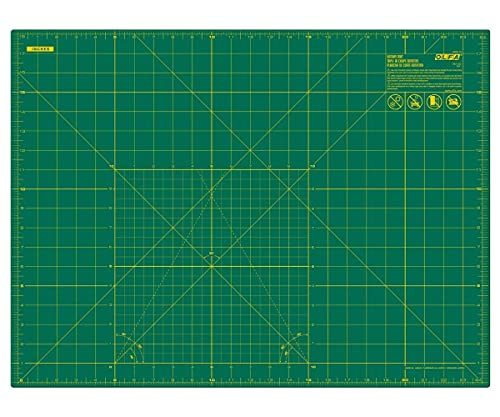
Best Cutting Mat for Prototyping (2026): Rotary Mats and Knives Do Not Mix
Self-healing mats are not all built for the same blade. OLFA say plainly that their rotary mat is for rotary cutters only and not for fixed-blade utility knives, which is exactly what you cut prototype cards with. It is the kind of thing you find out from the packaging rather than from the product name.

Best Model Railroad Track (2026): Code Is Rail Height, and It Shows
Code 100 and Code 83 both say HO scale on the box and they are not the same height. The code is the rail height in thousandths of an inch, and Code 100 rail is noticeably taller than anything the real railroads used at that scale. Once you have seen the difference on a layout you cannot unsee it.
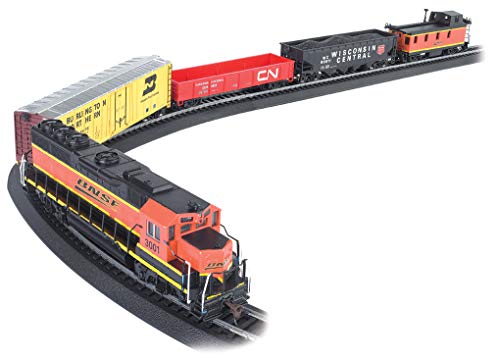
Best Model Train Set for Beginners (2026): 3 HO-Scale Starter Sets
The easiest way into model railroading is a ready-to-run starter set: a locomotive, a few cars, a loop of track, and a power pack, all in one box, so you can have a train running on the kitchen table the same day. For beginners the sweet spot is HO scale, the most popular size worldwide, big enough to handle easily and backed by a huge range of track, buildings, and trains to grow with. The main upgrade to understand is DC versus DCC (whether you can run and control more than one train independently, with sound). Here are three good HO starter sets, from a simple first loop to a premium digital set with sound.

Best Automata Kit (2026): A Cam Is a Shape That Stores a Movement
An automaton is a machine that turns one simple input, usually a crank, into a specific sequence of movement. The clever part is almost always a cam: a shape cut so that as it rotates, a follower riding on its edge rises and falls in exactly the pattern you designed. The movement is stored in the shape.