Best Cutting Mat for Prototyping (2026): Rotary Mats and Knives Do Not Mix
Self-healing mats are not all built for the same blade. OLFA say plainly that their rotary mat is for rotary cutters only and not for fixed-blade utility knives, which is exactly what you cut prototype cards with. It is the kind of thing you find out from the packaging rather than from the product name.
HobbyStack may earn a commission from links on this page at no extra cost to you. Our picks are chosen on merit; the commission helps fund the research.
- Check the mat is rated for craft knives, not just rotary cutters.
- Self-healing means layers of soft PVC that close after a cut. It is not magic and it wears.
- Buy bigger than your cards. You want room to work, not just room to cut.
- Change blades far more often than feels necessary. A dull blade tears card and gouges mats.
- Keep it flat and out of the sun. Mats warp permanently and never come back.
 JIARON 12x18Getting started$8Check price
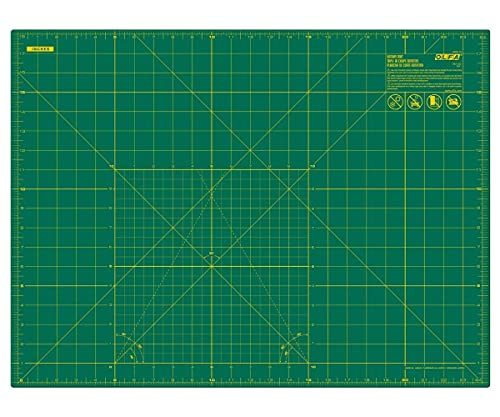 OLFA 18x24Rotary work$40Check price
 Our pickDahle Vantage 24x36Prototyping properly$58Check price
How self-healing works, and what it does not do
A self-healing mat is built from several layers of soft PVC, often five, bonded together. A blade parts the material rather than removing it, and the layers press back together behind the cut so the surface stays smooth.
What it does not do is repair damage. Cutting the same line repeatedly, using a blunt blade, or pressing hard enough to gouge will leave a groove that stays. Self-healing buys you a very long working life on light passes, not immortality.
Which brings up the blade distinction. A rotary cutter rolls a circular blade along the surface with even pressure, spreading the load. A craft knife drags a point through it under whatever force your hand applies, which concentrates far more damage in one place.
Some mats are rated only for the first. The OLFA rotary mat here says so on the listing: for rotary cutters only, not for fixed-blade utility knives. It is an excellent mat used as intended and a poor buy for prototyping cards, which is knife work almost exclusively.
Mats also have a grain of use. Rotate the mat and vary where you cut instead of always working the same strip near the edge, and it will last several times longer.
Double sided is genuinely useful, giving you a fresh surface once the first is tired, and usually a gridded side and a plain one.
Size, grid and the knife itself
Buy bigger than you think. A prototype card is 63 by 88mm, so a small mat sounds like plenty. In practice you want the card, the ruler, your hand and the offcut on the mat at once, plus room to keep a stack to one side. A 12 by 18 inch mat is workable for a few cards. A 24 by 36 is a working surface.
A larger mat also means you cut in different places rather than wearing one strip out.
Grids matter more here than in sewing. Prototyping is repetitive rectangles, and a printed grid with clear measurements and 45 and 60 degree angle lines means you can square a cut against the mat rather than measuring every card. Check the grid is printed clearly and does not wear off, since some cheap mats lose their lines within months.
Then the blade, which does most of the damage. A sharp blade parts card cleanly under light pressure. A dull one needs force, tears the fibres of the card, wanders off the ruler, and gouges the mat. Blades are cheap; change them far more often than feels reasonable, certainly whenever a cut starts to drag.
Use a metal ruler, never a plastic one. A knife will shave a plastic edge and follow the divot it makes, which ruins both the cut and the ruler.
Cut in several light passes rather than one heavy one. It is more accurate, safer, and much kinder to the mat.
 Best for getting started
JIARON Self Healing Cutting Mat
Five bonded layers that close up after a cut, double sided with printed grids and angle guides on both faces, for less than the price of a pack of blades. Twelve by eighteen inches is enough for cutting a handful of prototype cards with a ruler alongside. It is a light-duty mat and it shows with heavy use, so expect the surface to tire faster than the Dahle and the printed lines to fade over time.
What's good
- Two usable gridded sides for the price of a sandwich
- Five layers genuinely do close after light cuts
- Grid, angles and measurements printed clearly
- Cheap enough to replace rather than nurse
What's not
- Light duty, so it tires with heavy use
- Grid lines fade over time
- 12 by 18 is small for a real prototyping session
- Thinner than the premium mats
 Best for rotary work
OLFA 18x24" Self-Healing Rotary Cutting Mat
An excellent mat with a caveat you need before buying: OLFA state it is for rotary cutters only and not for fixed-blade utility knives. If you cut prototype cards with a craft knife, that rules it out despite the quality. Where it does belong is rotary work, cutting multiple layers of card or fabric at once, and there it is the standard. Eighteen by twenty-four at 1.5mm, one gridded side and one plain.
What's good
- The standard mat for rotary cutting
- Reseals surface cuts reliably under a rolling blade
- One gridded side and one plain
- Good size for medium projects
What's not
- Rated for rotary cutters only, not craft knives
- That rules it out for most card prototyping
- Only 1.5mm thick
- Dearer than the Dahle per square inch
 Best for prototyping properly
Dahle Vantage 10473 Premium Self-Healing Cutting Mat
Twenty-four by thirty-six inches, which stops being a mat and starts being a work surface. That size is the real upgrade for prototyping, because the cards, the ruler, the stack and the offcuts all fit at once and you can cut in different areas rather than wearing one strip out. Self-healing across the full area with a clear printed grid. It is large enough that finding somewhere to store it flat is a genuine consideration.
What's good
- 24 by 36 fits cards, ruler, stack and offcuts at once
- Cutting in different areas makes it last far longer
- Clear grid across the whole surface
- Substantial enough to work on directly
What's not
- Needs a big desk and flat storage
- Awkward to move once unrolled
- Dearest here
- More mat than a few cards needs
Cutting mats warp permanently and do not come back. Heat is the main culprit, so a mat left in a sunny window or leaning against a radiator will curl within days. Rolling one for storage sets a curve into it that never quite flattens. Keep it lying flat, out of direct sun, and if you have to transport one, roll it printed side out and unroll it as soon as you arrive.
Cutting cards that look like cards
Corner rounding changes everything. Square-cornered prototypes feel like paper. A 3mm corner rounder punch costs very little and makes a stack of cards feel like a game, which matters a lot when you are testing with people.
Cut in batches with a stop. Clamping a strip of card or a steel rule as a stop, then cutting against it, gives you identical cards far faster than measuring each one and is much more accurate.
Score, then cut. One light pass to establish the line, then two or three more to go through. Trying to cut through in one pass pushes the blade off the ruler.
Mind the ruler hand. Fingers well back from the edge, and the blade angled slightly into the ruler rather than away from it. Craft knife injuries almost all happen to the hand holding the ruler.
Sleeves hide a lot. Prototype cards in penny sleeves with a bulk card behind them shuffle properly and survive testing, and slightly rough edges disappear.
Keep a bin next to you. Offcuts on the mat get cut again by accident and blunt blades early.
Before you buy
Check the mat is rated for craft knives, not rotary cutters only.
Buy the largest that fits your desk. Room to work beats room to cut.
Look for a clearly printed grid with angle lines.
Double sided gives you a second surface for free.
Store it flat, away from heat and sunlight.
Cutting mat questions
Can I use a rotary cutting mat with a craft knife?
How does a self-healing mat actually work?
What size cutting mat do I need for prototyping?
Why does my mat have grooves in it already?
The Dahle Vantage is the one to buy for prototyping: big enough to be a work surface rather than a mat, self-healing across the whole area, and not restricted to rotary blades. Start with the cheap 12 by 18 if you are cutting a handful of cards and want to find out whether the hobby sticks. Skip the OLFA unless you actually use a rotary cutter, however good it is at that job.
Ready to actually do it?
The first board game design quest takes an evening, and it tells you whether the gear was worth it better than any review can.
Start Board Game DesignThe HobbyStack editorial team researches each guide against manufacturer specifications, published resources and practitioner sources. Every product is checked for availability and described against its current listing before publication, and prices are re-checked when guides are updated.
About our editorial process →More gear guides
All guides
Best Hobby Knife Set for Models & Dioramas (2026): X-Acto vs Budget Kits
A dull, wobbly blade ruins more parts than any lack of skill. Spend $8 to $52 on a real hobby knife set with sharp blades and a tight collet, and your cuts get clean overnight.

Best Miniature Paint Set for Beginners (2026): 3 Picks That Actually Work
The paint set is the heart of miniature painting, and the beginner trap is buying random craft acrylics that go on thick and hide all the detail. A proper miniature paint set is finely pigmented, flows off the brush, and is built to layer. Here are three good ones, from a loaded all-in-one kit to a pro-grade range.

Best Model Railroad Track (2026): Code Is Rail Height, and It Shows
Code 100 and Code 83 both say HO scale on the box and they are not the same height. The code is the rail height in thousandths of an inch, and Code 100 rail is noticeably taller than anything the real railroads used at that scale. Once you have seen the difference on a layout you cannot unsee it.
Best Model Train Set for Beginners (2026): 3 HO-Scale Starter Sets
The easiest way into model railroading is a ready-to-run starter set: a locomotive, a few cars, a loop of track, and a power pack, all in one box, so you can have a train running on the kitchen table the same day. For beginners the sweet spot is HO scale, the most popular size worldwide, big enough to handle easily and backed by a huge range of track, buildings, and trains to grow with. The main upgrade to understand is DC versus DCC (whether you can run and control more than one train independently, with sound). Here are three good HO starter sets, from a simple first loop to a premium digital set with sound.

Best Needle File Set (2026): Swiss Cut Numbers Run Backwards
Two things about needle files surprise people. Swiss cut numbers run the opposite way to sandpaper grit, so a higher number is finer, not coarser. And the most expensive set on this page is the coarser one, because cut grade and price are unrelated. Knowing both saves buying a set that does the wrong job beautifully.

Best Beginner RPG Dice Set 2026: Wiz Dice vs Chessex vs Haxtec
Good news: dice are the cheapest part of getting into tabletop RPGs, and almost any 7-dice set will get you through your first game just fine. You do not need to overthink this. What actually matters for a beginner is that you can read the numbers quickly, that you have a full set of the right shapes, and that you are not spending a fortune on your very first purchase. The fancy stuff (metal, gemstone, glow-in-the-dark) is fun, but it is a want, not a need. Below are three honest picks: a cheap bag that gets dice into everyone's hands, the standard single set most players end up with, and a metal set for when you know this hobby is sticking around.