Best Oven Thermometer (2026): Your Oven Is Probably Lying to You
Set a home oven to 350°F and there is a good chance it is sitting anywhere between 315 and 390. The dial is a request, not a measurement, and the difference is the reason a recipe that works for everyone else comes out pale and raw in the middle at your house.
HobbyStack may earn a commission from links on this page at no extra cost to you. Our picks are chosen on merit; the commission helps fund the research.
- Home ovens routinely run 25 to 50°F off, and they drift further with age.
- The oven light coming on does not mean the oven is at temperature.
- Preheat 20 to 30 minutes, not until the beep. The beep is the air, not the metal.
- Ovens have hot corners. Move the thermometer around and find yours.
- Two thermometers cost almost nothing and let you check one against the other.
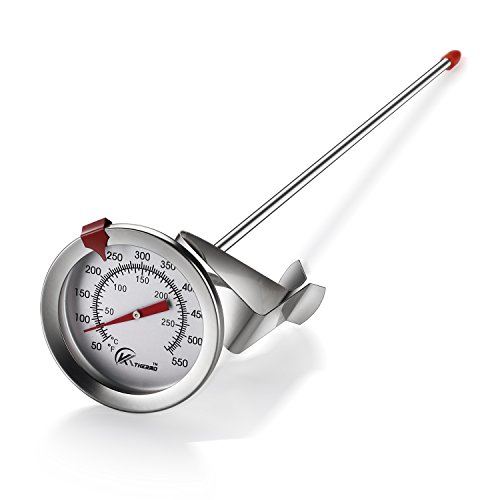 Rubbermaid CommercialJust knowing the truth$11Check price
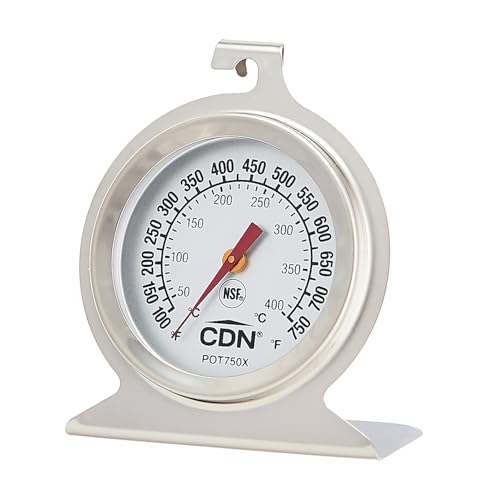 Our pickCDN ProAccurateMost kitchens$14Check price
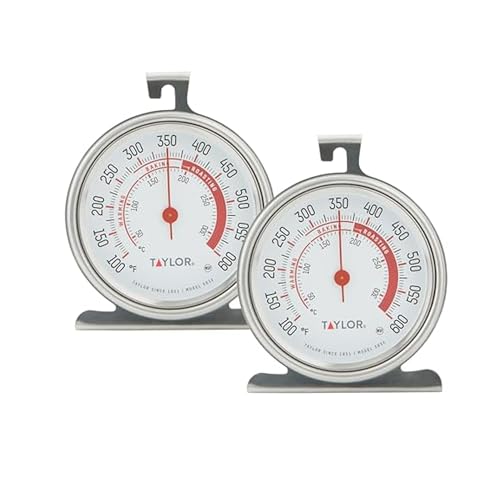 Taylor 2-packMapping hot spots$15Check price
Why ovens are wrong, and stay wrong
An oven does not hold a temperature. It overshoots and undershoots around one, switching the element on when the air cools past a threshold and off when it climbs past another. That swing is often 25 to 50°F wide even in a healthy oven, which is why the actual temperature depends on when you look.
On top of that swing sits calibration drift. The sensor ages, the thermostat wears, and a five-year-old oven that was accurate when installed can easily be 30°F out. Nothing warns you. The dial still says 350.
And then there is where you measure. Every oven has hot and cold regions, usually hotter at the back and near the element. A cake in the wrong corner browns on one side while the other stays pale, and people blame the recipe or the tin.
The consequences are specific rather than vague. Too cool and cakes stay dense and pale, bread does not spring, pastry leaks butter before the layers set. Too hot and the outside sets before the middle cooks, cookies spread then burn at the edge, custards curdle.
A thermometer costs about the same as a bag of good flour and it makes every recipe you own more likely to work.
Using one properly
Hang it in the middle, at the height you actually bake at, not on the bottom shelf where it is out of the way. The number you want is the one where the food will sit.
Preheat for 20 to 30 minutes. The beep tells you the air has reached temperature. It does not tell you the oven walls, the shelves or a stone have, and those are what actually radiate heat into your bake. An oven that beeps in eight minutes is not ready in eight minutes.
Then map it. Put the thermometer in the front left, run the oven, read it. Repeat for back left, front right, back right. Twenty minutes of work tells you where your oven is hot, which is worth more than any single number, because from then on you know which way to turn the tray halfway through.
Adjust the dial, not the recipe. If your oven reads 30° low, set it 30° high and leave the recipe alone. Chasing it by changing bake times gets confusing fast.
Recheck every few months. Drift is gradual, and a thermometer that lives in the oven costs you nothing to glance at.
Do not open the door to look. Opening drops the temperature sharply. Read it through the glass with the light on.
 Best for just knowing the truth
Rubbermaid Commercial Products Stainless Steel Monitoring
A stainless commercial thermometer that hangs from a shelf or stands on it, which is all this job actually requires. It reads true oven temperature at a glance so you can stop guessing whether the dial means anything, and it is built for a commercial kitchen rather than a gift shop. The dial is smaller than the CDN and the numbers are closer together, so it wants a decent look rather than a glance across the room.
What's good
- Stainless commercial build for the price of a coffee
- Hangs from a shelf or stands on it
- Nothing to calibrate, break or replace
- Cheap enough to own two
What's not
- Smaller dial than the CDN
- Numbers sit close together at a distance
- No NSF certification
- Analogue, so no min or max recording
 Best for most kitchens
CDN High Heat Oven Thermometer
NSF certified, which means it is built to a standard commercial kitchens are inspected against rather than to a price. Rated for high heat, so it stays accurate at the temperatures that matter for bread and pizza rather than drifting once you go past 450. The dial is large and clearly marked, which sounds trivial until you are reading it through oven glass with the light on. Still analogue, so no alarms.
What's good
- NSF certified to a commercial standard
- Rated for the high heat bread and pizza need
- Large, clearly marked dial reads through glass
- Holds calibration better than gift-shop units
What's not
- Analogue only, no alarm or logging
- Slightly dearer than the Rubbermaid
- One unit, so no hot-spot mapping
- Glass face can steam up briefly
 Best for mapping hot spots
Taylor Oven Thermometer 2-Pack
Two thermometers, and the second one is the point. Put them at opposite ends of the same shelf and you can read the difference between the front and the back of your oven in a single preheat rather than four. That difference is what tells you which way to turn a tray, and it is usually larger than people expect. Keep one in a second oven, or use it to check the first against.
What's good
- Two units read both ends of a shelf at once
- Maps hot spots in one preheat instead of four
- Lets you check one against the other
- Covers a second oven or a toaster oven
What's not
- Not NSF certified like the CDN
- Dearest of the three
- Two units is more than one oven needs
- Analogue, so no logging
Most ovens beep when the air sensor first touches the set temperature, which can be eight minutes in. The shelves, the walls and any stone are still cold, and they carry a large part of the heat that goes into your bake. Give it 20 to 30 minutes from cold, longer if you are using a stone or steel. This one habit fixes more pale bottoms and flat loaves than any equipment change.
What to do once you know
Turn the tray. Once you have mapped the oven, rotating halfway through is no longer superstition, it is aimed at a specific corner you know runs hot.
Move the shelf. Bottoms browning too fast means the shelf is too low, or the tray is too close to the element. Pale bottoms and dark tops mean the opposite. This is a shelf problem far more often than a recipe problem.
Two trays need space. Baking on two shelves at once blocks circulation and both trays cook unevenly. Swap them top to bottom as well as front to back.
Fan ovens run hotter than they say. The usual conversion is to drop 25°F from a conventional recipe, but check with the thermometer rather than trusting the rule, since the offset varies by oven.
Dark tins absorb more heat. A recipe developed for a shiny aluminium tin will brown faster in a dark non-stick one, which reads as an oven problem and is not.
If it is more than 50° out, that is a service call rather than a thing to compensate for. A thermostat that far gone is usually failing rather than merely drifting.
Before you buy
Get one that hangs, so it sits at the height you actually bake at.
Check it is rated for high heat if you bake bread or pizza.
A big clear dial matters, because you read it through glass.
Two units let you map front against back in one go.
Leave it in the oven permanently and glance at it every bake.
Oven thermometer questions
How far out is a typical home oven?
Where should I hang an oven thermometer?
How long should I really preheat?
Should I recalibrate the oven or adjust the recipe?
The CDN ProAccurate is the one to buy: NSF certified, rated for the high heat bread and pizza need, and with a dial big enough to read through oven glass. The Rubbermaid does the same job for a couple of dollars less if you just want to know the truth. The Taylor two-pack earns its place if you want to map front against back in a single preheat. Then leave it in there permanently.
Ready to actually do it?
The first baking quest takes an evening, and it tells you whether the gear was worth it better than any review can.
Start BakingThe HobbyStack editorial team researches each guide against manufacturer specifications, published resources and practitioner sources. Every product is checked for availability and described against its current listing before publication, and prices are re-checked when guides are updated.
About our editorial process →More gear guides
All guides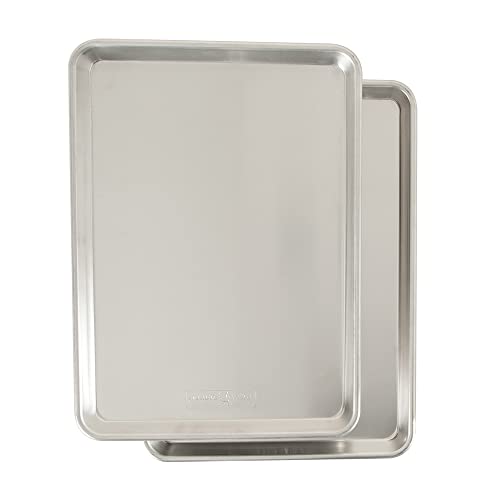
Best Baking Sheet for Beginners (2026): Why Half-Sheet Aluminium Wins
A baking sheet is the most-used pan in most kitchens and the one people spend least time choosing. The cheap ones warp with a bang the first time they hit a hot oven, and a warped sheet cooks unevenly forever after. The fix is not expensive: a heavy half sheet in bare aluminium with a rolled rim, which is what professional kitchens have used for decades.

Best Beginner Stand Mixer 2026: KitchenAid Artisan vs Classic vs Pro 600
Stand mixers are a one-time purchase that lasts decades. Pick the right KitchenAid (it's almost always going to be a KitchenAid) and you'll never need to think about it again. Pick wrong and you'll end up reselling and rebuying within 5 years.

Best Kitchen Scale for Baking 2026: Escali vs Ozeri vs OXO
A kitchen scale is the single most important tool in baking: weight is exact where measuring cups aren't, and switching to grams is the fastest way to make your recipes finally come out the same every time. The good news: accuracy is basically a solved problem, so the real choice isn't which scale weighs best (they're all spot-on) but which features you want. Here's the honest breakdown.
Best Mixing Bowls for Baking (2026): Stainless, Glass or Plastic
Mixing bowls are the piece of kit people own by accident — whatever came with the house, in whatever sizes. It mostly does not matter, with one real exception: plastic bowls will stop egg whites whipping, and almost nobody is told why. Beyond that it is about weight, nesting, and owning three rather than one.
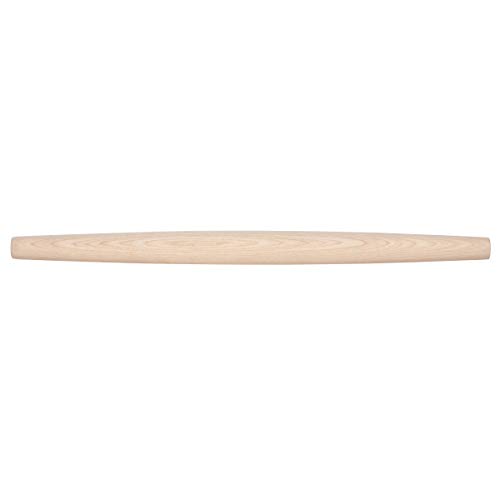
Best Rolling Pin (2026): French, Classic or Adjustable
Rolling pins divide into three shapes and people are oddly loyal to whichever they learned on. The differences are real but small: what changes most is how much you can feel the dough through the pin, and whether you get an even thickness without measuring. Any of them will roll pastry. One of them will roll it to a consistent 4mm without you thinking about it.

Best Round Cake Pans (2026): Why Anodised Aluminium Wins
Layer cakes are where most people find out their pans matter. A dark pan browns the edges before the middle is set; a thin one buckles; a single pan means baking layers one after another, which gives you two cakes that are not quite the same. None of this is expensive to fix, and the pan you want is not the one with the cleverest coating.