Best Gloves for Spray Paint (2026): Thickness Is Time
Solvents go through skin. Not around it, through it, and into your bloodstream — which is why the relevant number for a chemical glove is not what it is made of but how long it takes the chemical to get through. A thin disposable glove against xylene is measured in minutes, and most people assume it is measured in hours.
HobbyStack may earn a commission from links on this page at no extra cost to you. Our picks are chosen on merit; the commission helps fund the research.
- Nitrile, not latex or vinyl. Latex is poor against solvents and causes allergies.
- Thickness is time. A 3-mil disposable buys minutes; 15-mil chemical gloves buy hours.
- EN 374 Type A is the highest chemical protection classification. Look for it.
- Disposables are for short contact and going straight in the bin. Do not re-wear them.
- A gauntlet cuff matters when you spray upward and it runs down your arm.
 Our pickAMMEX 3-mil Nitrile, box of 100Short contact$13Check price
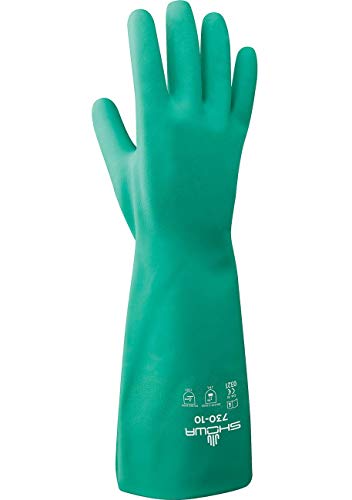 SHOWA 730, 15-milSustained solvent work$21Check price
 Ansell AlphaTec Solvex 37-155The highest rating$27Check price
Breakthrough time is the specification
Chemical gloves are not a barrier in the way a wall is a barrier. Solvents permeate them: molecules dissolve into the glove material on the outside, diffuse through, and come out on the inside against your skin.
So the meaningful figure is breakthrough time — how long until the chemical reaches the inside at a measurable rate. It depends on three things: the glove material, its thickness, and the specific chemical.
Thickness is the one you can read off the box. A 3-mil disposable and a 15-mil chemical glove are the same material doing very different jobs, because permeation time scales with how far the molecule has to travel.
Against aggressive solvents like acetone, thin disposables can be measured in minutes. Against milder ones they last much longer. Manufacturers publish permeation charts per chemical, and they are worth a look if you use one solvent constantly.
The practical rule: disposables for splash and short contact, thick chemical gloves for anything sustained. And change disposables the moment they get wet with solvent rather than working on in them.
Nitrile, latex, vinyl and what EN 374 means
Nitrile is the right default. It resists a broad range of solvents and oils, it is puncture resistant, and it contains no natural rubber proteins, so it does not cause the latex allergies that made latex gloves unpopular in the first place. Every glove here is nitrile.
Latex is comfortable and dextrous and poor against many solvents, and repeated exposure sensitises a meaningful number of people.
Vinyl is cheap, loose-fitting and the weakest of the three chemically. Fine for food handling, wrong here.
Then the standard worth knowing. EN 374 is the European chemical protection classification, and Type A is its highest tier: the glove has demonstrated a minimum breakthrough time against at least six of a defined list of test chemicals. The Ansell here is EN 374 Type A, which is a specific, tested credential rather than a marketing phrase.
Also worth noting: flock lining. A cotton flock liner wicks sweat and makes a thick glove far easier to pull off, which sounds cosmetic and is the difference between wearing them and not. Unlined gloves shed no lint, which matters if you are painting a surface that must stay clean.
 Best for short contact
AMMEX Black 3 mil Nitrile Disposable Gloves Latex Free Medium
Three-mil disposable nitrile, a hundred to the box, and the right way to think about them is as the glove you change constantly rather than the glove you rely on. AMMEX describe them as light-duty and short-duration, providing light barrier protection from many chemicals — which is honest, and exactly the use case for spraying: paint on your hands for a few minutes at a time, then a fresh pair. They are lightly textured for grip, thin enough to keep real tactile sensitivity for cap changes and stencil work, and touch-screen compatible, which matters more than it should when your phone is your reference. Latex-free. What they are not is protection against sustained solvent contact, and a pair that has gone wet with thinner should come straight off.
What's good
- Thin enough to keep full dexterity for cap changes
- A hundred pairs, so you change them constantly
- Latex-free, no allergy risk
- Touch-screen compatible
What's not
- Minutes, not hours, against aggressive solvents
- Light duty and short duration only
- Short cuff — nothing protects the forearm
- Single use, so a continuing cost
 Best for sustained work
SHOWA 730 Chemical Resistant Glove
Five times the thickness of a disposable at 15 mil, which is the specification that turns minutes of protection into hours — against a broad range of solvents, industrial oils and animal fats. The 13-inch gauntlet is the other half of the case, and it is not decoration: spraying upward or cleaning a nozzle sends solvent running down your wrist, and a short cuff channels it straight onto skin. A cotton flock liner wicks sweat, which stops the inside becoming unpleasant on a long session, and makes a thick glove far easier to pull off — the reason people abandon unlined gloves. Twelve pairs. The trade against disposables is dexterity: fiddly cap changes are noticeably harder in 15 mil.
What's good
- 15 mil — hours rather than minutes against solvents
- 13-inch gauntlet protects the forearm
- Cotton flock liner wicks sweat and eases removal
- Twelve pairs, reusable
What's not
- Much less dexterous than a disposable
- Flock lining sheds lint onto clean surfaces
- Bulky to carry to a wall
- Needs cleaning and drying between uses
 Best rated
Ansell AlphaTec Solvex 37-155 Nitrile Chemical Gloves
Certified to EN 374 Type A, the highest tier of the European chemical protection standard, which means demonstrated minimum breakthrough times against at least six defined test chemicals rather than a general claim of resistance. That is the reason to choose it over a thick unbranded glove: the performance is measured and published. It is unlined, which is a deliberate trade — no flock means less lint contamination, so it suits work where a clean surface matters, at the cost of being sweatier and harder to remove than the flock-lined alternative. Thirteen inches long and abrasion resistant, in sizes small through XXL, twelve pairs to a pack. If you use aggressive solvents regularly and want a documented figure rather than a claim, this is it.
What's good
- EN 374 Type A — the highest chemical classification
- Published breakthrough data rather than a general claim
- Unlined, so no lint on clean surfaces
- Five sizes, 13 inches long, abrasion resistant
What's not
- Unlined means sweatier and harder to pull off
- Dearest here for twelve pairs
- Same dexterity penalty as any thick glove
- Overkill for occasional aerosol work
A thin nitrile glove with thinner soaked into it is not protecting you, it is holding solvent against your skin — which is worse than no glove, because bare skin would have let it evaporate. If a disposable gets genuinely wet with solvent, strip it off and put a fresh pair on. That is why they come a hundred to a box.
Getting paint off skin without making it worse
The instinct is to reach for the strongest solvent within reach, and that is exactly backwards.
Thinner and acetone on skin are the problem, not the solution. They strip the natural oils, which raises absorption of everything else you touch afterwards, and they are absorbed themselves. Using solvent as a hand cleaner is worse than the paint.
Barrier cream before you start genuinely works. A film on the skin means paint sits on top of it and washes off with soap.
Cooking oil or a citrus-based cleaner lifts most aerosol paint from skin with none of the absorption problem. Rub it in, then wash with soap and warm water.
Leave what remains. A little paint on your hands for a day is not a health issue. Scrubbing skin raw to remove it is, because broken skin absorbs far more of everything.
Wash before you eat, always. Hand-to-mouth is the ingestion route people forget entirely, and it is the one that actually gets pigment inside you.
Before you buy
Nitrile only. Latex is poor against solvents and vinyl is worse.
Read the thickness in mil. It is the number that decides protection time.
Gauntlet cuffs matter if you ever spray above shoulder height.
Flock lined for comfort, unlined if lint would spoil the surface.
Keep both: disposables for quick work, thick gloves for anything sustained.
Chemical glove questions
Are disposable nitrile gloves enough for spray paint?
What does mil thickness mean on gloves?
What is EN 374 Type A?
How do I get spray paint off my skin safely?
Buy a box of 3-mil disposables and change them constantly — that covers most aerosol work, keeps the dexterity you need for cap changes, and costs almost nothing. Add the SHOWA 730 if you clean parts in solvent or spray above shoulder height, where 15 mil and a 13-inch gauntlet are doing real work. The Ansell is the choice when you want a published EN 374 Type A figure rather than a claim. And never use thinner as a hand cleaner.
Ready to actually do it?
The first graffiti art quest takes an evening, and it tells you whether the gear was worth it better than any review can.
Start Graffiti ArtThe HobbyStack editorial team researches each guide against manufacturer specifications, published resources and practitioner sources. Every product is checked for availability and described against its current listing before publication, and prices are re-checked when guides are updated.
About our editorial process →More gear guides
All guides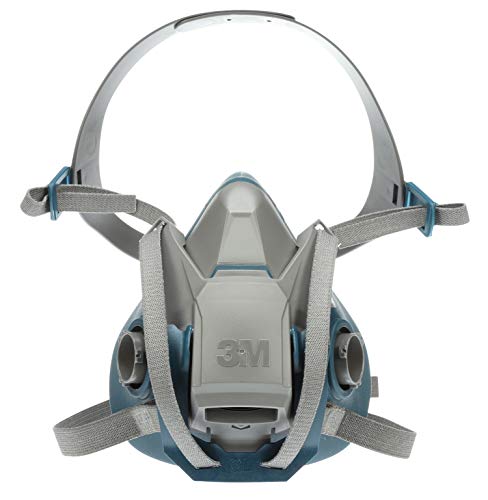
Best Respirator for Spray Painting (2026): An N95 Does Not Stop Solvent
The most common safety mistake in spray art is wearing a white dust mask and believing it is doing something. An N95 filters particles. The hazard in aerosol paint is mostly solvent vapour, which is a gas, and it passes through a particulate filter as if it were not there. You need a cartridge with activated carbon in it, and the two look nothing alike.

Best Fineliner Pens for Sketching (2026): Waterproof, Lightfast, and Which Width
The moment that decides which pen you want is putting a watercolour wash over a finished line drawing. A dye-based pen dissolves and grey-blue bleeds through everything you have done. A pigment pen sits there. That is the entire specification, and it is why sketchers are so specific about brands.

Best Portable Watercolor Set (2026): "Hue" Means a Substitute Pigment
The word doing the most work on a watercolour pan is "Hue". It means the colour is made with a cheaper substitute rather than the pigment the name refers to, and Winsor & Newton say so plainly about their student range. That is the student-versus-artist line, and it explains most of the price gap.

Best Beginner Acrylic Paint Set 2026: Liquitex BASICS and Where to Start
Acrylics are the best paint to start with: fast-drying, water-cleanup, and forgiving, but the cheapest craft-store paints are so thin and chalky they'll put you off. The fix is student-grade acrylics with real pigment, which cost barely more. Here are three sets, from the beginner standard to a pro-quality upgrade.

Best Canvas for Painting (2026): Cotton, Linen, and What Primed Really Means
Almost every cheap canvas says pre-primed, and almost every painter adds more primer anyway. Factory gesso is applied thinly to keep costs down, so paint sinks into the weave, colours dry dull and you use two or three times as much of an expensive tube as you needed to.

Best Easel for Beginners (2026): Tabletop, H-Frame or Neither
An easel is the piece of painting equipment people buy first and need last. Watercolour is usually painted flat or at a shallow angle; small acrylic and oil studies work fine propped against a stack of books. What an easel really buys you is the ability to stand back, see the whole picture at once, and work at a size your table cannot hold.