Best Tape Measure for Woodworking (2026): The Loose Hook Is Not Broken
The hook on the end of a tape measure wobbles, and every woodworker eventually decides theirs is worn out and tries to squeeze it tight. It is supposed to move. That small piece of slop is a deliberate correction, and crimping it is one of the quickest ways to make every measurement you take slightly wrong.
HobbyStack may earn a commission from links on this page at no extra cost to you. Our picks are chosen on merit; the commission helps fund the research.
- The hook slides by exactly its own thickness so inside and outside measurements both read true.
- Use one tape for a whole project. Two tapes rarely agree with each other.
- Mark with a V, not a line. A pencil line is wider than the tolerance you are chasing.
- Burn an inch when you need precision, and remember to subtract it.
- Standout is how far the blade reaches unsupported. It matters more than length.
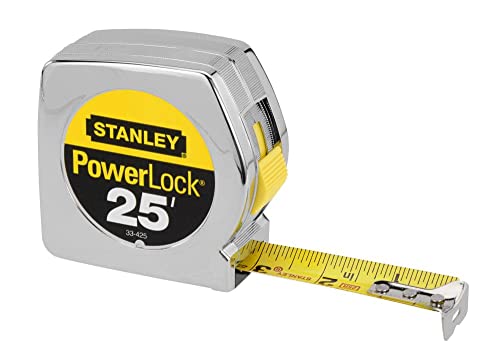 Our pickFastCap ProCarpenter 25ftShop work$11Check price
 Milwaukee Magnetic 25ftWorking alone$28Check price
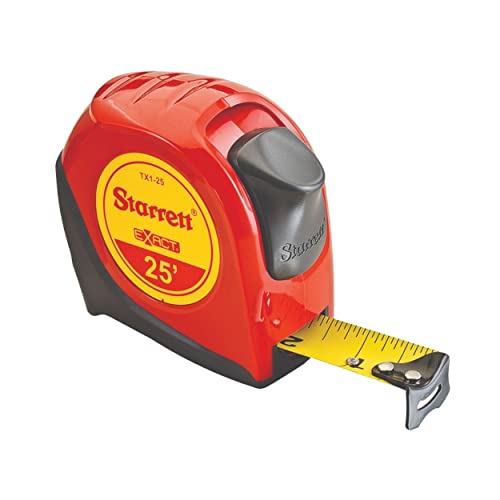 Starrett Exact 25ftPrecision layout$36Check price
The hook, and why it has to move
Hold a tape against the end of a board and hook it over the edge. The hook is pulled, so the tape has to start measuring from the outside face of the hook.
Now push the same tape into the inside of a cabinet. The hook is compressed against the surface, so the tape has to start measuring from the inside face of the hook.
Those two positions are different by the thickness of the hook, usually about a sixteenth of an inch. So the hook is riveted through slotted holes and allowed to slide by exactly that much. Pull it and it moves out. Push it and it moves in. Both readings come out true.
This is called true zero, and it means a tape with a hook that has been bent tight, or one that has been dropped so the rivets are damaged, gives you readings that are consistently a sixteenth out in one direction. That is enough to leave a visible gap in a joint.
Check yours by hooking it over the edge of a known-square board, then measuring the same board from the inside of a stop. If the two numbers differ by more than a hair, the hook is bent.
And never let the blade snap back. It is the fastest way to bend a hook, and the damage is invisible until a joint does not close.
Measuring so the numbers actually agree
Most measuring errors in woodworking are not about the tool. They are about method.
Use one tape for the whole project. Tapes are manufactured to a tolerance, and two tapes from different brands can genuinely disagree by a sixteenth or more over a few feet. If you cut the rails with one tape and the stiles with another, the frame will not close. Mark your tape and keep it on the bench.
Better still, stop measuring. Where you can, hold the piece against the space it has to fit and mark it directly. A transferred mark has no number in it and therefore no rounding error. Story sticks and set-up blocks exist for exactly this.
Mark with a V, not a line. A pencil line is about a fiftieth of an inch wide, and you will not remember afterwards whether you meant the left edge, the middle or the right. A crow's foot has a single point.
Burn an inch when the reading really matters. The hook is the least accurate part of any tape, so start from the 1 inch graduation instead, take your reading, and subtract one. The one thing to remember is to actually subtract it, which is the source of a great many ruined boards.
Read square to the tape. Looking at a graduation from an angle shifts it, which is worth knowing on wide blades where the markings sit further from the wood.
 Best for shop work
FastCap ProCarpenter Standard Reverse Measuring Tape, 25-Foot
A cult favourite among cabinetmakers and it costs less than a pizza. The side of the case is an erasable notepad, so cutting lists get written where you cannot lose them, and there is a pencil sharpener built into the body. The blade is a full inch wide with clear sixteenth markings and a four-rivet nose clip. The reverse-reading scale suits cabinet layout and takes a little getting used to.
What's good
- Erasable notepad on the case for cutting lists
- Built-in pencil sharpener
- Clear 1/16 markings on a 1 inch blade
- Costs a third of the others here
What's not
- Reverse-reading scale confuses people at first
- Shorter standout than the Milwaukee
- No magnetic tip
- Plainer build than the Starrett
 Best for working alone
Milwaukee Tool 48-22-7125 Magnetic Tape Measure 25 ft x 1.83
The magnetic tip is the feature, and it is worth more than it sounds. Hook it to anything ferrous and the tape stays put while both your hands are on the work, which is most of the reason people give up and go looking for a helper. The blade is nearly two inches wide with a nylon bond coating, a five-point reinforced frame and a finger stop that saves your knuckle on retraction.
What's good
- Magnetic tip holds so you can measure alone
- Wide blade gives a long unsupported standout
- Nylon bond coating resists wear on the markings
- Finger stop protects on retraction
What's not
- Magnet is useless on wood alone
- Bulky in a pocket
- Three times the FastCap
- Wide blade is stiff in tight spots
 Best for precision layout
Starrett Exact Retractable Imperial Pocket Tape Measure
Starrett have made precision measuring tools for over 140 years and the pedigree shows in the details rather than the features. The end hook is self-adjusting, which is the true-zero mechanism done properly, and the company states its tapes exceed national and international accuracy standards. A positive lock holds the blade firmly while you transfer a mark. Nylon-coated blade in an overmoulded ABS case with a steel belt clip.
What's good
- Self-adjusting hook for reliable true zero
- Stated to exceed national accuracy standards
- Positive lock holds firmly for transfers
- Steel belt clip and overmoulded case
What's not
- No magnetic tip
- No notepad or sharpener
- Dearest here for the fewest features
- Accuracy gain is invisible on rough work
It is the single most common thing people do to a new tape and it breaks the tool. That movement is the correction that makes inside and outside measurements read the same, and once you squeeze it out every reading you take is a sixteenth wrong in one direction. If a hook genuinely is bent from a drop or a snap-back, replace the tape. They cost less than the wood you will waste working around one.
What the numbers on the case mean
A few specs are worth understanding before you compare.
Standout is how far you can extend the blade horizontally before it folds under its own weight. It is not usually printed, but a wider, more curved blade gives more of it. This is what lets you measure across a sheet of plywood on your own, and it is more useful day to day than the total length.
Length. 25 feet suits almost all furniture and cabinet work. 16 feet is lighter and easier in the hand for small shop work. Going longer mostly adds weight and bulk you carry for no reason.
Blade width. Wider means more standout and more stiffness, but also a bulkier case and markings that sit further from the workpiece, which introduces a small parallax error when you read at an angle.
Graduations. Sixteenths are standard. Some tapes mark thirty-seconds over the first foot, which is genuinely handy. Fraction-labelled tapes print the fractions out, which speeds up reading enormously if you do not already read a tape fluently.
Nylon or blade coatings protect the printed markings. On a tape that lives in a pocket with screws, that is the difference between three years and ten.
Before you buy
Pick one tape and use it for the whole project.
25 feet is plenty. Standout matters more than length.
Magnetic tip if you often measure alone against metal.
Look for clear sixteenths, or printed fractions if you read slowly.
Never crimp the hook, and never let the blade snap back.
Tape measure questions
Why is the hook on my tape measure loose?
Do two tape measures give the same reading?
What does burning an inch mean?
What is standout and why does it matter?
The FastCap ProCarpenter is the one to buy for shop work, and the notepad on the side stops being a gimmick the first time you write a cutting list on it instead of on a scrap you then cut up. Take the Milwaukee if you often measure alone and there is steel to stick to. Choose the Starrett if precision layout is the job and you want the hook done properly. Whichever you get, use only that one.
Ready to actually do it?
The first woodworking quest takes an evening, and it tells you whether the gear was worth it better than any review can.
Start WoodworkingThe HobbyStack editorial team researches each guide against manufacturer specifications, published resources and practitioner sources. Every product is checked for availability and described against its current listing before publication, and prices are re-checked when guides are updated.
About our editorial process →More gear guides
All guides
Best Cordless Drill for Woodworking 2026: Ryobi vs DeWalt vs Milwaukee
A cordless drill is the first power tool most woodworkers buy: it drives screws, bores pilot holes for joinery, and assembles your projects. The trick is choosing the right one for a wood shop without overbuying. Here are three picks, and the battery-ecosystem decision that matters more than the drill itself.
Best Hand Saw for Woodworking 2026: Japanese Pull Saw vs Western
A good hand saw is the most-used tool in beginner woodworking, and the first decision is the stroke: Japanese pull saws cut on the pull (thin kerf, easy control) while Western saws cut on the push (faster through rough stock). Here are three picks and which stroke fits the work you'll actually do.

Best Miter Saw for Woodworking 2026: Metabo vs DeWalt DWS779 vs Festool Kapex
A miter saw makes the fast, accurate, repeatable crosscuts that turn rough boards into furniture parts, the second power tool most woodworkers buy after the drill. Here are three picks, from an honest sub-$160 starter to the finish-carpenter's dream, plus how much saw your woodworking actually needs.

Best Beginner Woodworking Chisels 2026: REXBETI vs Irwin Marples vs Narex
A set of bench chisels is one of the first hand tools every woodworker needs: they pare joints, clean up saw cuts, and do the detail work a saw can't. Here are three beginner picks you can buy on Amazon, from a cheap set that includes its own sharpening stone to a buy-it-once Czech set, plus the four sizes you actually need.

Best Circular Saw for Beginners 2026: SKIL vs DeWalt 20V vs Makita
A circular saw is the workhorse of a beginner's shop, it breaks down plywood and makes the rough cuts a miter saw is overkill for. The first decision is the cord: corded gives you consistent power at the lowest price, cordless gives you go-anywhere freedom for more money. Here are three picks, and the blunt truth that a cheap saw plus a good blade beats an expensive one used carelessly.

Best Squares for Woodworking (2026): Speed Square or Combination Square
A speed square and a combination square are not two grades of the same tool. One is a fast triangle for framing cuts and rafter angles, the other is an adjustable square for laying out joints, checking depth and marking parallel lines. Most people buy the wrong one first because the cheap one looks like the beginner version, and it is not.